Youth discussing and learning together

Where Young Minds
Shape Political Discourse

Civitas Politics is an independent, youth-led platform based in Uzbekistan, dedicated to enhancing political literacy, fostering critical thinking, and giving a powerful voice to the younger generation. Founded in 2025 by high-schooler Biloliddin Boymurotov, it initially started as a simple, passionate school political club. Today, it has rapidly grown and proudly operates as an official member of the prestigious Civitas Global network.

Our Guests

Distinguished scholars and practitioners from world-leading universities who have contributed to Civitas Politics through interviews, lectures, and mentorship.

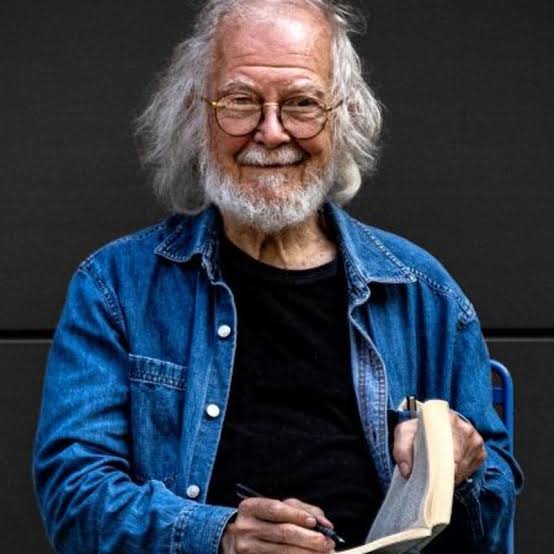
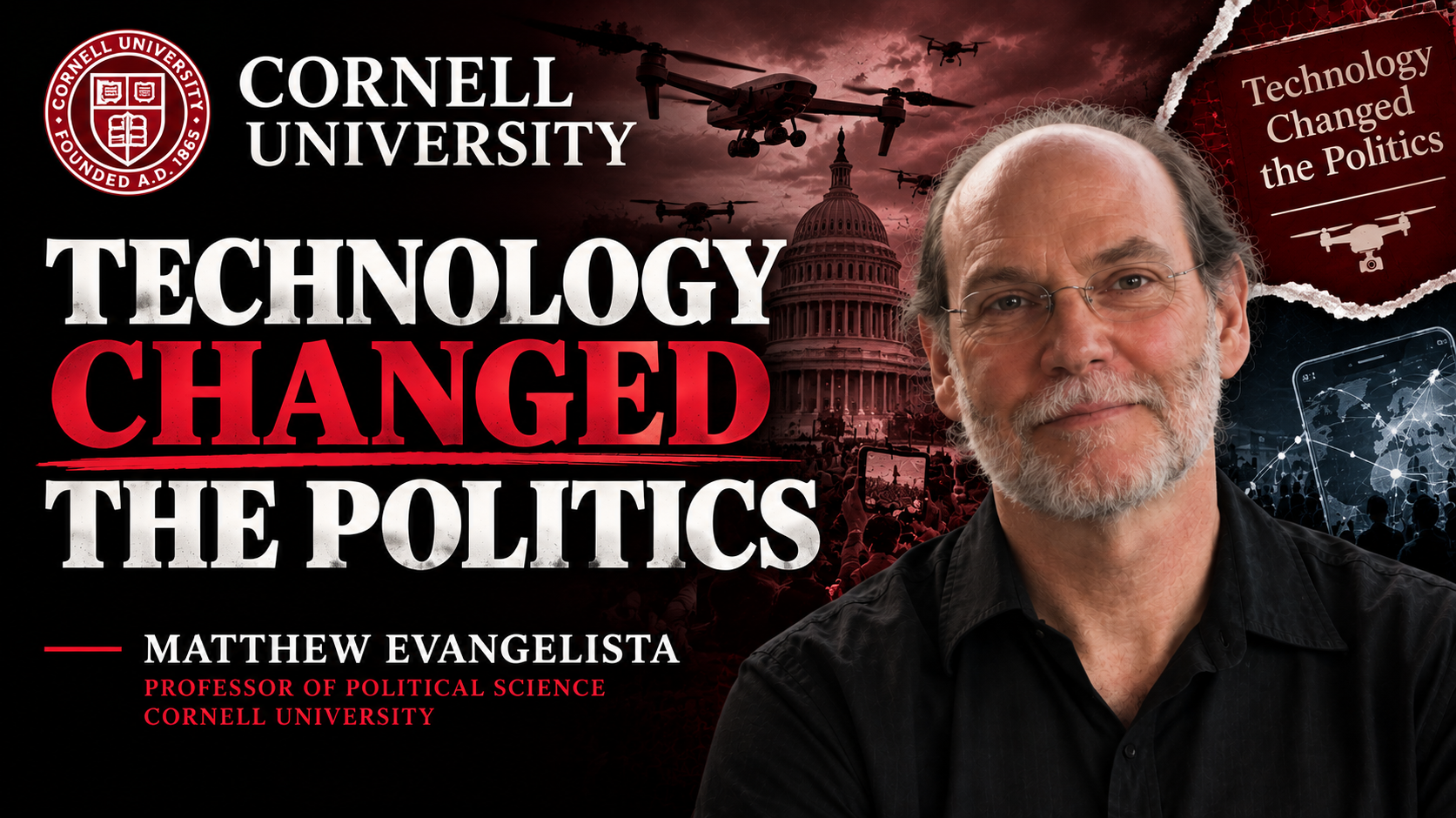
Matthew Evangelista

Matthew Evangelista

Cornell University — Professor of Government

International Relations, Security Studies

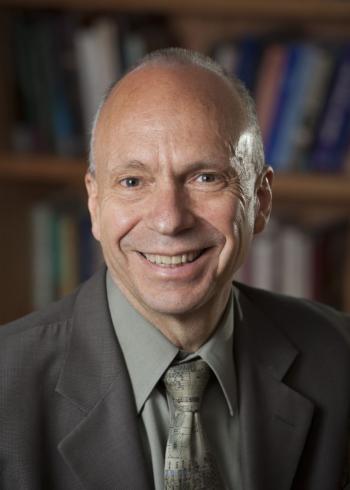
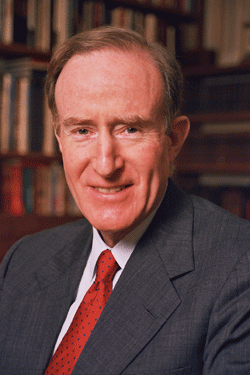
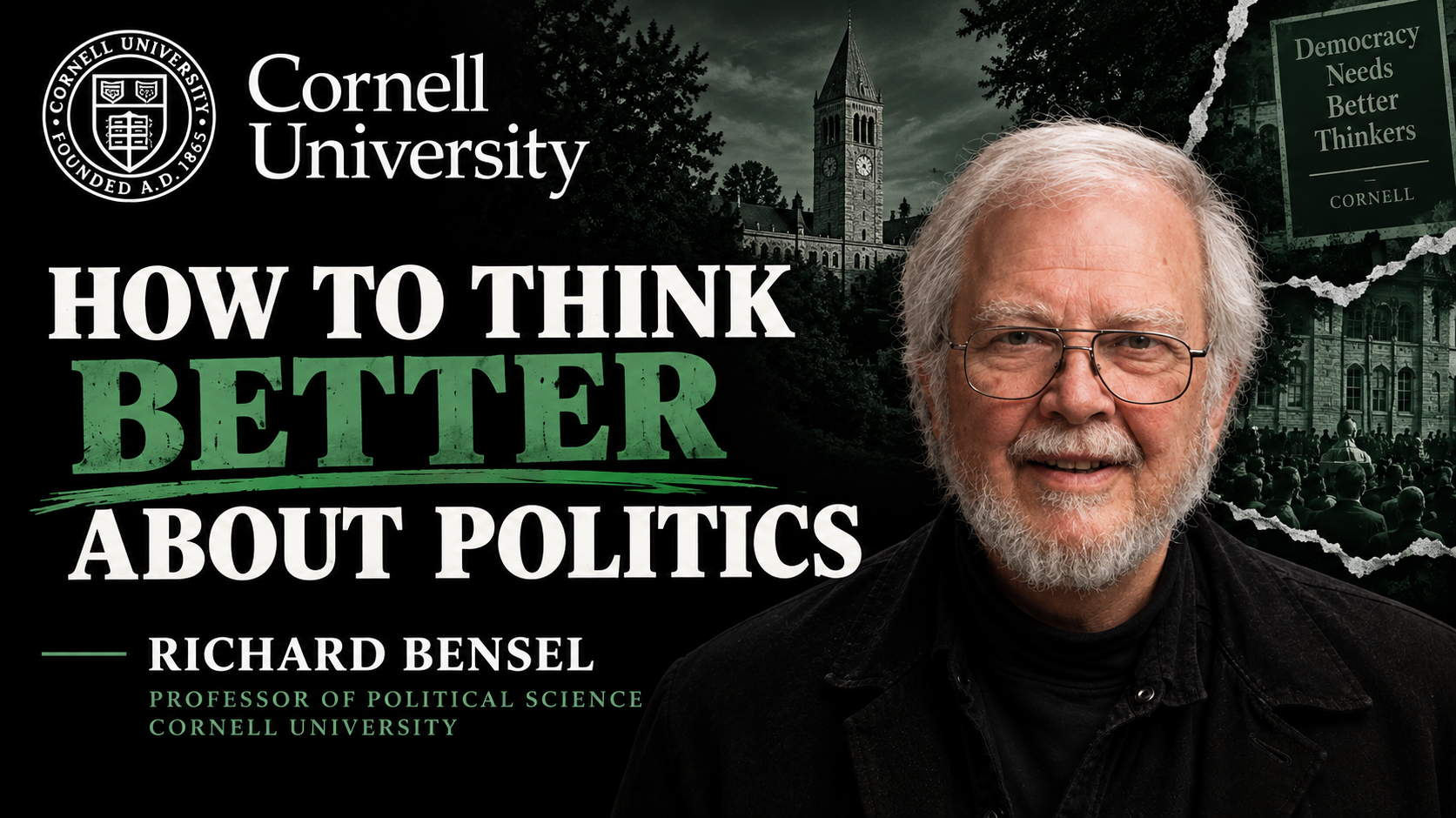
Richard Bensel

Richard Bensel

Cornell University — Professor of Government

American Political Development, Political Economy

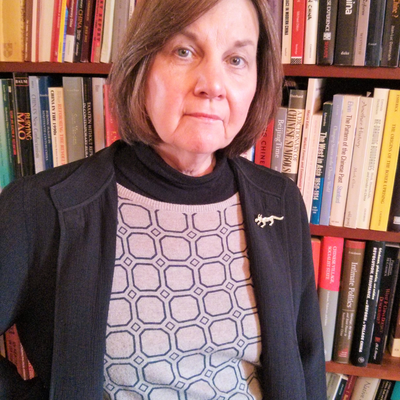
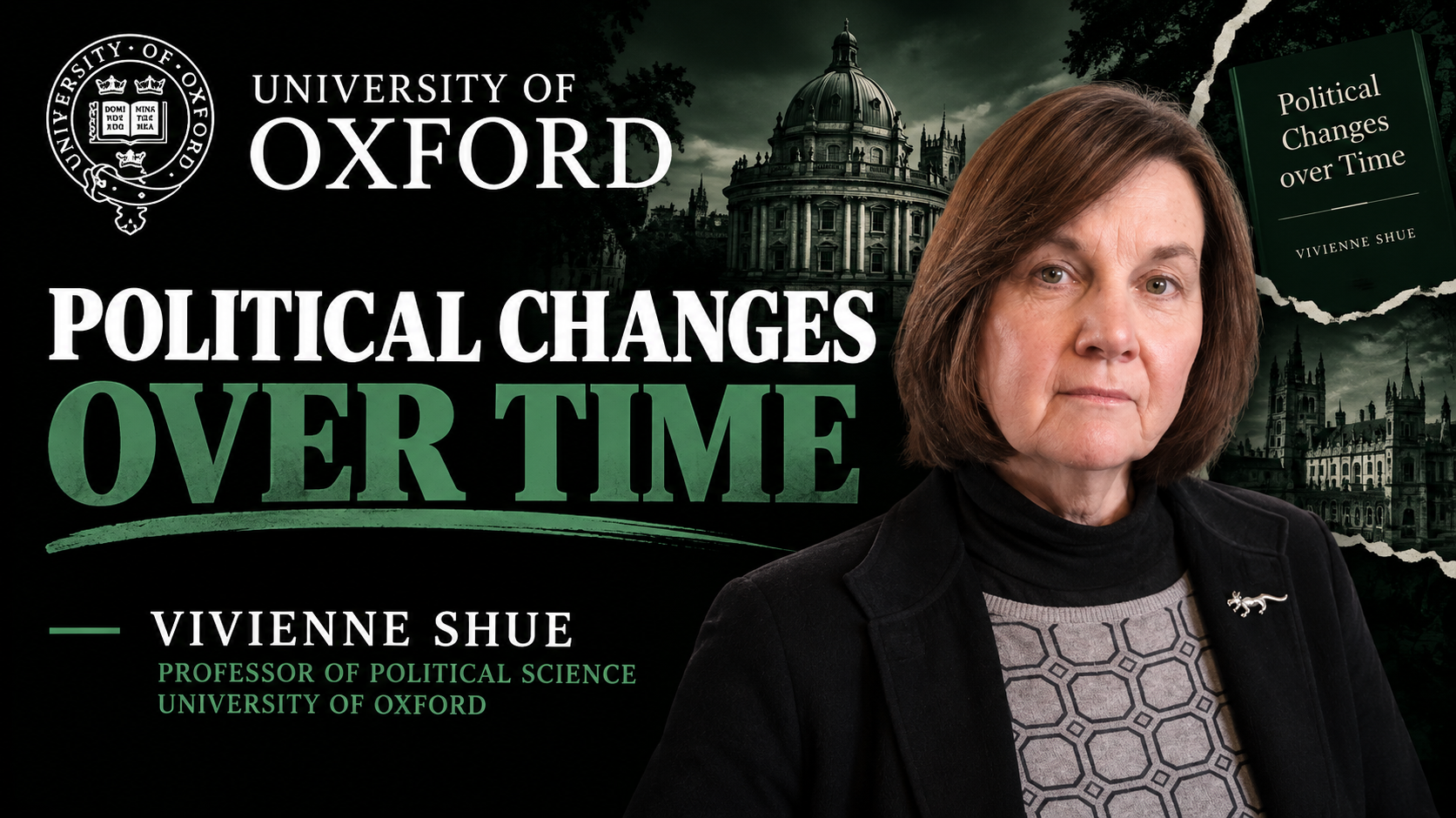
Vivienne Shue

Vivienne Shue

University of Oxford — Emeritus Professor of Chinese Politics

Chinese Politics, State-Society Relations

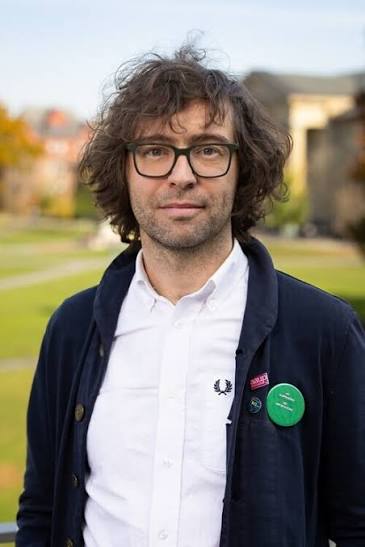
David Bateman

David Bateman

Cornell University — Associate Professor of Government

American Politics, Race & Representation

Sheri Berman

Sheri Berman

Barnard College, Columbia University — Professor of Political Science

European Politics, History of Democracy, Social Democracy

Ian Shapiro

Ian Shapiro

Yale University — Sterling Professor of Political Science

Democratic Theory, Power & Distribution

Benjamin Friedman

Benjamin Friedman

Harvard University — William Joseph Maier Professor of Political Economy

Political Economy, Economic History

Jeffrey Miron

Jeffrey Miron

Harvard University — Director of Economic Policy Studies

Libertarian Economics, Drug Policy

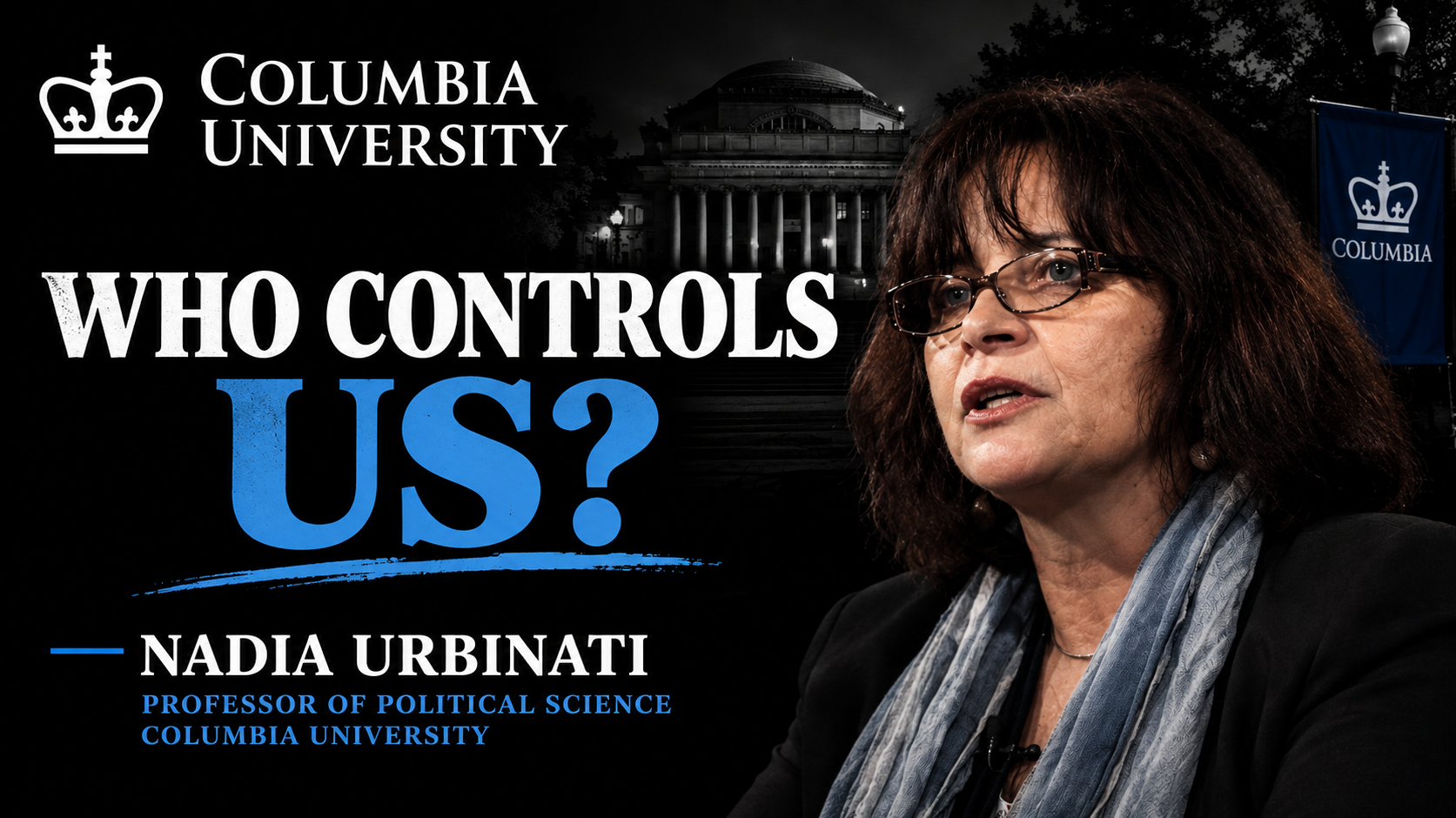
Nadia Urbinati

Nadia Urbinati

Columbia University — Kyriakos Tsakopoulos Professor of Political Theory

Democratic Theory, Political Representation

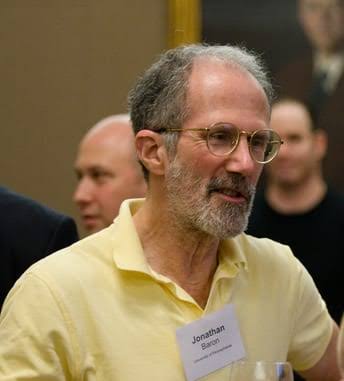
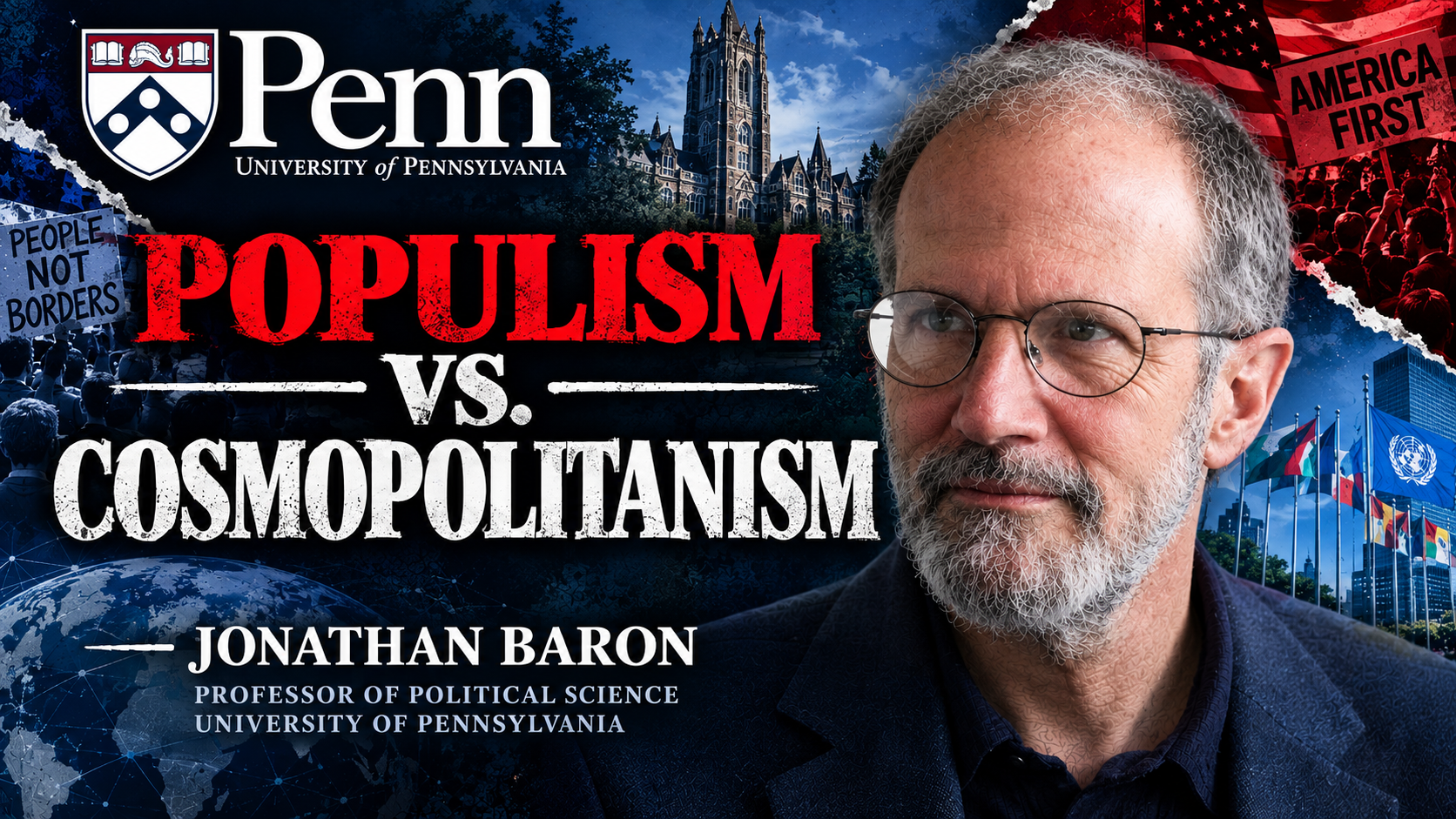
Jonathan Baron

Jonathan Baron

University of Pennsylvania — Professor of Psychology

Decision Theory, Political Psychology

Where We've Reached

Student contributors, community members, and partner institutions spanning 27 countries across every inhabited continent.

0 Countries Reached
0+ Student Contributors
0 Continents Reached
World map
Show all 27 countries

Latest Political News

Curated global and local political coverage, updated in real-time.

Loading Latest News

Fetching real-time global political news from leading sources...

Connecting to RSS Feed

Press Room

Browse our collection of articles, research papers, book reviews, commentary, and more.

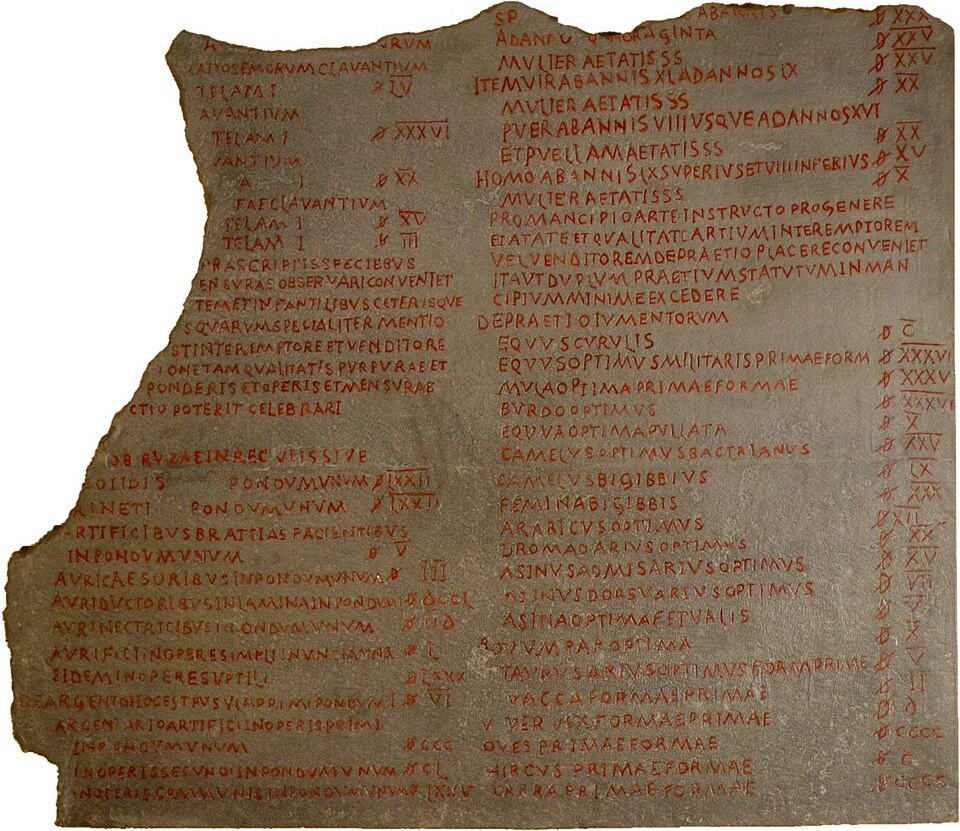
The Emperor Who Tried to Ban High Prices

The Emperor Who Tried to Ban High Prices

October 17, 2026 · Click to read
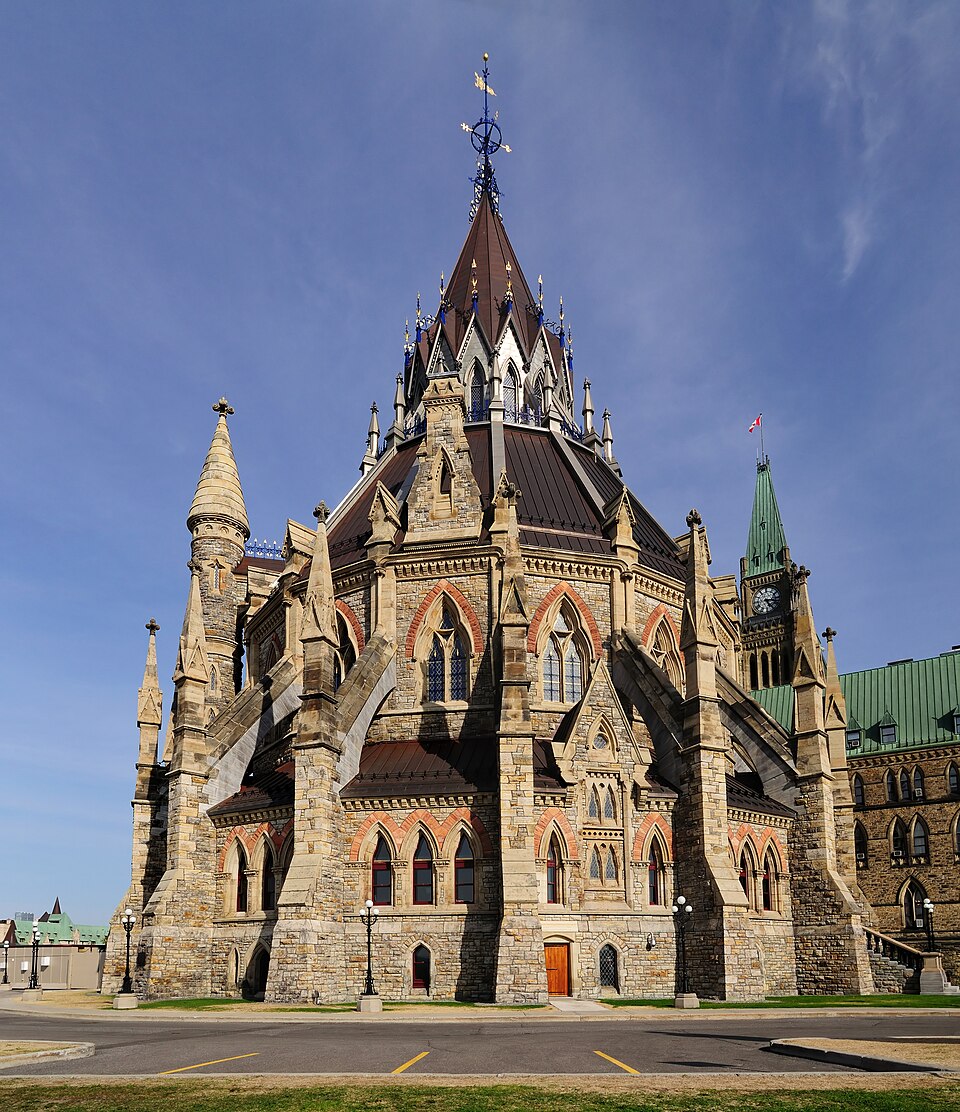
Canada Dark Money

The Country That Banned Dark Money

October 10, 2026 · Click to read
Ken Saro-Wiwa

The Man Who Beat the Oil Companies

October 3, 2026 · Click to read
Make It 16

The Teenagers Who Changed Election Laws

September 26, 2026 · Click to read
The Billionaires Who Control What You Read

The Billionaires Who Control What You Read

September 19, 2026 · Click to read
The Twelve Men Who Own Half the World

The Twelve Men Who Own More Than Half the World

September 12, 2026 · Click to read
Sherron Watkins

The Woman Who Told the Truth About Enron

September 5, 2026 · Click to read
Kibaale Village

The Village That Built Its Own Hospital

August 29, 2026 · Click to read
Singapore

The Country That Became Rich by Being Honest

August 22, 2026 · Click to read
Falcone and Borsellino

The Judges Who Fought the Mafia and Won

August 15, 2026 · Click to read
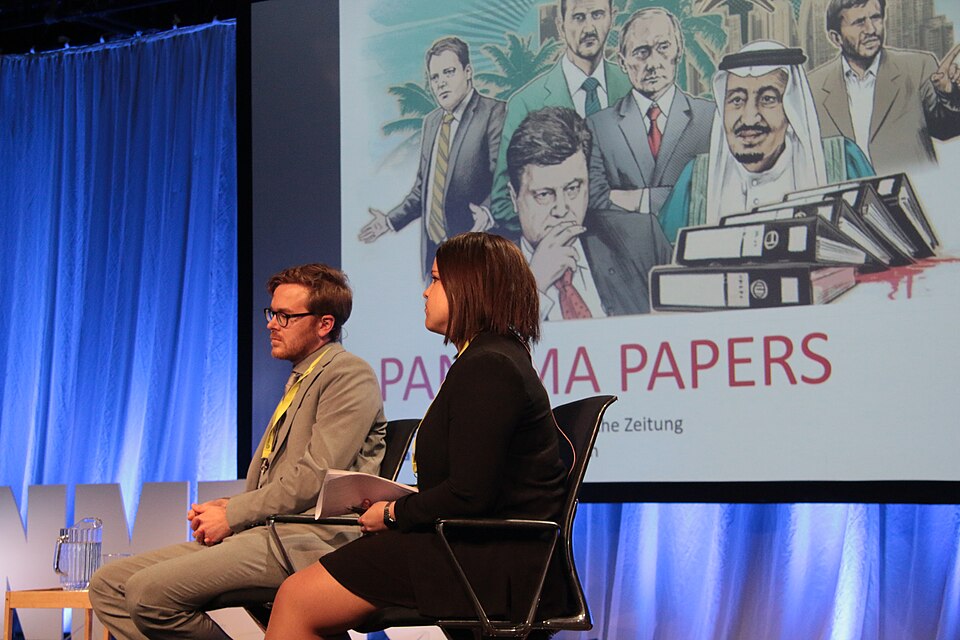
Panama Papers

The Journalists Who Exposed the World's Biggest Secret

August 8, 2026 · Click to read
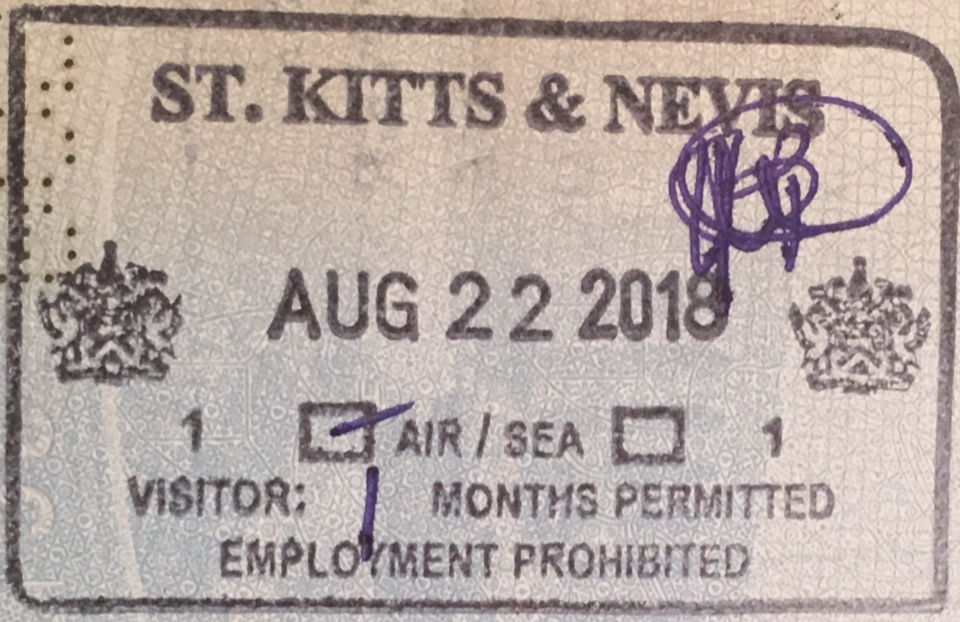
The Country That Sold Its Passports

The Country That Sold Its Passports

August 1, 2026 · Click to read
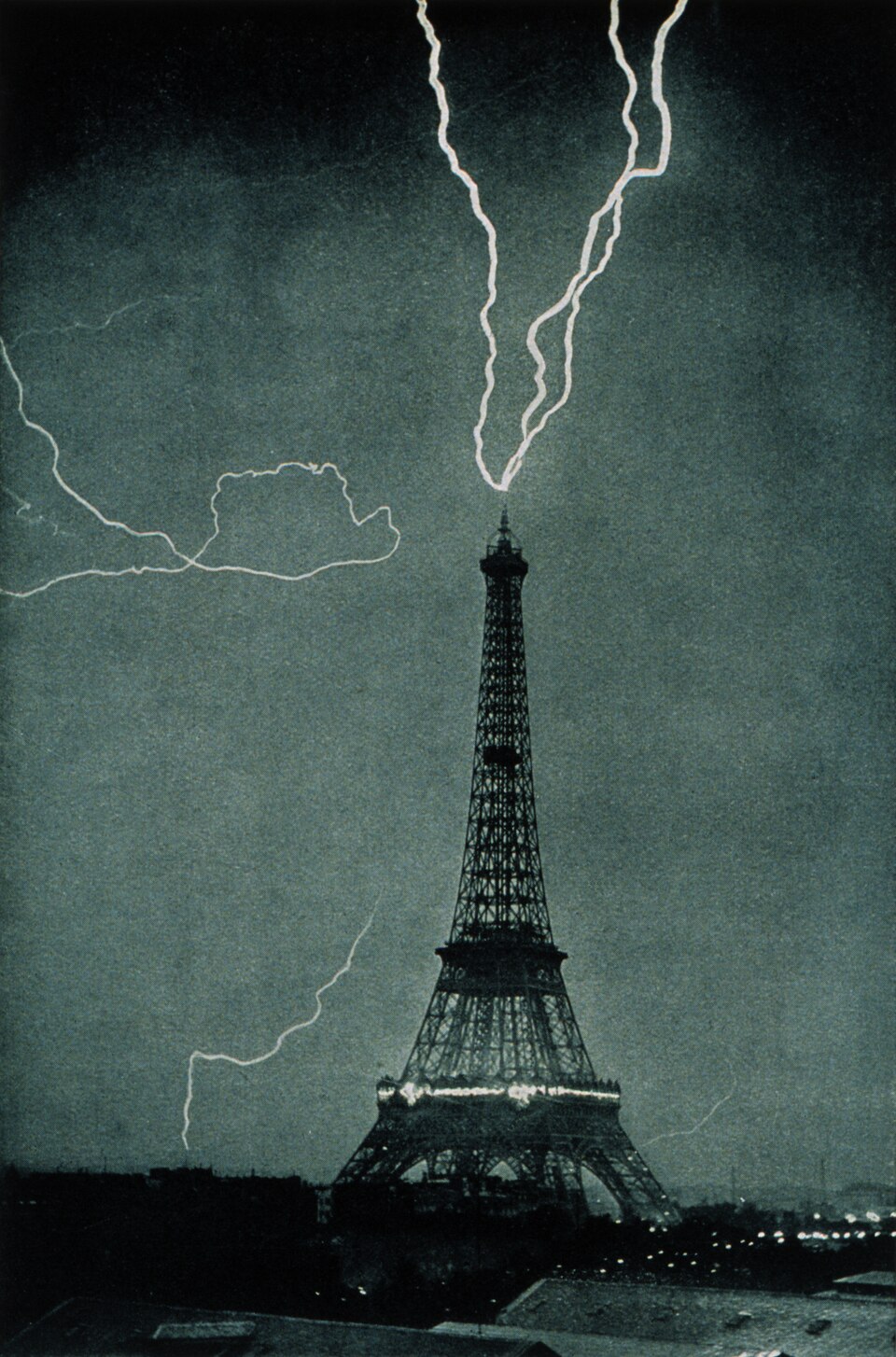
The Man Who Sold the Eiffel Tower

The Man Who Sold the Eiffel Tower

July 25, 2026 · Click to read
The Woman Who Beat the Lottery

The Woman Who Beat the Lottery

July 18, 2026 · Click to read
The Man Who Threw Away $500 Million

The Man Who Threw Away $500 Million

July 11, 2026 · Click to read
The Pizza Worth $100 Million

The Pizza That Was Worth $100 Million

July 4, 2026 · Click to read
The Man Who Printed His Own Money

The Man Who Printed His Own Money

June 27, 2026 · Click to read
The Government That Paid People to Leave

The Government That Paid People to Leave

June 20, 2026 · Click to read
The Economy That Ran on Cigarettes

The Economy That Ran on Cigarettes

June 13, 2026 · Click to read
The Bank That Robbed Itself

The Bank That Robbed Itself

June 6, 2026 · Click to read
The 1869 Gold Panic

The 1869 Black Friday Gold Panic

May 30, 2026 · Click to read
Prices Doubled Every 15 Hours

The Country Where Prices Doubled Every 15 Hours

May 23, 2026 · Click to read
The Man Who Sold a Country That Didn't Exist

The Man Who Sold a Country That Didn't Exist

May 16, 2026 · Click to read
Nicholas Winton

The Man Who Saved 669 Children and Never Told Anyone

May 9, 2026 · Click to read
The Roundabout to Nowhere

The $1.5 Million Roundabout to Nowhere

May 2, 2026 · Click to read
The Spy Balloons

The Spy Balloons That Started a War

April 25, 2026 · Click to read
Stanislav Petrov

The Man Who Saved the World from Nuclear War

April 18, 2026 · Click to read
The 38-Minute War

The War That Lasted 38 Minutes

April 11, 2026 · Click to read
Wars Fought Over Salt and Sugar

The Wars Fought Over Salt and Sugar

April 4, 2026 · Click to read
Monkeys and Elections

Monkeys, Elections, and the Science of Politics

March 28, 2026 · Click to read
The Google Search That Changed a Country

The Google Search That Changed a Country

March 21, 2026 · Click to read
The President's White House Tiger

The President Who Kept a Tiger in the White House

March 14, 2026 · Click to read
The Football War

The Football War That Lasted 100 Hours

March 7, 2026 · Click to read
The Monopoly Board Escape Kits

The Monopoly Board That Helped Prisoners Escape

February 28, 2026 · Click to read
The Rock Concert That Helped End the Cold War

The Rock Concert That Helped End the Cold War

February 21, 2026 · Click to read
The Forest Path That Connects Two Countries

The Forest Path That Connects Two Countries

February 14, 2026 · Click to read
The Piece of Land That Belongs to Nobody

The Piece of Land That Belongs to Nobody

February 7, 2026 · Click to read
The Dumbest Taxes in History

The Dumbest Taxes in History

January 31, 2026 · Click to read
The House in Two Countries

The House That Is in Two Countries at Once

January 24, 2026 · Click to read
The Island That Changes Countries

The Island That Changes Countries Every Six Months

January 17, 2026 · Click to read
The Postage Stamp That Became a Fortune

The Postage Stamp That Became a Fortune

January 10, 2026 · Click to read
Star Wars and the Cold War

Star Wars: The Lie That Won the Cold War

January 3, 2026 · Click to read
Hot Air Balloon Escape

The Families Who Escaped in Hot Air Balloons

December 27, 2025 · Click to read
The Crisis That Started with One Coin

The Financial Crisis That Started with One Coin

December 20, 2025 · Click to read
The Cosmonaut Left in Space

The Cosmonaut Who Was Left in Space

December 13, 2025 · Click to read
War of Eggs and Tomatoes

The War of Eggs and Tomatoes

December 6, 2025 · Click to read
Soviet Ocean Floor Taps

The Soviet Spies Who Tapped the Ocean Floor

November 29, 2025 · Click to read
Mailed Children

When Americans Mailed Their Children

November 22, 2025 · Click to read
638 Ways to Kill Castro

The 638 Ways the CIA Tried to Kill Fidel Castro

November 15, 2025 · Click to read
Acoustic Kitty

Acoustic Kitty: The CIA's Plan to Turn a Cat Into a Spy

November 8, 2025 · Click to read
King of Bir Tawil

The Student Who Declared Himself King of a Desert No Country Claimed

October 26, 2025 · Click to read
America's Animal Mayors

America's Animal Mayors: When Cats and Goats Entered Local Politics

October 20, 2025 · Click to read
Pepsi's Soviet Navy

Pepsi's Soviet Navy: The Strange Deal That Put Submarines on a Soft-Drink Company's Balance Sheet

October 13, 2025 · Click to read
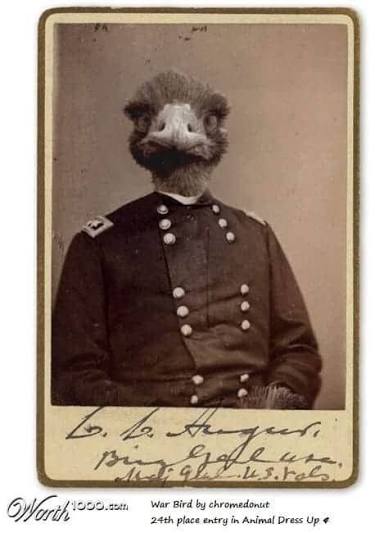
The Great Emu War

The Great Emu War: When Australia Sent Soldiers to Fight Its Birds

October 8, 2025 · Click to read
Civitas Politics Issue 01

Civitas Politics — Issue 01 (Fall 2025)

27 pages · Scroll to read
Civitas Politics Issue 02

Civitas Politics — Issue 02 (Winter 2025-2026)

38 pages · Scroll to read
Civitas Politics Issue 03

Civitas Politics — Issue 03 (Spring 2026)

38 pages · Scroll to read
Civitas Politics Issue 04

Civitas Politics — Issue 04 (Summer 2026)

38 pages · Scroll to read
Animal Farm

Animal Farm — George Orwell

Click to read
The Dictator's Handbook

The Dictator's Handbook: Why Bad Leaders Stay in Power

Click to read
Seeing Like a State

Seeing Like a State: How Good Intentions Destroyed Millions of Lives

Click to read
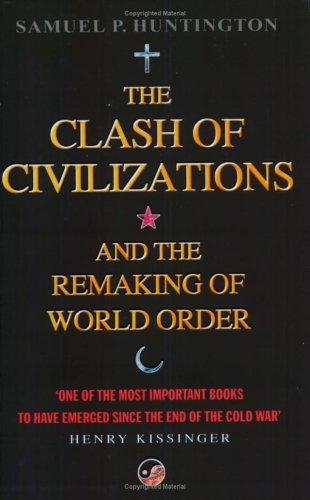
The Clash of Civilizations

The Clash of Civilizations: The Book That Defined a Generation

Click to read
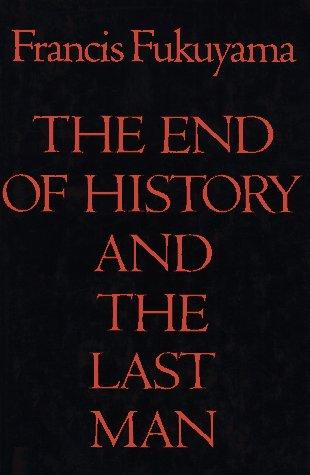
The End of History and the Last Man

The End of History and the Last Man

Click to read
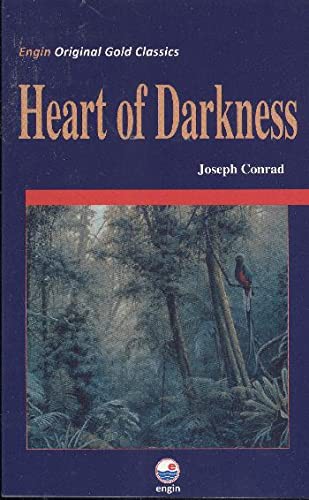
Heart of Darkness

Heart of Darkness: A Voyage into the Human Soul

Click to read
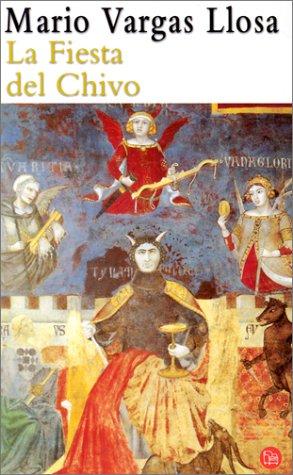
The Feast of the Goat

The Feast of the Goat: Inside the Mind of a Dictator

Click to read
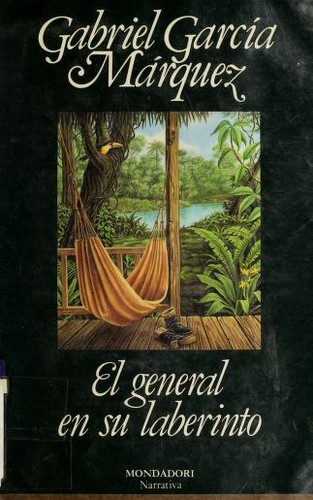
The General in His Labyrinth

The General in His Labyrinth: The Last Journey of the Liberator

Click to read
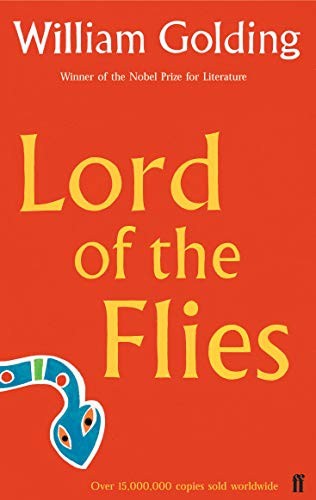
Lord of the Flies

Lord of the Flies: The Darkness Beneath Civilization

Click to read
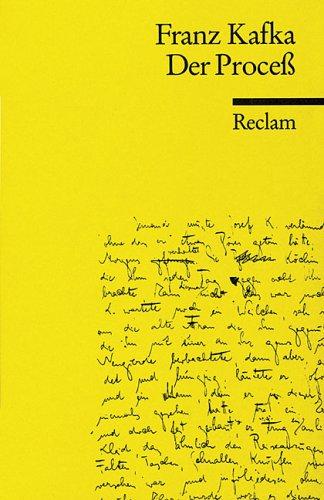
The Trial

The Trial: Guilty Without a Crime

Click to read
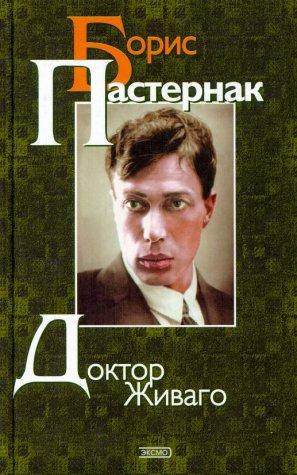
Doctor Zhivago

Doctor Zhivago: A Poet in the Ruins of Revolution

Click to read
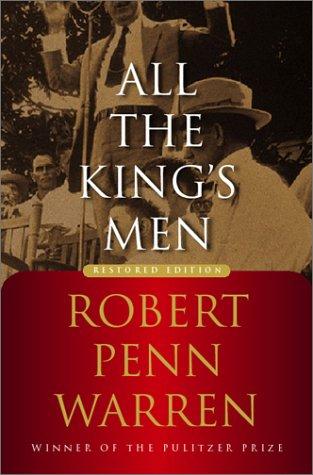
All the King's Men

All the King's Men: Power and the Man It Destroys

Click to read
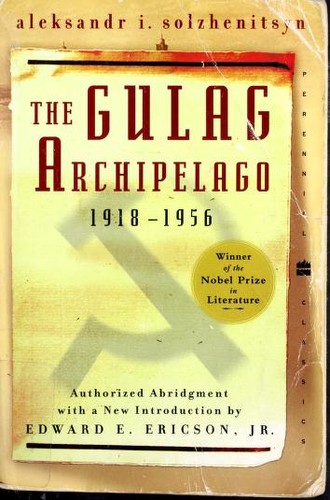
The Gulag Archipelago

The Gulag Archipelago: The Empire of Camps

Click to read
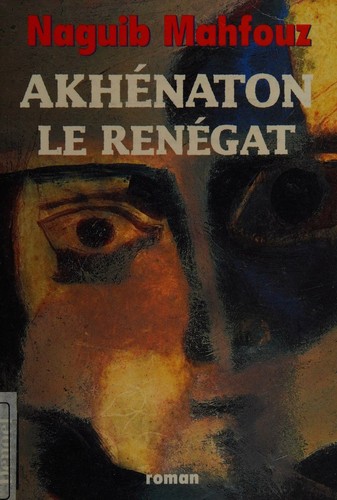
Akhenaten and Sultan and Sheikh

Akhenaten and Sultan and Sheikh: Power, Faith, and Memory

Click to read
The Death of a Politician

The Death of a Politician: Nobody Cared

Click to read
Les Misérables

Les Misérables: A Cathedral of Words

Click to read
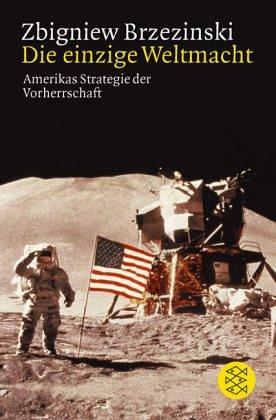
The Grand Chessboard

The Grand Chessboard: American Primacy and Its Geostrategic Imperatives

Click to read
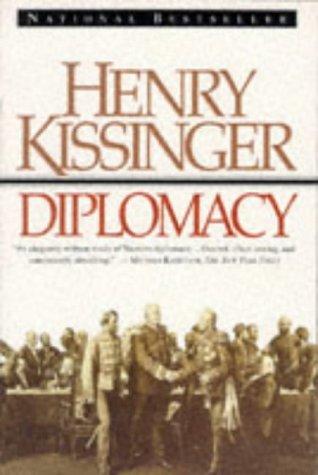
Diplomacy

Diplomacy: Three Centuries of Power and Statecraft

Click to read
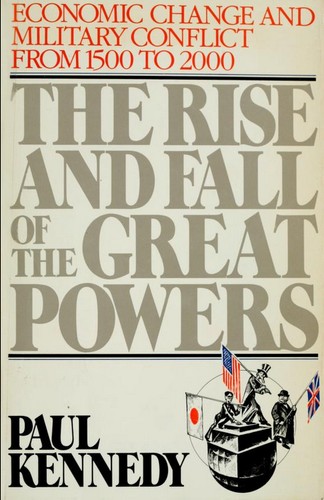
The Rise and Fall of the Great Powers

The Rise and Fall of the Great Powers: Why Empires Overspend Themselves to Death

Click to read
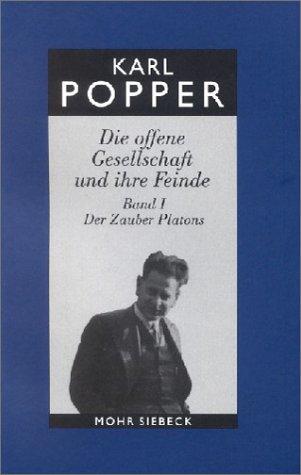
The Open Society and Its Enemies

The Open Society and Its Enemies: A Defense of Freedom Against the Philosophers of Certainty

Click to read
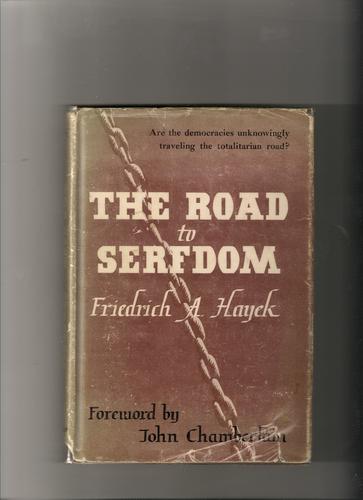
The Road to Serfdom

The Road to Serfdom: Why Central Planning Leads to Tyranny

Click to read
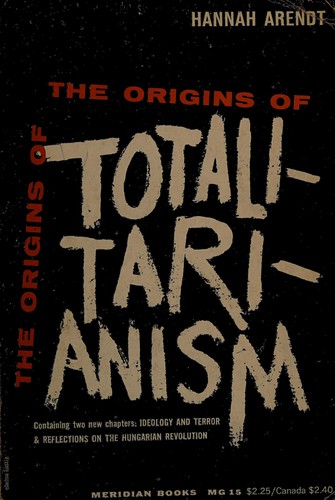
The Origins of Totalitarianism

The Origins of Totalitarianism: How Ordinary Societies Produce Monsters

Click to read
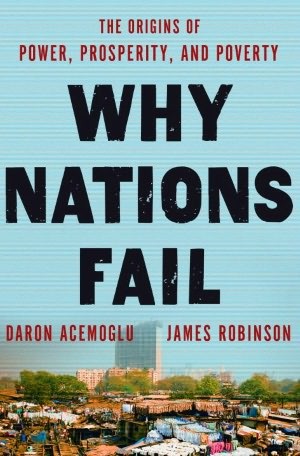
Why Nations Fail

Why Nations Fail: Institutions, Not Geography or Culture, Decide Who Prospers

Click to read
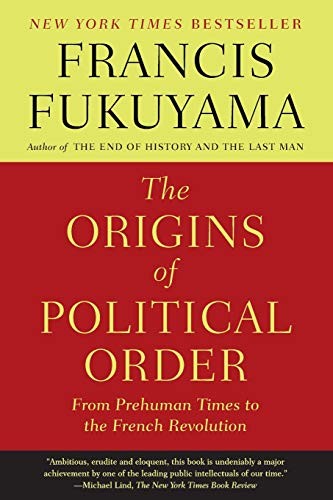
The Origins of Political Order

The Origins of Political Order: How States Learned to Be Free

Click to read
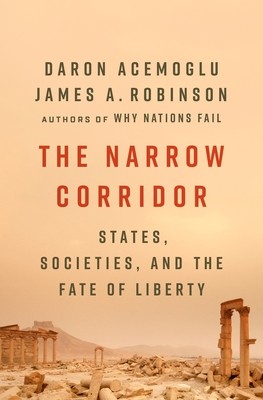
The Narrow Corridor

The Narrow Corridor: The Razor's Edge Between Anarchy and Tyranny

Click to read
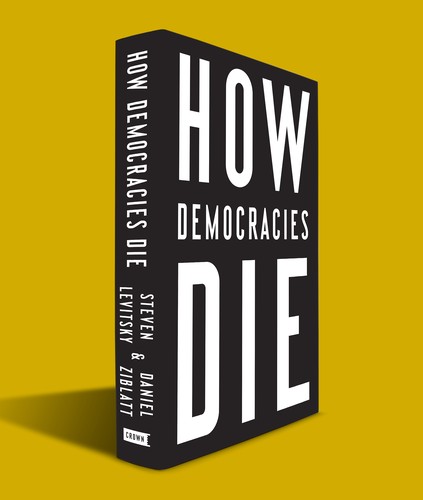
How Democracies Die

How Democracies Die: A Thousand SmallViolations, Not a Single Blow

Click to read
Das Kapital

Das Kapital: The Book That Explained Capitalism to Its Enemies

Click to read
The Age of Surveillance Capitalism

The Age of Surveillance Capitalism: When Your Behavior Became a Product

Click to read
1984

1984: The Machinery That Makes Tyranny Possible

Click to read
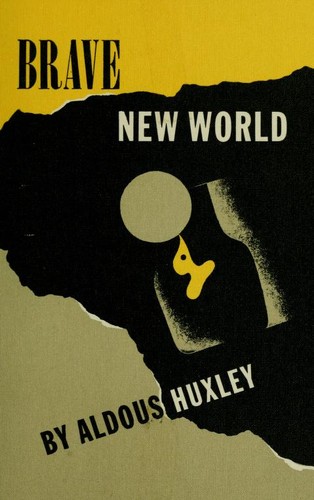
Brave New World

Brave New World: Submission Through Comfort

Click to read
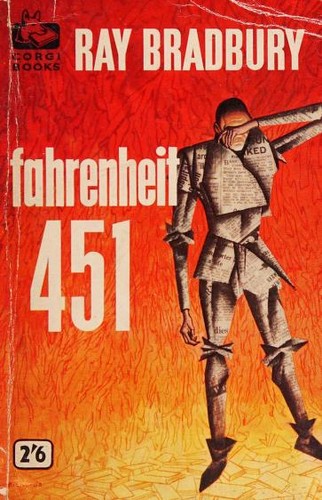
Fahrenheit 451

Fahrenheit 451: The War Against Attention

Click to read
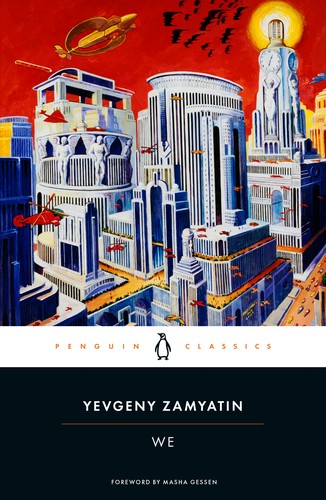
We

We: Engineering Away the Unpredictability of Being Human

Click to read
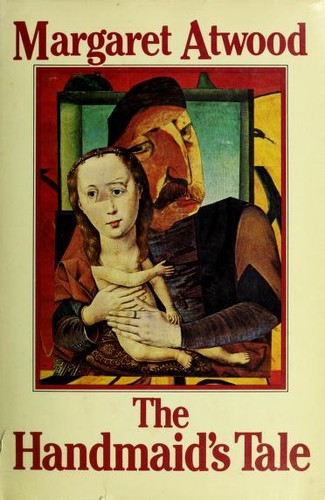
The Handmaid's Tale

The Handmaid's Tale: How Oppression Becomes Respectable

Click to read
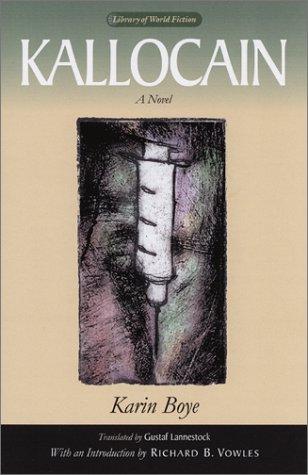
Kallocain

Kallocain: The State That Wanted Your Thoughts

Click to read
War and Peace

War and Peace: History as a Crowded Human Experience

Click to read
The Grapes of Wrath

The Grapes of Wrath: What a Society Owes Its Discarded

Click to read
And Quiet Flows the Don

And Quiet Flows the Don: A World Coming Apart

Click to read
To Kill a Mockingbird

To Kill a Mockingbird: Decency Without a Result

Click to read
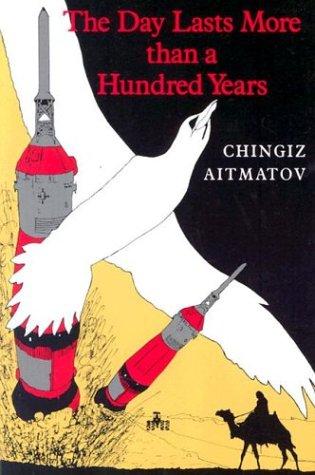
The Day Lasts More Than a Hundred Years

The Day Lasts More Than a Hundred Years

Click to read
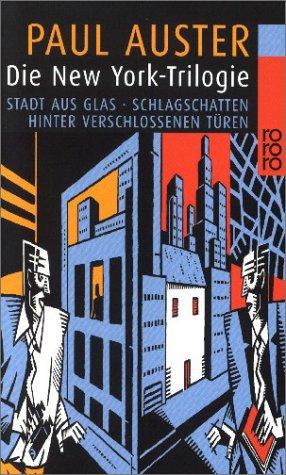
The New York Trilogy

The New York Trilogy: When the Detective Loses Himself

Click to read
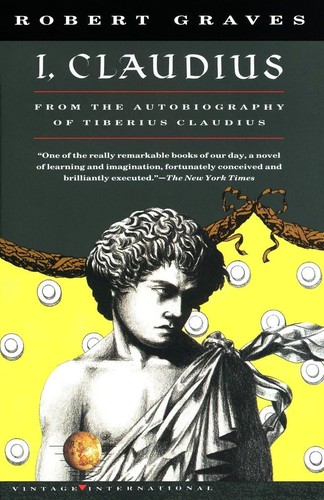
I, Claudius

I, Claudius: The Fool Who Survived the Palace

Click to read
Document cover

Civitas Politics — Official Statement

Coming soon · PDF upload pending

Civitas Podcasts

In-depth conversations on politics, diplomacy, and youth leadership.

Episode 2 cover

Episode 2

Professor Sheri Berman about Democracy

Episode 3 cover

Episode 3

Professor Ian Shapiro about Democracy

Episode 4 cover

Episode 4

Professor Jeffrey Miron about the Government Control

Episode 5 cover

Episode 5

Professor Benjamin Friedman about Economics

Episode 6 cover

Episode 6

Professor Nadia Urbinati about Who Controls Us

Episode 7 cover

Episode 7

How to Think Better About Politics

Episode 8 cover

Episode 8

Professor Vivienne Shue explains Political Change Over Time

Episode 9 cover

Episode 9

Professor Matthew Evangelista talks about Technology and Politics

Episode 10 cover

Episode 10

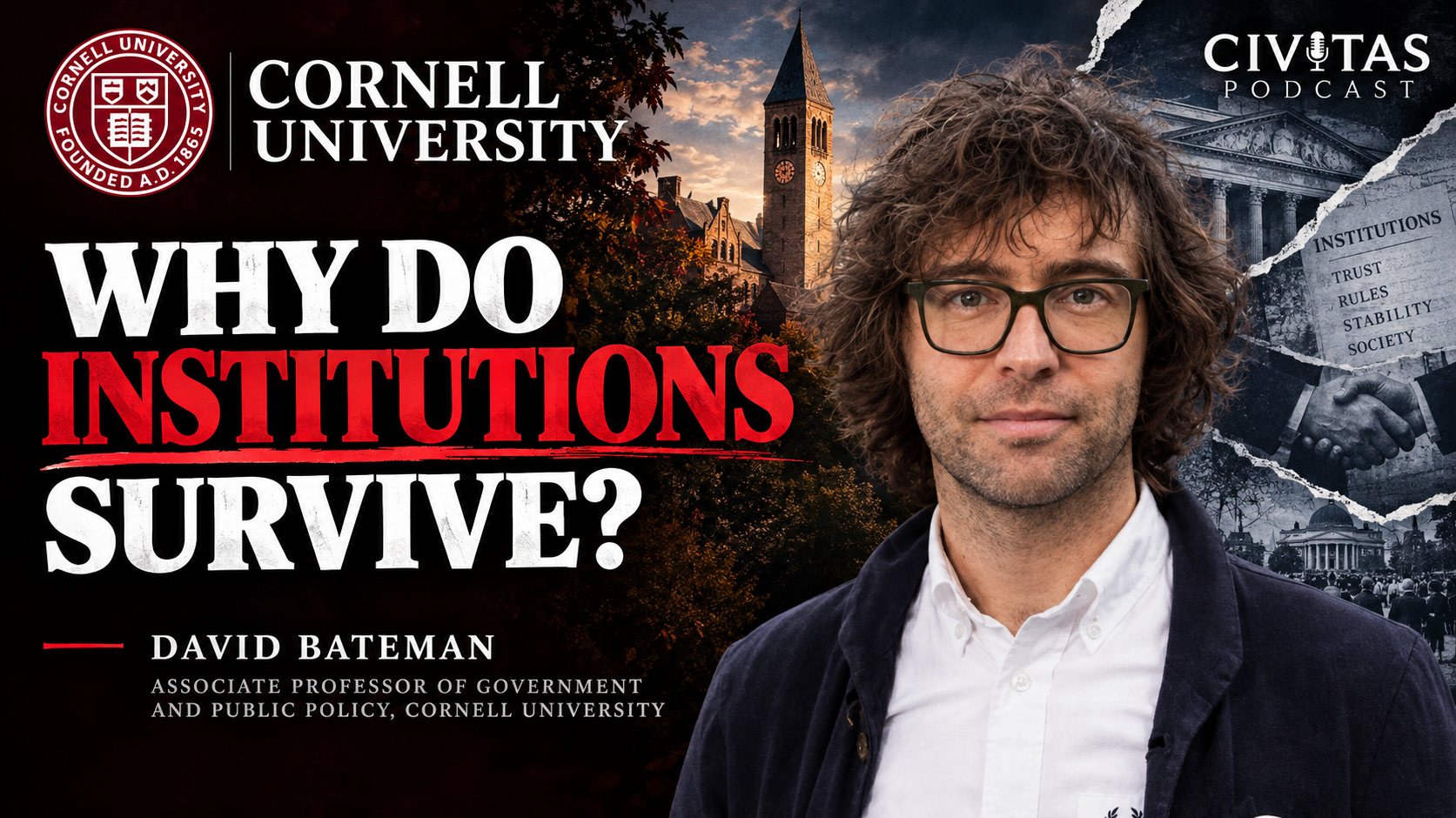
Professor David Bateman explains Why Do Institutions Survive

User Voices

Student voices, analytical articles, research papers, and opinion pieces — coming soon.

✦ Coming soon — accepting student submissions

User Voices — Launching Soon

The User Voices section is currently in development. Soon you will be able to read analytical articles, research papers, and opinion pieces submitted by students from 27 countries worldwide. Stay tuned for our official launch!

Coming Soon

Submit Your Voice

Share your analytical article, research paper, academic essay, or opinion piece with the Civitas community.

Click to upload or drag and drop your file here

Supported formats: .doc, .docx, .pdf (Max 10 MB)

file.pdf

Become Part of Civitas

We are building the core team. Whether you write, design, or manage — there is a place for you.

Become a Staff Writer

For youth who want to edit, research, and write consistently about politics, international relations, and social issues. Gain editorial experience, build your portfolio, and have your work featured across our platforms.

Learn More

Join as SMM or Designer

For media creators, graphic designers, and social growth hackers who want to shape the visual identity and digital presence of a growing political platform. Run campaigns, design assets, and grow our community.

Learn More

Send Your Application

Collaborate With Us

We welcome partnerships with educational institutions, experts, and organizations that share our vision.

School & University Partnerships

We invite local educational institutions to open official Civitas chapters on their campuses. Partner with us to provide your students with a platform for political discourse, analytical writing, and civic engagement. Fill out the form below to start the conversation.

Guest Speakers & Experts

We invite political scientists, diplomats, professors, and policy experts to speak at our events, contribute to our podcast, or mentor our writers. Share your expertise and help shape the next generation of politically conscious youth.

General Inquiries

civitasglobal05@gmail.com
The Great Emu War

The Great Emu War: When Australia Sent Soldiers to Fight Its Birds

October 8, 2025

In 1932, the Australian government sent soldiers with machine guns to Western Australia. Thousands of emus had been destroying wheat crops, and the farmers wanted help. The soldiers expected to reduce the bird population. Instead, the operation showed how hard it is to use military tactics against a problem in the natural world.

The campaign lasted several weeks. Newspapers across the country covered it, and it became known as the Great Emu War.

Wheat Farmers Ask for Help

The operation took place during the Great Depression. Western Australian wheat farmers were already facing falling prices and difficult growing conditions. Many were former servicemen who had received farmland through government settlement programs. Drought, low wheat prices, and damage to crops and fences had left some struggling to keep their farms.

Emus moved through the wheat districts, ate the crops, and broke the fences. Rabbits came through the gaps. Farmers asked the federal government for help, and Defence Minister Sir George Pearce approved a military deployment.

The Soldiers Arrive

On November 2, Major G.P.W. Meredith and two soldiers from the Royal Australian Artillery arrived in the Campion district. They had two Lewis machine guns and 10,000 rounds of ammunition. Their task was to help farmers reduce the number of emus damaging their land.

The plan ran into problems immediately. The birds scattered into smaller groups when approached, which made them hard to target. On November 4, an ambush near a water source failed after a gun jammed. Only about a dozen birds were reportedly killed.

The equipment did not match the task. Emus could move quickly across open country, and attempts to engage large groups often ended with scattered birds and few results. Newspapers reported the failures, and readers found them funny.

They Try Again, Then Leave

The first deployment was withdrawn in early November, but farmers pushed for another effort. The government agreed. Meredith's unit returned, and operations continued into December.

The final numbers are disputed. Meredith reported that his forces had killed 986 emus by December 10, with more believed to have died from their injuries. Other accounts disputed those numbers, and nobody could verify them. The military effort did not solve the agricultural problem, and the deployment was abandoned.

The government turned to other methods, including bounty schemes. Farmers still lost crops to wildlife, and the army did not come back.

The name "Great Emu War" stuck because it is funny. Behind the nickname was a serious dispute over how to protect struggling farmers during an economic crisis. The government thought soldiers could solve a farming problem. They could not.

Pepsi's Soviet Navy

Pepsi and Soviet Submarines

October 13, 2025

In 1989, PepsiCo acquired 17 Soviet submarines and three warships. Many newspapers wrote about it. Some even claimed Pepsi had become the world's sixth-largest navy. The reality was much simpler: the Soviet economy was collapsing, and Pepsi was trying to keep its business alive.

What Happened?

In the 1980s, Pepsi wanted to do business in the Soviet Union. But the Soviet ruble could not be exchanged for Western currency. So the two sides turned to barter: the Soviets paid with vodka and ships.

By 1989, Pepsi had acquired 17 outdated submarines, one cruiser, one frigate, and one destroyer. These vessels were not for military use; they were meant to be sold as scrap. A Norwegian partner was also involved.

Myth and Reality

The claim that Pepsi became the "world's sixth fleet" is exaggerated. With 17 submarines, a country could rank around seventh in the world by attack-submarine numbers. But owning obsolete vessels headed for dismantling is not the same as operating a navy.

Pepsi was not trying to build military power. It wanted to sell soft drinks in the Soviet Union. But this was no ordinary trade.

In 1990, PepsiCo signed a $3 billion deal with the Soviet Union. The agreement called for expanded Pepsi production. Part of the payment was still to be made in vodka and ships. But the next year, the Soviet Union collapsed. Pepsi had to deal with a new market and a new government.

The "Pepsi navy" makes a good headline. But the real story is even more interesting: because the Soviet ruble was worthless abroad, a soft-drink company ended up trading in vodka and ships.

America's Animal Mayors

America's Animal Mayors: When Cats and Goats Entered Local Politics

October 20, 2025

In small American communities, some of the strangest political careers have belonged to candidates who could never deliver a campaign speech. A cat in Alaska became a town's unofficial mayor. A goat in Vermont won a mayoral election. Their campaigns were less about governing than community spirit, local publicity and, in some cases, fundraising.

Take Stubbs, the orange cat who became a fixture of Talkeetna, Alaska, in 1997. He was widely described as an elected mayor, but the story needs a qualification: Talkeetna has no formal municipal mayor, and NPR later reported that there had been no official mayoral election. Stubbs's title was honorary. Still, he became a local celebrity, attracting visitors who wanted to meet the feline figurehead.

Then came Lincoln, a Nubian goat who won Fair Haven, Vermont's honorary pet-mayor contest in 2019. He beat 15 other animal candidates, receiving 13 votes in a town of about 2,500 people. The initiative began as a fundraiser for a playground and evolved into a civics lesson for local children. Lincoln's duties included appearing at community events, not setting policy or managing a municipal budget.

These elections are not evidence that animals can govern better than people. The posts are symbolic, and the animals have no executive authority. But the contests do reveal something about local politics: residents are willing to turn an election into a community event, especially when it raises money, draws visitors or gives children a playful introduction to civic life.

The joke, of course, is hard to miss. A cat cannot raise taxes, and a goat cannot promise a new road. Yet their appeal may lie precisely in what they represent: a break from the usual political theater, without the expectation that they can deliver on a platform.

America's animal mayors are not running city hall. They are doing something smaller, but still useful: giving their communities a reason to gather, laugh and take part.

King of Bir Tawil

The Student Who Declared Himself King of a Desert No Country Claimed

October 26, 2025

In 2017, an Indian software engineer named Suyash Dixit travelled to a remote stretch of desert between Egypt and Sudan, planted a flag and declared himself king. He named his self-proclaimed state the Kingdom of Dixit and said he had notified the United Nations. There was just one problem: declaring a country into existence does not make it one.

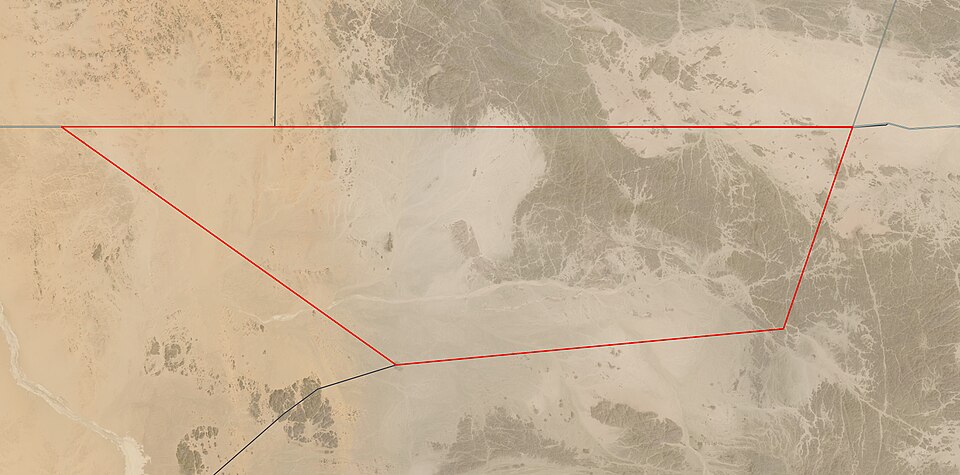
The territory, known as Bir Tawil, covers roughly 2,060 square kilometres of arid land along the Egyptian-Sudanese border. Its unusual status stems from a dispute over two different boundary lines drawn during British rule. Egypt favors the 1899 political boundary, while Sudan relies on an administrative boundary established in 1902. The competing positions leave each country claiming the nearby Hala'ib Triangle while neither asserts sovereignty over Bir Tawil.

For an aspiring monarch, the arrangement might look like an opening. Dixit travelled to the area, planted a flag and announced his claim to the land. He also reportedly sent a message to the United Nations asking for recognition of his new kingdom.

But the gap between declaring independence and achieving statehood is substantial. A flag, a name and a royal title do not establish sovereignty, and Dixit's claim received no international recognition. The United Nations did not turn his announcement into a new member state.

Dixit was not the first person drawn to Bir Tawil's unusual position on the map. In 2014, American farmer Jeremiah Heaton travelled there and declared the creation of the Kingdom of North Sudan, hoping to make his young daughter a princess. Other self-proclaimed states have followed, each attempting to turn a rare territorial anomaly into a political project.

The irony is that Bir Tawil is not a prize that Egypt and Sudan simply forgot to claim. Its status is tied to a much larger dispute over territory that both countries want. Claiming Bir Tawil under one interpretation of the border could undermine a country's position over the Hala'ib Triangle.

That is what makes the story more than an eccentric tale about a student who wanted a crown. Borders are not blank spaces waiting for someone to plant a flag. They are shaped by treaties, competing claims and the willingness of other states to recognize them.

Dixit could call himself king. The international system, however, had not agreed to give him a kingdom.

Acoustic Kitty

Acoustic Kitty: The CIA's Plan to Turn a Cat Into a Spy

November 8, 2025

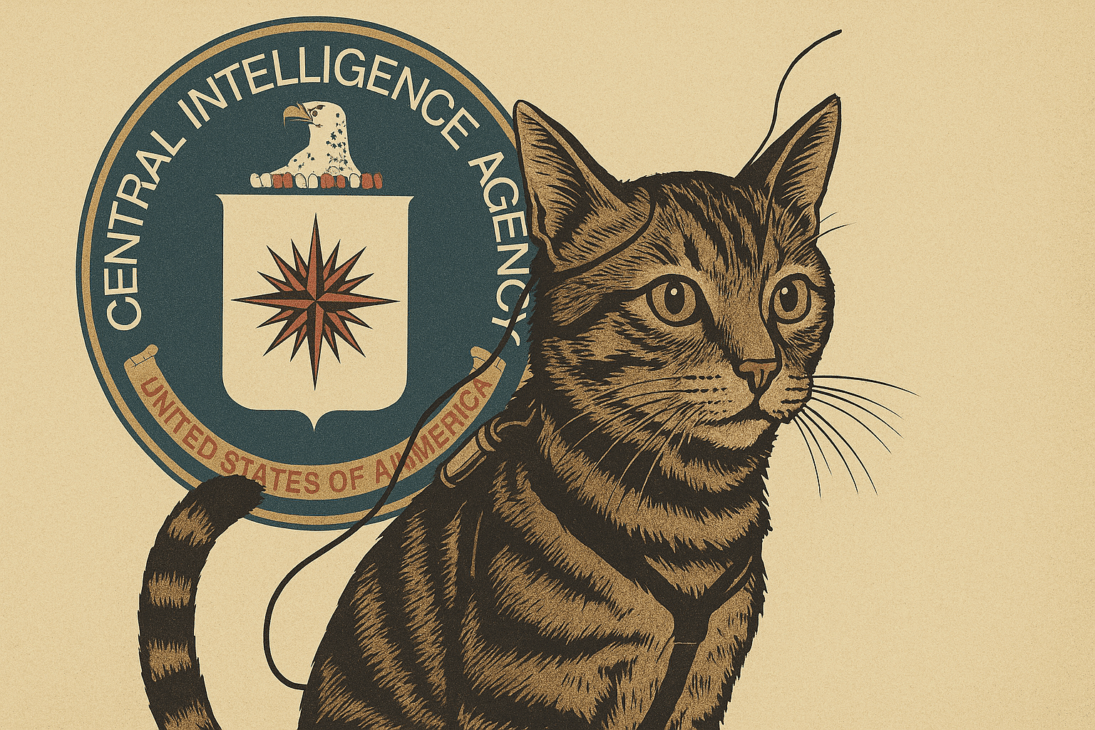
During the Cold War, the CIA spent time and money trying to solve a problem familiar to every intelligence agency: how do you listen to a conversation without being noticed? Its answer, developed in the 1960s, was to turn a cat into a walking surveillance device.

The project was called Acoustic Kitty. Technicians implanted a microphone in the animal's ear, placed a radio transmitter beneath its skin and worked an antenna into its fur. The theory was that a cat could approach people in public, linger nearby and pick up conversations without attracting the attention a human spy might.

There was one complication. Cats do not take orders particularly well.

According to the CIA's later account, the technology itself worked. The animal did not. During field tests, the cat wandered wherever it pleased rather than staying close to the people it was supposed to monitor. The agency had managed to engineer a listening device, but not a reliable way to direct it.

The project is often said to have cost $20 million, a figure repeated in accounts of the episode but not firmly established by the publicly available records. By 1967, the CIA had concluded that cats were impractical for the job. Acoustic Kitty was abandoned before it was used in an operational mission.

Then came the ending that helped turn the project into a Cold War legend. In the most familiar version of the story, the cat was released near its targets and promptly struck by a taxi. It is a memorable punchline, but the evidence is less conclusive than the story suggests. The CIA later said the tale originated as a joke by a former official, while an earlier account had presented the accident as fact.

Acoustic Kitty was real. The taxi story remains disputed, and the familiar $20 million price tag deserves caution. What the record does establish is that the CIA tried to turn an ordinary animal into a sophisticated intelligence tool, tested the idea and decided it was not practical.

The failure was not simply a matter of faulty equipment. The microphone and transmitter could be made to work; the cat could not be counted on to do what the mission required. In the end, the agency ran into a problem that no amount of Cold War ingenuity could easily solve: a surveillance device with a mind of its own.

638 Ways to Kill Castro

The 638 Ways the CIA Tried to Kill Fidel Castro

November 15, 2025

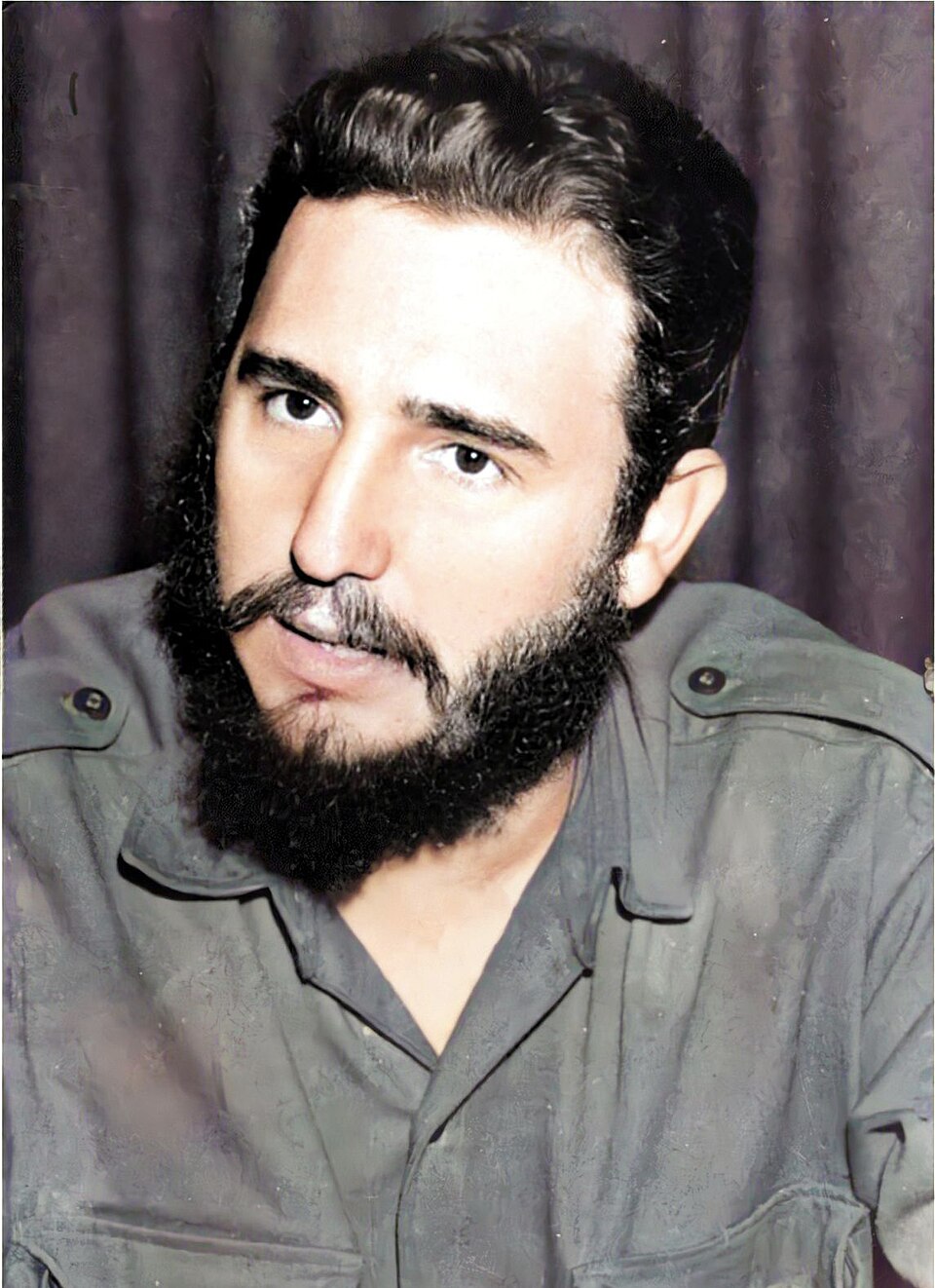
Fidel Castro smoked cigars, drank milkshakes, went scuba diving, and gave speeches that lasted for hours. For nearly fifty years, the United States government tried to kill him. According to a 2006 documentary by Britain's Channel 4, the CIA plotted at least 638 assassination attempts. Most failed, some were absurd, and a few were so strange they sound like jokes.

The plots started in 1960, less than two years after Castro took power. The first idea was simple: hire the Mafia. The agency approached Sam Giancana and Santo Trafficante Jr., two mobsters who had lost their casino businesses in Havana when Castro nationalized them. The mobsters said yes, but the hit never happened.

Then the CIA turned to science. It built exploding cigars — boxes of Castro's favorite brand with one cigar packed with a small bomb. The bomb would detonate when he put it in his mouth. Castro quit smoking in 1985 for health reasons, and the CIA never got its chance.

There were poison milkshakes. The CIA put botulinum toxin into a chocolate milkshake at the Havana Hilton, where Castro sometimes drank. The waiter was supposed to serve it. The waiter chickened out, and the milkshake melted.

There was a poison pen — a ballpoint pen with a hypodermic needle so fine Castro would not feel it. Nobody ever used it. There was a contaminated scuba suit, dusted with tubercle bacilli and a fungus that caused skin disease. The suit was too small, and Castro never wore it.

There was a bacteria-laced handkerchief, infected with botulism and given to a Cuban official who was supposed to hand it to Castro. The official gave it to someone else, and nothing happened.

There was the "exploding seashell" plan. The CIA thought Castro liked to snorkel in a particular bay, so they planned to place a bomb inside a colorful seashell on the ocean floor. Nobody could figure out how to make it work.

There was the "poison pill in a glass of water" plan. The CIA gave a pill to a Cuban waiter who was supposed to drop it into Castro's drink. The waiter put it in the freezer, the freezer was cleaned out, and the pill was lost.

There was the "LSD in the broadcasting studio" plan. The CIA thought about spraying LSD into the air of a studio where Castro was giving a radio address, to make him sound crazy on live radio. Nobody could figure out how to do it.

Other plans failed the same way: the poisoned ice cream at the Coppelia ice cream parlor, the diving regulator contaminated with tuberculosis and given to a diplomat who gave it to someone else, and the exploding baseball. The CIA tried at least six different times to kill Castro with a poisoned cigar — one laced with botulinum toxin, one that would explode, one that would make him sick. None worked.

They tried putting poison from the manchineel tree, one of the most toxic trees in the world, into Castro's shoes. The poison would soak through his skin. The plan failed.

In 1975, the U.S. Senate's Church Committee investigated the plots. It found that the CIA had tried to kill Castro at least eight times between 1960 and 1965. The report was made public, and the CIA stopped trying. Or maybe it didn't. Nobody knows.

Castro died in 2016 at the age of 90. He outlived nine U.S. presidents, the Soviet Union, and the Cold War. The CIA never got him. The exploding cigars never exploded, the poison milkshakes never melted in his mouth, and the poisoned handkerchiefs never touched his face. The 638 plots, if there really were 638, all failed.

When Americans Mailed Their Children

When Americans Mailed Their Children

November 22, 2025

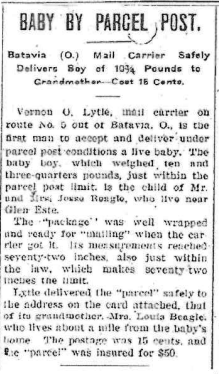
In January 1913, a family in Ohio mailed their baby to their grandmother. The baby was eight months old, and the grandmother lived a few miles away. The parents put the baby in a mail sack, paid 15 cents in postage, and handed the sack to a letter carrier. The baby arrived safely. The post office was not amused.

This was not a one-time prank. Between 1913 and 1915, American families mailed their children through the U.S. Postal Service on a regular basis. It was cheaper than a train ticket, faster than walking, and legal — the postal service had not yet written a rule against it.

The story starts in 1913, when the U.S. Post Office introduced Parcel Post. Before Parcel Post, Americans could only send letters through the mail. If they wanted to send a package, they had to use a private express company, which was expensive. Parcel Post changed that. Now ordinary people could send packages through the mail, and the rules were vague.

The rules said Parcel Post could be used to send "mailable matter." They did not say what counted as mailable matter. They did not say that human beings were not mailable matter. Some parents decided to find out.

On January 1, 1913, the first day of Parcel Post, a couple in Glen Este, Ohio, mailed their son to his grandmother in Batavia. The boy weighed 10 pounds. The postage was 15 cents. The letter carrier, a man named James Beagle, picked up the boy, carried him to Batavia, and delivered him. The boy was fine, but the post office was not happy.

A few weeks later, a man in Pennsylvania mailed his daughter to her aunt. The girl was two, and the postage was 45 cents. She arrived safely. A few weeks after that, a woman in Missouri mailed her son to his father. The boy was three, and the postage was 33 cents. He arrived safely.

The post office was not happy because mailing children was dangerous. Children could get lost, hurt, cold, or hungry, and the post office did not have the equipment, training, or legal authority to keep them safe.

In June 1913, the post office issued a new rule: human beings were not mailable matter, postmasters should not accept children for delivery, and any postmaster who did would be fired. The rule worked. Families stopped mailing their children.

For six months, though, American families mailed their children through the U.S. Postal Service. They mailed babies, toddlers, and children, paying 15, 33, and 45 cents. They sent them to grandmothers, aunts, fathers, and cousins. The children arrived safely. Then the post office wrote a rule, and the practice ended.

The Soviet Spies Who Tapped the Ocean Floor

The Soviet Spies Who Tapped the Ocean Floor

November 29, 2025

In 1971, the Soviet Union discovered something strange on the floor of the Sea of Okhotsk. An American submarine had laid a cable across the seabed. It was a communication line between two U.S. Navy bases. The Soviets realized that if they could tap the cable, they could listen to American military communications. So they did.

The story starts in the 1960s, when the U.S. Navy began laying undersea cables to connect its bases around the world. The cables carried telephone calls, telegrams, and other communications. The Navy thought the cables were safe because they were on the ocean floor. The Navy was wrong.

In 1971, a Soviet submarine found an American cable in the Sea of Okhotsk. The Soviets sent a team of divers to inspect it. The cable was not armored — it was a simple copper cable, easy to tap.

The Soviets built a special device, a pod about the size of a large refrigerator, that could be clamped onto the cable and record the signals passing through it. The Americans called it "Cobra." The Soviets called it something else nobody knows. The pod was powered by a small nuclear reactor, could record for months, was designed to be invisible to American sonar, and was designed to be impossible to find.

The Soviets installed the first pod in 1971 and more over the next few years. They tapped cables in the Sea of Okhotsk, the Barents Sea, and the Baltic Sea. For nearly a decade, they listened to American military communications, learning about submarine movements, naval strategy, and plans. The Americans did not know.

In 1981, the Americans found out. A former National Security Agency employee named Ronald Pelton sold the Soviets information about the tapping operation. The Americans realized their cables had been compromised and launched a search. They found one pod in the Sea of Okhotsk, brought it to the surface, studied it, and were impressed.

The pod was a masterpiece of engineering. It was small, quiet, and powerful, and it had been sitting on the ocean floor for years, recording everything. The Americans realized the Soviets had been listening for a decade and that they had lost a lot of secrets.

They did not know what to do. They could not remove all the pods because they did not know where they were. They could not stop using the cables because the cables were important. They could not build new cables because that would take years. So they did something clever: they built their own pods, tapped Soviet cables, and turned the tables.

The story of the undersea cable tapping is a story about espionage, technology, and two superpowers trying to outsmart each other. It is the story of a device the size of a refrigerator that sat on the ocean floor for years, recording everything, while nobody knew it was there.

The War of Eggs and Tomatoes

The War of Eggs and Tomatoes

December 6, 2025

In 1960s Britain, throwing eggs at politicians was a political act. It was not a crime, not a misdemeanor, not even a disturbance of the peace. It was a form of protest that was protected by law — or at least, that is what some people argued.

The story starts in the 1960s, when British politics was chaotic. Labour was in power, the Conservatives were in opposition, the economy was struggling, and the public was angry. People started throwing things at politicians.

In 1964, a man named Peter Hain threw a tomato at a Labour MP named Patrick Gordon Walker. Hain was a young anti-apartheid activist and Walker was a supporter of apartheid South Africa. Hain was arrested, charged with "insulting behavior," fined £10, and became a folk hero.

In 1965, David Lane threw an egg at the Conservative MP Enoch Powell. Powell was a controversial figure who had given a speech about immigration that many considered racist. Lane was arrested, charged with "insulting behavior," fined £5, and became a folk hero.

In 1966, students threw eggs and tomatoes at Prime Minister Harold Wilson during a speech in Birmingham. They were protesting his support for the Vietnam War. Wilson was hit by a tomato but not hurt. The students were arrested, charged, fined, and became folk heroes.

The pattern repeated itself. Politicians gave speeches, protesters threw eggs and tomatoes, politicians were hit, protesters were arrested, fined, and became folk heroes. The public cheered, the politicians complained, and the police were confused.

The police were confused because throwing eggs and tomatoes was not clearly illegal. It was not assault, because the eggs and tomatoes did not cause injury. It was not vandalism, because they did not damage property. It was not a breach of the peace, because they did not cause a riot. The charge was "insulting behavior," which could mean almost anything.

In 1967, the government clarified the law. Parliament passed the Criminal Justice Act, which made it illegal to throw "any missile" at a person. The act was designed specifically to stop the egg and tomato protests, and they stopped.

For a few years in the 1960s, though, throwing eggs and tomatoes at politicians was a legal form of protest in Britain. It was a way for ordinary people to express their anger and say, "We do not agree with you, and we are not afraid to show it."

The Cosmonaut Who Was Left in Space

The Cosmonaut Who Was Left in Space

December 13, 2025

In May 1991, Sergei Krikalev left Earth. He was a Soviet cosmonaut going to the Mir space station for what was supposed to be a five-month mission. He stayed for ten. When he finally came home, the country he had left no longer existed.

Krikalev launched on May 18, 1991, aboard a Soyuz rocket. He was part of a mission to repair the Mir station. He was 32 years old, had been training for years, and was ready. The Soviet Union was not.

In August 1991, while Krikalev was in orbit, hardline communists attempted a coup against Mikhail Gorbachev. The coup failed, but it weakened the Soviet government, and the country began to fall apart. Krikalev watched from space. He could not vote, protest, or help. He could only float above the Earth and watch the country he had been born in disappear.

In December 1991, the Soviet Union officially dissolved, replaced by fifteen independent republics. Krikalev was from Leningrad, now Saint Petersburg, in a country called Russia. He was still in space.

The new Russian government did not have money. The space program was in chaos. The rocket that was supposed to bring Krikalev home was delayed, the launch site was now in Kazakhstan, and the engineers had not been paid. The mission was extended.

Krikalev stayed in space for 311 days, a record at the time. His muscles weakened, his bones lost density, and his body began to forget what gravity felt like. He was not alone — Anatoly Artsebarsky was with him — but Artsebarsky returned to Earth in October 1991. Krikalev stayed because there was no ship to bring him home.

In March 1992, a Soyuz rocket finally launched from Kazakhstan, carrying a replacement crew and a return capsule. Krikalev climbed in and came home, landing in Kazakhstan while wearing a Soviet uniform. The Soviet Union no longer existed.

Reporters asked him what he thought about the changes. He said it was strange. He had left as a Soviet citizen and returned as a Russian citizen. He did not know what to feel. He was just glad to be home.

Krikalev did not quit. He kept flying — on the Space Shuttle, on the International Space Station. He became the first Russian to fly on an American spacecraft and the director of the Yuri Gagarin Cosmonaut Training Center.

But in 1991, he was just a man in a tin can, floating above a country that was falling apart. He could not come home because his country had disappeared. He could not stay because his body was failing. He could only wait. He waited ten months, and when he finally landed, the world had changed.

The Financial Crisis That Started with One Coin

The Financial Crisis That Started with One Coin

December 20, 2025

In the third century AD, the Roman Empire was the most powerful state in the world. It controlled Europe, North Africa, and the Middle East. Its currency, the denarius, was the most trusted in history. And then the emperors began cutting corners.

The denarius was a silver coin. It was valuable because it was made of silver. Soldiers were paid in denarii, taxes were collected in denarii, and trade was conducted in denarii. But as the empire grew, so did its costs. The army was expanding, the borders were stretching, and the expenses of running an empire were rising. The emperors needed more money. They did not want to raise taxes because that would make them unpopular, so they did something else: they reduced the amount of silver in the coin.

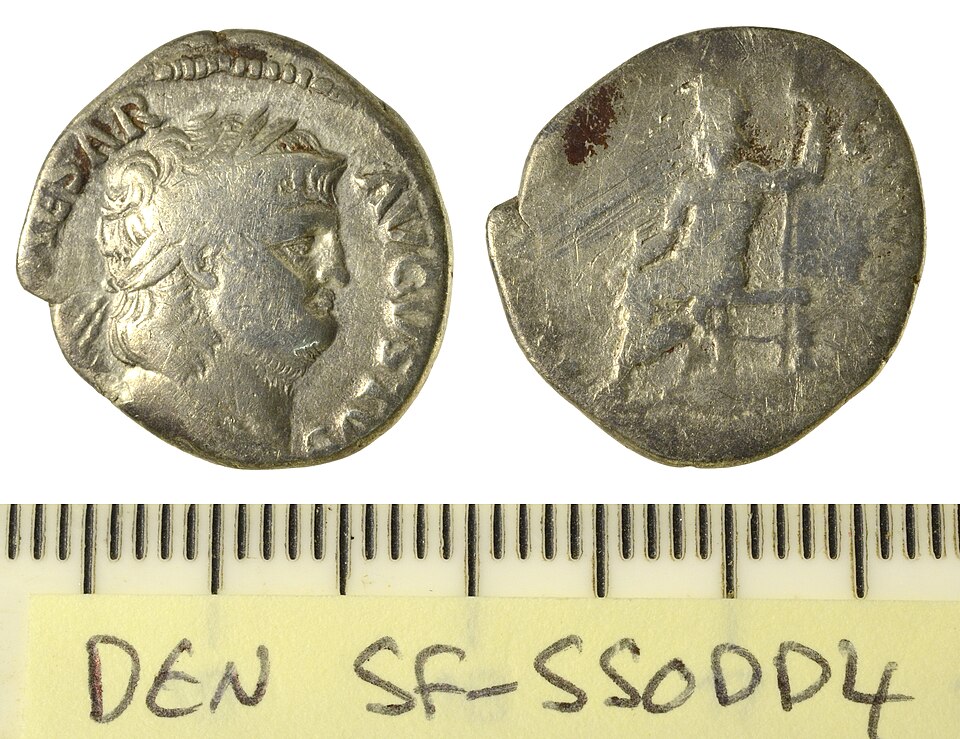
Nero started it in 64 AD by reducing the silver content from 95 to 90 percent. It was a small change nobody noticed at first. But the trend continued. Trajan reduced it to 85 percent, Marcus Aurelius to 75, Commodus to 70, Septimius Severus to 50, and Caracalla to 40. By the middle of the third century, the denarius contained less than 5 percent silver. The coin that had once been the backbone of the Roman economy was worth almost nothing.

The result was predictable. Prices rose. People hoarded the old coins with more silver and spent the new ones, and the old coins disappeared from circulation. The economy began to unravel.

People stopped using coins and started bartering. They traded goods for goods, paid taxes in grain, and paid soldiers in land. The money economy shrank, and the empire began to fall apart.

The emperors tried to fix the problem. Diocletian introduced a new silver coin and price controls, both of which failed. Constantine introduced a gold coin called the solidus, which was stable but too valuable for everyday use. Ordinary people continued to barter, and the empire continued to decline.

The Roman Empire did not collapse because of the debasement of the currency. But the debasement made the collapse worse. It weakened the economy, the army, and the state, and it was one of the many problems the empire could not solve.

The Families Who Escaped in Hot Air Balloons

The Families Who Escaped in Hot Air Balloons

December 27, 2025

In 1979, two families escaped from East Germany in a homemade hot air balloon. They flew over the Berlin Wall and landed in West Germany. They were not pilots or engineers. They were ordinary people who decided they could not live in a dictatorship anymore.

The story starts in the 1970s, when East Germany was a communist state. The government controlled everything, the secret police spied on everyone, and people could not travel to the West, speak freely, or read what they wanted. Many people wanted to leave, and many tried. Most were caught.

The Stammberger and Wetzel families lived in the town of Pößneck. They were not political activists or dissidents. They were ordinary people who wanted a better life and wanted their children to grow up in a free country. So in 1979, they decided to escape. They could not go through the border because it was guarded, and they could not go through a neighboring country because the borders were sealed. They decided to fly.

They built a hot air balloon in secret over several months. They sewed the envelope from bedsheets and nylon fabric, built the burner from a gas cylinder and a stove, and constructed the basket from wood and wire. The balloon was not perfect — the envelope was not airtight, the burner was not reliable, and the basket was not strong — but it was their only chance. They tested it at night in a field, made mistakes, fixed them, and tried again.

On September 16, 1979, they launched the balloon with eight people in the basket: two families, four adults, and four children. The balloon rose into the night sky and the wind carried it west. The families did not know where they were going, but they knew they were going up. It flew for 28 minutes, reached an altitude of 2,000 meters, crossed the border, and landed in West Germany near the town of Naila. The families climbed out of the basket. They were free.

The East German government was furious. The Stasi launched an investigation, interrogated neighbors, and searched houses. They tried to find out how the escape had happened, but they never caught the families. The families were already in the West.

Star Wars: The Lie That Won the Cold War

Star Wars: The Lie That Won the Cold War

January 3, 2026

In 1983, President Ronald Reagan gave a speech announcing the Strategic Defense Initiative. It was a shield in space that would shoot down Soviet nuclear missiles and make nuclear war impossible. The press called it Star Wars.

The plan was not realistic, not possible, and not even close to possible. The technology did not exist, would not exist for decades, and might never exist. But Reagan did not care. He was not trying to build a shield. He was trying to scare the Soviets.

The Soviets were scared. They believed Reagan was serious, believed the United States was building a space-based missile defense system, and believed it would make their nuclear arsenal useless. They responded.

They spent billions of rubles trying to build their own version of Star Wars. They developed new missiles, new lasers, and new satellites. They spent money they did not have and could not afford, and they bankrupted themselves in the process.

The Soviet economy was already struggling. The war in Afghanistan, the arms race, and the space program were all draining resources, and the Star Wars response drained even more. By the late 1980s, the Soviet Union was on the verge of collapse. In 1989, the Berlin Wall fell. In 1991, the Soviet Union dissolved. The United States won, and Star Wars was one of the reasons.

But Star Wars was a lie. The United States never built a working space-based missile defense system, never developed the technology, never implemented the plan, and never deployed the shield. The whole thing was a bluff, and the Soviets fell for it.

The Postage Stamp That Became a Fortune

The Postage Stamp That Became a Fortune

January 10, 2026

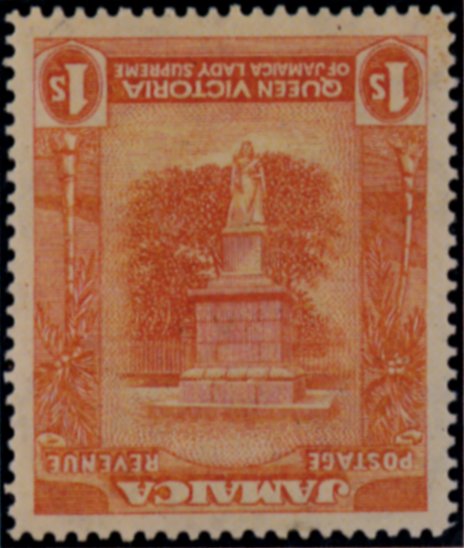
In 1920, a stamp was printed in Jamaica. It was not a special or commemorative stamp. It was an ordinary stamp printed on ordinary paper, showing a picture of a Jamaican landscape. It cost one penny. Nobody thought it was valuable. Then, overnight, it became one of the most expensive objects in the world.

The story starts in 1920, when Jamaica was a British colony and the post office needed new stamps because the old ones were running out. The office ordered a new printing from a company in England. The stamps were printed, shipped to Jamaica, and put into circulation.

One of those stamps was different. It had a flaw — a tiny mistake in the printing process that made the stamp unique, rare, and valuable.

In 1921, a stamp collector in Jamaica bought a sheet of stamps and noticed the flaw. He realized the stamp was rare, kept it, did not sell it, and waited. The stamp became known as the "Jamaica 1d," and collectors wanted it. They offered money for it and drove the price up.

In 1922, a British collector bought it for £1,500, a fortune at the time. In 1926, an American collector bought it for £3,000. In 1932, a French collector bought it for £5,000. In 1947, a Swiss collector bought it for £10,000. In 1963, a German collector bought it for £20,000. In 1970, a Japanese collector bought it for £50,000.

In 1980, the stamp was sold at auction in New York for $1 million.

The Island That Changes Countries Every Six Months

The Island That Changes Countries Every Six Months

January 17, 2026

In the middle of the Pyrenees mountains, on the border between France and Spain, there is a small island called Pheasant Island. It is only 200 meters long and 40 meters wide, with no buildings and no people. But it is one of the strangest places in the world, because every six months, it changes countries.

The story starts in 1659, when France and Spain were at war. Both sides were exhausted and both wanted peace, so they signed the Treaty of the Pyrenees. The treaty ended the war and created a strange arrangement. Pheasant Island would be a neutral territory, belonging not to France or Spain but to both. It would be administered by France for six months, then by Spain for six months, then by France again, and so on.

The arrangement has been in place for more than 350 years. It is the oldest surviving condominium in the world.

Every year on February 1st, France takes control of the island. Every year on August 1st, Spain takes control. The changeover is a ceremony where officials from both countries meet on the island, walk to the middle, shake hands, sign a document, and hand over the keys.

The island has no permanent residents, no buildings, and no roads. It has a small monument built in 1861 to commemorate the treaty, a few trees, and a lot of grass. It is a quiet, peaceful place.

But it has a strange history. In 1659, it was the site of the wedding of Louis XIV of France and Maria Theresa of Spain. The wedding took place on the island in a temporary pavilion, because the island was neutral ground and the perfect place for a wedding between two enemies.

In the centuries since, the island has been used as a meeting place for diplomats, a prison, a quarantine station, a place to dry fishing nets, a place to graze sheep, and a place to hide during wars. Today, it is a tourist attraction. Visitors can walk to the island from either side, stand in the middle, take a photo, and say they have been in two countries at once.

The House That Is in Two Countries at Once

The House That Is in Two Countries at Once

January 24, 2026

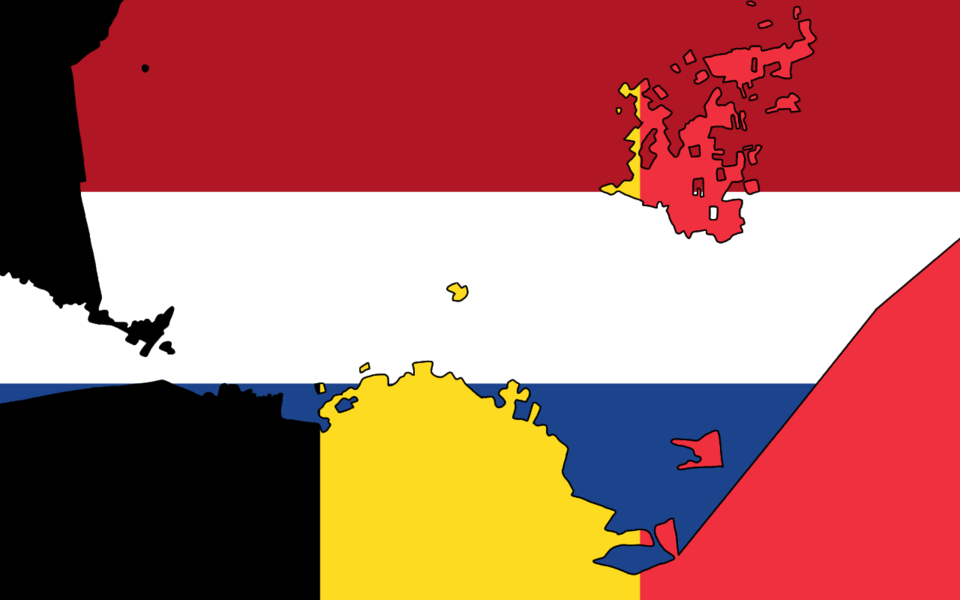
In the town of Baarle, on the border between Belgium and the Netherlands, there is a house that is in two countries at once. The kitchen is in Belgium, the living room is in the Netherlands, the bedroom is in Belgium, and the bathroom is in the Netherlands. If you want to move from the kitchen to the living room, you have to cross an international border. If you want to go to the toilet at night, you have to cross a border.

The story starts in the Middle Ages, when the region was a patchwork of small territories owned by different lords. The lords were not careful about where their borders were. They drew lines on maps, put markers in fields, and did not think about the houses or the people.

Over the centuries, the borders became official. The territories became countries, Belgium and the Netherlands became separate states, and the borders became international. But the houses remained where they were. Some were on the border, and some were split by it.

In Baarle, there are dozens of houses split by the border. Some have the front door in Belgium and the back door in the Netherlands. Some have the kitchen in Belgium and the bedroom in the Netherlands. Some have the living room in Belgium and the bathroom in the Netherlands.

The people who live in these houses have to deal with strange problems. They pay taxes to two countries, follow two sets of laws, vote in two elections, and have two sets of documents, insurance, and everything. But they also have advantages. They can choose which country's laws to follow, which taxes to pay, and which services to use. If Belgian taxes are too high, they can move to the Dutch side of the house. If Dutch laws are too strict, they can move to the Belgian side.

The arrangement is strange, but it works. The people of Baarle have learned to live with it, navigate it, deal with the confusion, and laugh about it.

The Dumbest Taxes in History

The Dumbest Taxes in History

January 31, 2026

In 1696, England introduced a tax on windows. The idea was that rich people had big houses with many windows, and poor people had small houses with few windows. If you taxed windows, you would tax the rich. It was a progressive tax, a fair tax, a disaster.

The government needed money for the war against France. It did not want to raise income or land tax because both were unpopular, so it taxed windows instead. The logic seemed sound.

But the tax was easy to avoid. If you had a window, you could brick it up. And that is exactly what people did.

Across England, people bricked up windows in their houses, shops, factories, churches, schools, and hospitals. Buildings that had once been full of light became dark. People lived, worked, prayed, and learned in darkness.

The tax stayed until 1851, 155 years in total. It raised money, but it created a generation of dark buildings and gave English the phrase "daylight robbery" — the government robbing people of daylight.

It was supposed to be fair, simple, and effective. It was none of those things.

Around the same period, Peter the Great of Russia introduced a tax on beards. He wanted Russian men to look more European, so he wanted them to shave. If they did not shave, they had to pay: 100 rubles a year for a merchant, 60 for a nobleman, and 30 for a commoner. If you paid, you got a token you had to carry. No token meant a fine.

The tax was unpopular. Russian men saw beards as a sign of masculinity, faith, and Russian identity. They did not want to shave and they did not want to pay, but they had no choice.

Peter the Great was a reformer, a modernizer, and a tyrant. He believed beards were a symbol of backwardness and shaving a symbol of progress. He thought that if he changed how Russians looked, he could change how they thought.

He was wrong. The beard tax made Russians angry, resentful, and rebellious, and they clung to their beards even more tightly.

It was abolished in 1772, after Peter's death. For nearly 75 years, Russian men had to pay for the right to have a beard, carry a token, and prove they had paid. Their faces were not their own.

The Piece of Land That Belongs to Nobody

The Piece of Land That Belongs to Nobody

February 7, 2026

Between Egypt and Sudan, in the middle of the desert, there is a piece of land called Bir Tawil. It covers 2,060 square kilometers with no cities, no roads, no water, and no people. It belongs to no country — not because nobody wants it, but because both Egypt and Sudan insist it belongs to the other.

The story starts in 1899, when Britain ruled Egypt and Sudan and drew a border as a straight line. That line placed Bir Tawil in Sudan and a larger, more valuable piece of land called the Hala'ib Triangle in Egypt. The Hala'ib Triangle covers 20,580 square kilometers, sits on the Red Sea, and has water, ports, and people.

In 1902, the British drew a second border along tribal boundaries. This line reversed the arrangement, placing Bir Tawil in Egypt and Hala'ib in Sudan, and declaring the first border a mistake.

For decades, both countries used the second border without argument. Then, in 1958, Egypt sent troops to Hala'ib, and Sudan protested. Each country claimed the triangle, and the dispute began.

In 1990, Egypt announced it would use the first border, which gave it Hala'ib and Bir Tawil to Sudan. Sudan responded by insisting on the second border, which gave it Hala'ib and Bir Tawil to Egypt. Neither side changed its position.

The result was a paradox. If Egypt is right, Bir Tawil belongs to Sudan. If Sudan is right, Bir Tawil belongs to Egypt. But Egypt refuses to accept Bir Tawil, because that would mean accepting Hala'ib for Sudan. Sudan refuses for the same reason. So Bir Tawil belongs to nobody.

The land is a hot, dry desert with no resources and no strategic value. It is one of the very few places on Earth that no country claims.

In 2014, a man from Virginia named Jeremiah Heaton found Bir Tawil on Google Maps and noticed it belonged to nobody. He wanted to make his daughter a princess, so he traveled there, planted a flag, and declared the land the Kingdom of North Sudan, with himself as king.

The Egyptian and Sudanese governments ignored him. They did not recognize his claim, send troops, or send diplomats. They simply did not care.

Heaton returned home and told his story. The media picked it up and it went viral. People laughed and wondered why anyone would want a piece of desert that belonged to nobody. Heaton said he did it for his daughter, to give her something no one else could.

But Bir Tawil remains a no man's land, claimed by no one and wanted by no one. It exists only because two countries cannot agree on where their border is.

The Forest Path That Connects Two Countries

The Forest Path That Connects Two Countries

February 14, 2026

In the middle of Europe there is a forest, ordinary in every way, with ordinary trees and paths. But it has a secret. It is split by a border, and a path crosses that border. On the path stands a café that is in two countries at once.

The café is called Café Restaurant Voba. It sits in the town of Baarle-Hertog, on the border between Belgium and the Netherlands. Baarle itself is a patchwork of Belgian and Dutch territories, with 22 Belgian enclaves inside the Netherlands and 7 Dutch enclaves inside the Belgian ones. It may have the most complicated border in the world.

The café is one of the buildings split by the border. The front door is in the Netherlands, the back room in Belgium, the kitchen in the Netherlands, and the dining area in Belgium. The owner follows Dutch law at the front and Belgian law at the back, pays taxes to both countries, and runs two cash registers with two sets of menus and prices.

The café is not unique. Elsewhere in Baarle, a house has its living room in Belgium and its bedroom in the Netherlands, a shop has its front counter in Belgium and its shelves in the Netherlands, and a church has its nave in Belgium and its altar in the Netherlands.

The border is marked by numbered white crosses on the pavement, some on the street, some on the sidewalk, and some in the middle of buildings. The crosses make the border visible but also strange.

The people of Baarle have learned to live with it. Most hold two nationalities and two passports, and they can choose which country's laws to follow, which taxes to pay, and which services to use. If Dutch taxes are too high, they can move to the Belgian side of their house. If Belgian laws are too strict, they can move to the Dutch side. They can vote in either country's elections and send their children to either country's schools.

The arrangement is strange, but it works. The people of Baarle have learned to laugh about it, explain it to tourists, and turn a problem into a feature.

The story of Baarle is a story about how borders can be messy and how history can create strange situations, and about people who adapted to it.

The Rock Concert That Helped End the Cold War

The Rock Concert That Helped End the Cold War

February 21, 2026

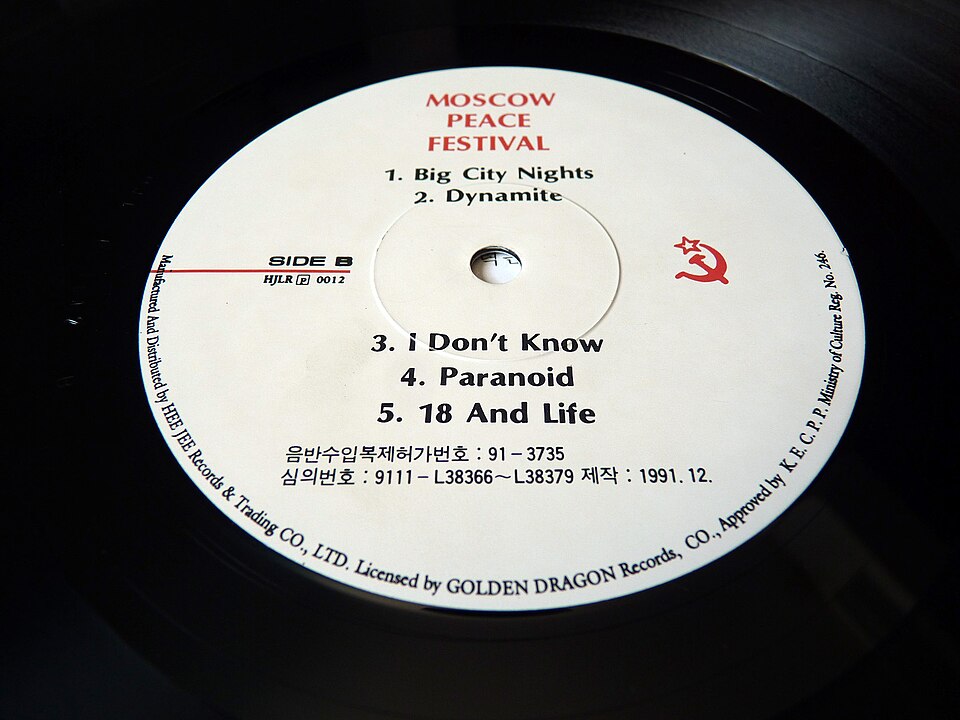
In August 1989, a rock band from California played a concert in Moscow. The band was Bon Jovi, and the event was called the Moscow Music Peace Festival. It was the first time a Western rock band had played in the Soviet Union, and the first time Soviet fans could see one live.

The story starts in the 1980s, when the Cold War was still going on. The Soviet Union and the United States were enemies with nuclear weapons, spies, and propaganda, but no contact. Ordinary people could not travel between the two worlds.

Then, in 1985, Mikhail Gorbachev became the leader of the Soviet Union. He introduced reforms called glasnost (openness) and perestroika (restructuring). He wanted to open the country to the world, end the Cold War, and bring down the wall.

One of his first changes was allowing Western music into the Soviet Union. Western bands could tour, records could be sold, and culture could spread. Young Soviets had listened to Western music on bootleg tapes for years, and now they could hear it live.

In August 1989, the Moscow Music Peace Festival was held at Lenin Stadium. The lineup included Bon Jovi, Motley Crue, Skid Row, Ozzy Osbourne, Scorpions, and Cinderella. The concert was organized by Doc McGhee, Bon Jovi's manager, and was meant to promote understanding between East and West.

The concert was a success. Thousands of Soviet fans filled the stadium, screaming, singing, and crying. They did not care about politics or ideology. They just wanted to hear the music and feel the energy.

The concert was broadcast on television around the world. It showed that Soviet youth were not so different from Western youth. They liked the same music and had the same dreams. The Cold War was about governments, not people.

The concert did not end the Cold War, but it helped. It showed that the walls between East and West were not permanent, that music could cross borders, and that people could connect.

Three months after the concert, the Berlin Wall fell. Two years later, the Soviet Union dissolved. The Cold War ended, the world changed, and the music played on.

The Monopoly Board That Helped Prisoners Escape

The Monopoly Board That Helped Prisoners Escape

February 28, 2026

In 1941, the British government sent Monopoly boards to prisoners of war in Germany. The boards were not gifts but tools. Hidden inside them were maps, compasses, and files that could cut through bars. They were escape kits disguised as games.

The story starts in 1939, when World War II began and British soldiers were captured and sent to prison camps in Germany, including Colditz, Stalag Luft III, and Oflag IV-C. Conditions were harsh. Prisoners were treated badly, fed poorly, and forced to work. They wanted to escape.

The British created a department called MI9 to help prisoners of war escape. Its plan was to send escape kits hidden inside ordinary objects and deliver them through the Red Cross. One of those objects was the Monopoly board.

Monopoly was popular and sold everywhere, so the Germans did not suspect it. They allowed the Red Cross to deliver the boards to prisoners, unaware that they were escape kits.

The special boards were made by John Waddington Ltd. in Leeds, a legitimate manufacturer that also worked for MI9 during the war. The boards were slightly thicker than normal and had hidden compartments containing escape tools.

The tools were clever. A silk map showed the area around the camp, routes to neutral countries, and safe houses. Silk was used because it does not rustle. A tiny compass was hidden inside a Monopoly token, visible only when the piece was unscrewed. A small steel file could cut through iron bars and wire. Real money in German marks and French francs was hidden inside the Monopoly money so prisoners could buy food, clothes, and train tickets.

The boards were sent through the Red Cross. Prisoners received them, opened them, found the tools, and used them to escape.

One of the most famous escapes was from Stalag Luft III in 1944, when 76 prisoners escaped through a tunnel called "Harry." The tunnel was dug by hand, stretched 110 meters, and sat 9 meters underground. The escape inspired the movie The Great Escape.

The Monopoly boards were not just games. They were lifelines, hope, and freedom.

The Football War That Lasted 100 Hours

The Football War That Lasted 100 Hours

March 7, 2026

In June 1969, two countries went to war over a football match. The war lasted 100 hours, killed thousands, displaced tens of thousands, and almost destroyed both economies. It started because of a game.

The countries were El Salvador and Honduras, neighbors in Central America. Their shared problem was land. Honduras was bigger and underpopulated, while El Salvador was smaller and overcrowded. For decades, Salvadorans crossed the border illegally, settled on land, farmed, and built homes.

By 1969, about 300,000 Salvadorans lived in Honduras, roughly 20% of the population. They were not citizens and not welcome. Honduran farmers resented them, politicians blamed them, and newspapers attacked them. The tension was rising.

That year, the two countries played a series of qualifying matches for the 1970 World Cup. Honduras won the first 1-0 in Tegucigalpa, El Salvador won the second 3-0 in San Salvador, and El Salvador won the third 3-2 in Mexico City.

The matches were treated like wars. Fans were attacked in both countries, and the newspapers on each side fueled the hatred while the governments did nothing.

On June 26, 1969, Honduras severed diplomatic relations. On July 14, the Salvadoran air force bombed Honduran cities and the army crossed the border. The Honduran army fought back, and the war began.

The fighting was fierce. The Salvadoran army was better equipped, but the Honduran army was larger. About 2,000 people were killed, most of them civilians, and about 100,000 were displaced, most of them Salvadorans living in Honduras.

The Organization of American States intervened and demanded a ceasefire. El Salvador initially refused but agreed after the OAS threatened sanctions. The fighting stopped on July 18, 1969, making it one of the shortest wars in history.

The consequences lasted for decades. Both economies were devastated, the border closed, and Salvadorans in Honduras were expelled. The two countries did not sign a peace treaty until 1980, and the border dispute was not resolved until 1992, when the International Court of Justice ruled on it.

The Football War was not really about football. It was about land, migration, nationalism, poverty, and the failure of two governments to solve their problems. Football was just the spark; the fire was already there.

The President Who Kept a Tiger in the White House

The President Who Kept a Tiger in the White House

March 14, 2026

In 1830, President Andrew Jackson received a gift from the Sultan of Oman. The gift was a tiger cub, and Jackson did not know what to do with it.

He was not a man who liked animals. He liked power, control, and order. A tiger did not fit into his world, being wild, unpredictable, and dangerous.

But he could not refuse a gift from a foreign leader, because that would be an insult and a diplomatic incident. So he accepted the tiger, kept it, and put it in the White House.

The cub was small and manageable at first, but it did not stay that way. It grew into a full-sized tiger that needed meat, space, and attention.

The tiger was kept in a small cage in the White House basement. It was not happy there. It roared, paced, and scratched at the bars. Servants and visitors were afraid, but Jackson enjoyed it. He liked the way the animal made people nervous and the power it represented.

The tiger was also a practical problem. It ate fresh meat every day, needed a keeper and a vet, and required a bigger and safer cage than Jackson ever provided.

In 1834, the tiger died in its cage, alone, having never seen its homeland or known freedom. It died because a president wanted a symbol of power.

Jackson did not mourn. He did not write a eulogy or hold a funeral. He simply moved on to other things: running a country, fighting enemies, building a legacy.

The tiger was not the only animal in the White House. Thomas Jefferson kept a mockingbird, John Quincy Adams kept an alligator, Martin Van Buren kept two tiger cubs, Abraham Lincoln kept a turkey, and Theodore Roosevelt kept a bear. Calvin Coolidge kept a raccoon. Most modern presidents have kept dogs, while Donald Trump kept none.

The animals were not always welcome. The alligator was kept in a bathroom, the tiger cubs in a cage, and the bear was sent to a zoo. They were symbols, gifts, pets, and problems at the same time.

The Google Search That Changed a Country

The Google Search That Changed a Country

March 21, 2026

In 2011, a group of young people in a small African country used Google to expose corruption. They had no money, no power, and no connections. They had the internet, and that was enough.

The country was Malawi, one of the poorest in the world. It was ruled by President Bingu wa Mutharika, who had been in power since 2004. He had started as a reformer but ended as a dictator. He crushed protests, jailed journalists, bought a private jet, spent millions on himself, and ignored the poor.

The young people were students, activists, and bloggers. They were not politicians, journalists, or experts — just ordinary people tired of corruption who wanted change and knew how to use the internet.

They started a campaign called "Google Malawi." The idea was simple: every time someone searched for Malawi on Google, they would see the truth. The corruption, the poverty, the mismanagement, the president's jet, his mansion, and his cars.

The campaign was launched on social media and spread quickly. Thousands joined, posting on Facebook, Twitter, WordPress, and WhatsApp. They used every platform available to fight back.

The government tried to stop it. It blocked websites, arrested activists, threatened bloggers, and passed laws, but the campaign continued.

In July 2011, protests began. Thousands took to the streets, demanding the president's resignation, an end to corruption, and a better life. The police responded with tear gas, rubber bullets, and beatings. Protesters were arrested and some were killed.

The protests lasted for days. The country was in chaos, the economy in crisis, and the government under pressure as the international community watched.

In April 2012, President Mutharika died of a heart attack in office. He never admitted wrongdoing, never apologized, and never faced justice.

The campaign and the protests did not bring him down. But the campaign showed that ordinary people could use the internet to fight corruption, that young people could organize, and that a Google search could expose a dictator.

Monkeys, Elections, and the Science of Politics

Monkeys, Elections, and the Science of Politics

March 28, 2026

In the 1960s, a group of scientists wanted to know if monkeys could vote. They were not joking. They wanted to understand the origins of political behavior and whether democracy was unique to humans.

The scientists were from the National Institute of Mental Health, led by a researcher named John B. Calhoun. He was famous for his experiments with rats. He had built a rat utopia, watched it collapse, and learned about overcrowding, social breakdown, and violence.

In the 1960s, Calhoun turned to monkeys. He wanted to see if they could govern themselves, make decisions, and vote. He built a monkey colony in a large enclosure and gave the monkeys food, water, toys, and everything they needed.

Then he gave them a problem. The monkeys had to decide who would get the food, the water, the toys, and who would be leader.

The monkeys did not have a government, a constitution, or an election. They had a hierarchy: a dominant male who made the decisions while the others followed.

But Calhoun wanted to know if they could change that system. He set up an experiment with a button that would release food, but only if the monkeys pressed it together. They had to cooperate and work as a team.

The monkeys learned to press the button, cooperate, share, and work together. The dominant male lost his power, and the group became more equal, more democratic, and more peaceful.

Calhoun was excited. He wrote that monkeys could be democratic, that democracy was not unique to humans, and that democracy was natural.

Other scientists were skeptical. They said the experiment was flawed, that the monkeys were not voting but simply pressing a button to get food, and that it proved nothing.

Calhoun did not care. He believed in his findings, his monkeys, democracy, and science.

The Wars Fought Over Salt and Sugar

The Wars Fought Over Salt and Sugar

April 4, 2026

In 1932, a war broke out in South America over a patch of land that had no oil, no gold, and no cities. The land was called the Chaco Boreal, a dry and mosquito-infested region between Bolivia and Paraguay. Nobody wanted to live there, but both countries wanted to own it, because under the dry soil, they thought, there was oil.

There was no oil. There was salt, which in the 1930s was still valuable. Salt was used to preserve meat, make chemicals, and make gunpowder. In some ways it was more important than gold.

Bolivia and Paraguay went to war over the Chaco. The war lasted from 1932 to 1935 and killed about 100,000 people, making it the bloodiest war in South American history. Bolivia had a larger army, but Paraguay had better generals and won. In the end, the land turned out to have no oil and no salt — only thorn bushes and mosquitoes.

The Chaco War was not really about salt. It was about pride, access to the sea, and two poor countries trying to prove they were not poor. Salt was part of it, but only part.

Salt has caused conflicts for thousands of years. In ancient China, the government ran a salt monopoly that was one of its most important sources of revenue. Selling salt without a license could be punished by death, and the state fought wars to protect and expand its salt.

In ancient Rome, salt was so important that soldiers were sometimes paid in it. The Latin word "salarium," from which "salary" comes, referred to a salt allowance. Without salt, soldiers could not preserve their food, and without food they could not fight.

In India, salt became a symbol of revolution. In 1930, Mahatma Gandhi led a 240-mile march to the sea to pick up a lump of salt, protesting the British tax that forced Indians to buy British salt. He broke the law, and the march helped start a revolution.

Sugar was another weapon. In the 17th and 18th centuries, sugar was one of the most valuable commodities in the world. It was grown in the Caribbean by enslaved people, shipped to Europe, and sold for enormous profits. The trade made countries rich, companies powerful, and kings greedy, and it helped fuel the Seven Years' War, the American Revolution, the Haitian Revolution, and the Napoleonic Wars.

In the 19th century, sugar became cheaper and less valuable. But in the 20th century, salt and sugar were used in economic warfare, as countries imposed sanctions, blockades, and tariffs. They were not just food — they were politics.

The War That Lasted 38 Minutes

The War That Lasted 38 Minutes

April 11, 2026

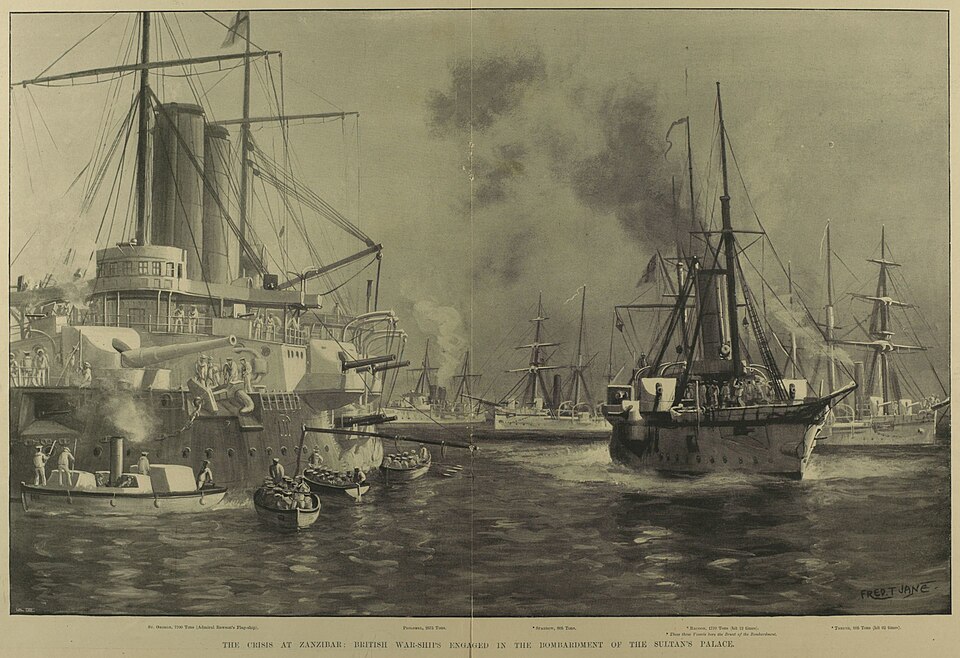
In 1896, a war broke out between the British Empire and the Sultanate of Zanzibar. It lasted 38 minutes. It is the shortest war in recorded history, and one of the most lopsided. The British had modern warships, the Zanzibaris had a palace, the British won, and then everyone went home for lunch.

The story starts in 1890, when Zanzibar became a British protectorate. The island was rich in cloves, ivory, and slaves, and the British wanted to control it. They got what they wanted.

In 1893, the Sultan died and his son Hamad bin Thuwaini took power. Hamad was friendly to the British. He let them station troops on the island and control foreign policy and the economy. He was a puppet, and the British were happy.

In 1896, Hamad died. His cousin Khalid bin Barghash seized power, moved into the palace, and declared himself Sultan. Khalid refused to accept British control, and the British were not happy.

They sent an ultimatum: leave the palace, surrender, and accept British control by 9:00 AM on August 27, 1896. Khalid refused. He barricaded himself in the palace with his troops.

The British gathered their ships — the HMS Philomel, HMS Rush, HMS Sparrow, and HMS Thrush. At 9:02 AM, they opened fire. The shells hit the palace and it caught fire. The Zanzibari troops fled, and Khalid fled to the German consulate, where he was given asylum.

Firing stopped at 9:40 AM. About 500 Zanzibaris were killed, and one British sailor was wounded. The British installed a new Sultan, Hamoud bin Mohammed, who was friendly to them.

Stanislav Petrov

The Man Who Saved the World from Nuclear War

April 18, 2026

On September 26, 1983, Stanislav Petrov was working at a Soviet early warning station. He was a lieutenant colonel in charge of the duty shift, watching the screens and monitoring the satellites.

Suddenly, the screens lit up. They showed a missile launch — an American missile heading for the Soviet Union. They showed a nuclear attack. They showed the beginning of the end.

The alarms blared and the sirens sounded. The system reported an attack and demanded a launch.

Petrov had a choice. He could follow the system and report the attack, launch a retaliatory strike, and start a nuclear war that would destroy the world.

He did not.

Petrov hesitated. He thought about the system, the satellites, the evidence, and the consequences. In the end, he believed the system was wrong, the alarm false, and the satellite glitching. He decided not to report, not to launch, not to act. He would wait and trust his judgment.

He was right. The alarm was a false alarm, caused by a satellite that had mistaken sunlight on clouds for a missile launch. There was no attack, no war, no destruction.

Petrov told no one what he had done. He did not want to be a hero or honored. He just wanted to do his job and keep the world safe.

The story came out years later. Petrov was interviewed about that night and said it was just another shift, that he was just doing his job, and that anyone would have done the same. He was not a hero, he said, just a man.

But he was a hero. He refused to follow orders, refused to trust the machine, and thought for himself. He saved the world.

Stanislav Petrov died in 2017 at the age of 77. The world never knew his name, what he had done, or that he had saved it. But he had.

The Spy Balloons That Started a War

The Spy Balloons That Started a War

April 25, 2026

In 1956, the United States began sending spy balloons over the Soviet Union. The balloons were part of Project Genetrix, designed to photograph Soviet military bases and gather intelligence. They were supposed to be invisible. They were not.

The balloons were made of plastic, filled with helium, and carried cameras, radios, and batteries. They were launched from Western Europe, floated east across the Soviet Union, and were supposed to be recovered in the Pacific. Most were not.

The Soviets saw them on radar, in the sky, and on the ground. They shot them down, captured them, and studied them. They were not happy.

The Soviets protested through diplomatic notes, letters, and complaints. They called the balloons a violation of their airspace and an act of aggression. The Americans denied everything, saying the balloons were for weather research and scientific purposes. The Soviets did not believe them.

The balloons were not the only spy technology. The Americans also had the U-2, a high-altitude plane that flew at 70,000 feet and was designed to be invisible to Soviet radar. On May 1, 1960, a U-2 was shot down over the Soviet Union, and its pilot, Francis Gary Powers, was captured. He was tried, convicted of espionage, and sentenced to 10 years in prison. He served 18 months before being exchanged for a Soviet spy. The incident was a disaster and a humiliation for the United States.

The U-2 incident ended the spy flights and the spy balloons. The Americans turned to satellites, which were safer, better, and invisible. Those satellites are still there, still watching, still part of the world.

The $1.5 Million Roundabout to Nowhere

The $1.5 Million Roundabout to Nowhere

May 2, 2026

There is a roundabout in western Hungary, near a town called Zalaegerszeg. It has asphalt, lane markings, and signs. It cost about $1.5 million. The European Union paid for it.

The EU gave the money to Hungary to build a railway line. The railway was supposed to connect Hungary to the Adriatic Sea. Goods would flow from the coast through Hungary to Slovakia, the Czech Republic, and Poland. It would create jobs, boost trade, and bring Hungary closer to the rest of Europe.

There was just one problem. There was no railway.

The roundabout was built years ago. The railway was never built. So the roundabout sits in a field by itself, waiting for a train that will never come. It is a perfect circle. It is smooth. It is empty. It leads nowhere.

Critics of Prime Minister Viktor Orbán call it a monument to his economic system. They say Orbán has spent sixteen years demonizing the EU while happily taking its money. They say the money has gone to vanity projects, unfinished construction, and friends of the government. The roundabout is one example, but it is not the only one.

There are tens of thousands of EU-funded projects in Hungary. Some work, some do not. Some were never finished, and some were never started. Nobody is sure how many actually work or how much money was wasted. The accounting is complex, the oversight is weak, and the corruption is subtle but widespread.

The roundabout is a circle that leads nowhere. It takes money from the poor and gives it to the rich. It is a monument to the gap between what governments promise and what they deliver.

But it is not just a Hungarian problem. It is a European problem. It is a global problem. Governments everywhere take money from taxpayers and give it to contractors. Sometimes the money is well spent, sometimes it is not, and sometimes it disappears entirely.

The roundabout in Zalaegerszeg is just one example. It is small, but it is visible. You can drive to it, walk around it, take a photo, and ask yourself: why?

The answer involves politics, bureaucracy, and human nature. It involves the way money moves through systems and the way power protects itself. The answer is uncomfortable, and it is true.

Nicholas Winton

The Man Who Saved 669 Children and Never Told Anyone

May 9, 2026

Nicholas Winton was a stockbroker in London. He bought and sold shares, wore suits, and carried a briefcase. By all appearances, he was an ordinary man — not a politician, not a soldier, not a diplomat. Just a man with a conscience.

In 1938, he was planning a skiing holiday in Switzerland when a friend called from Prague. Something terrible was happening: Hitler was about to invade Czechoslovakia, and Jewish families were in danger. Winton changed his plans and went to Prague instead.

What he saw changed his life. Families were living in fear, children had nowhere to go, and parents were desperate to save their kids while the world ignored the crisis. So Winton decided to do something about it.

He set up an office in a hotel and started taking names, photos, and stories. Britain would only accept children if they had a place to stay and a guarantee of money, so Winton had to find foster families, sponsors, and £50 per child — a huge sum at the time. He had to persuade two governments to cooperate, and he had to do it all before the Nazis arrived. He worked eighteen-hour days.

He succeeded. Between March and August 1939, eight trains carried 669 children out of Czechoslovakia to Britain. They went to new homes, new lives, and new futures. They survived.

The last train was supposed to carry 250 more children. It was scheduled to leave on September 1, 1939, the day Germany invaded Poland. The borders closed. The train never left. Most of the children on it died in concentration camps. Winton kept their photos on his desk for the rest of his life.

For fifty years, he told no one what he had done. Not his wife, not his friends, not the world. He thought it was not important. He thought he had just done what anyone would do.

In 1988, his wife Grete found a scrapbook in the attic. It was full of photos, letters, and documents. She read it, stunned, and asked him about it. He said it was nothing. She said it was everything.

The story came out. Winton was interviewed on television, sitting in the audience. The host asked if anyone owed their life to Nicholas Winton. Dozens of people stood up — the children he had saved, now adults, grandparents, professionals. They were alive because of him.

Winton started to cry. He had no idea. He had not kept track, and he had never wanted credit. The audience applauded. He wiped his eyes and said he was glad. He was glad they had lived.

He died in 2015 at the age of 106. Many countries honored him and called him a hero. He did not like the word. He said he was just a man who saw a problem and tried to fix it. Anyone could have done what he did, he said. But not everyone did.

The Man Who Sold a Country That Didn't Exist

The Man Who Sold a Country That Didn't Exist

May 16, 2026

In 1820s London, there was a man named Gregor MacGregor. He said he was the ruler of a country called Poyais, in Central America. It was a paradise with fertile land, friendly natives, and gold. There was just one problem: Poyais did not exist.

MacGregor was a Scottish adventurer. He had fought in South America and served under Simón Bolívar. He had been captured, escaped, and given land by a local indigenous leader. He decided to turn that land into a country. He gave it a name, a flag, a constitution, a currency, and a nobility. He gave it everything a country needs, except a country.

He printed brochures, issued bonds, and sold land grants. He told people that Poyais was a new Eden — that the soil was rich, the climate was perfect, the natives were friendly, and the government was stable. They could get rich and start a new life. They could be part of something great.

Hundreds of people believed him. They sold their homes, packed their bags, said goodbye to their families, and sailed to Central America. They arrived in a jungle. There was no country, no gold, no silver, no government, no nobility. There was nothing. Some of them died. Others barely survived, stranded, sick, hungry, and desperate.

MacGregor became known as the "king of con-men." He had sold a country that never existed. He had taken money from people who could not afford to lose it. He had destroyed lives, families, and dreams, and he had done it all with a smile.

But MacGregor was not just a con-man. He was a product of his time. The 1820s were a time of speculation, optimism, and greed. People believed in progress and in the power of money. MacGregor understood that people will believe almost anything if you tell them what they want to hear.

Con-men do not lie all the time. They tell the truth just enough to make the lie believable. They do not take everything at once. They take a little at a time. They do not destroy their victims. They let their victims destroy themselves.

MacGregor died in 1845. He was 58 years old. He was broke and forgotten, but his story lives on. It is a reminder that if something sounds too good to be true, it probably is.

The Country Where Prices Doubled Every 15 Hours

The Country Where Prices Doubled Every 15 Hours

May 23, 2026

In 1946, Hungary experienced the worst inflation in human history. Prices doubled every 15 hours. Not every year. Not every month. Every 15 hours. The inflation rate reached 41.9 quadrillion percent — the highest ever recorded anywhere in the world.

The country was shattered after World War II. It had been on the losing side. It was occupied by the Soviet Union. It had to pay punishing reparations. It had to rebuild its cities. It had to feed its people. The government had no money. So it printed more.

And more.

And more.

The money became worthless. Workers were paid twice a day and rushed to spend their wages before the prices went up again. People used banknotes as wallpaper. They burned them for heat. They swept them off the streets. The pengő, Hungary's currency, died. It was replaced by the forint, which is still used today.

But the memory of 1946 remains. It is a reminder of what happens when governments print money without limit. It is a reminder of how quickly an economy can collapse. It is a reminder of how fragile trust can be.

The 1869 Black Friday Gold Panic

The 1869 Black Friday Gold Panic

May 30, 2026

The 1869 Black Friday Gold Panic

May 30, 2026

In 1869, two men tried to corner the gold market in the United States. Their names were Jay Gould and Jim Fisk. They were robber barons — wealthy, ruthless, and willing to break the law. They had a plan. They would buy as much gold as possible, drive up the price, and sell at the top. They would make a fortune.

There was just one problem. The U.S. government held a lot of gold. If the government sold its gold, the price would crash. So Gould and Fisk needed to stop the government from selling.

They found a way. Gould became friends with Abel Corbin, who was President Ulysses S. Grant's brother-in-law. Through Corbin, Gould tried to convince Grant that high gold prices were good for farmers. Grant listened but was not convinced. He did not stop the scheme, but he did not endorse it either.

On September 24, 1869, Gould and Fisk made their move. They bought gold. The price soared. Then Grant found out. He ordered the Treasury to sell $4 million in gold. The price crashed. Thousands of investors were ruined. The day became known as Black Friday.

Gould and Fisk survived. They had already sold. They made money. The small investors lost everything. The story is a reminder that the rich can protect themselves, and the poor cannot.

The Bank That Robbed Itself

The Bank That Robbed Itself

June 6, 2026

In 1991, a bank in Luxembourg collapsed. It was called the Bank of Credit and Commerce International, or BCCI. It was one of the largest banks in the world, with branches in 73 countries and assets of $20 billion. Its clients included presidents, dictators, and drug lords. It was a bank that operated in the shadows and was built on fraud.

BCCI was founded in 1972 by a Pakistani financier named Agha Hasan Abedi. He wanted to create a bank that would serve the developing world and would not be controlled by the West. It was different, and it was different in ways that were criminal.

The bank was involved in money laundering, arms trafficking, drug trafficking, and bribery. It had a unit called the "Black Network" that handled the illegal operations, and a unit called "Sandstorm" that handled the secret accounts. The legitimate business was a cover; the illegitimate business was the point.

The bank was eventually caught by regulators in the United States, the United Kingdom, and Luxembourg. The investigation revealed a web of corruption that reached into the highest levels of government. BCCI had secretly taken over an American bank, First American Bankshares, without telling regulators. It had helped Saddam Hussein hide money, helped drug cartels launder money, and helped terrorists move money.

The bank was shut down in 1991. It was the largest bank failure in history and a scandal that shocked the world. It showed how vulnerable the financial system was, how easy it was for criminals to use banks, and how hard it was for regulators to stop them.

The Economy That Ran on Cigarettes

The Economy That Ran on Cigarettes

June 13, 2026

In the aftermath of World War II, Europe was in ruins. The economy was destroyed and the currency worthless. People needed a way to trade, to buy food and clothes, and they found it in cigarettes.

Cigarettes became the currency of Europe. They were used to buy food, clothes, favors, and anything else. They were more valuable, stable, and trusted than money.

The reason was simple. Cigarettes were scarce, valuable, portable, divisible, and durable. They had everything a currency needs, and they were not controlled by any government, subject to inflation, or vulnerable to devaluation. They were just cigarettes.

The cigarette economy was not limited to Europe. In prisons, prisoner-of-war camps, and refugee camps — anywhere the official economy had broken down — cigarettes became the unofficial currency.

In the United States, cigarettes were used as currency in prisons, to buy favors, protection, and drugs. The cigarette economy was so important that prisons eventually banned it, introducing tokens, alternative currencies, and debit cards. They tried to replace cigarettes, and they failed.

The Government That Paid People to Leave

The Government That Paid People to Leave

June 20, 2026

In the 1980s, the government of East Germany had a problem. Many of its citizens wanted to leave, and the government did not want them to go. It did not want to lose its people, admit that its system was failing, or look weak.

But it also did not want to keep people who were unhappy, angry, or potentially dangerous. So it made a deal: it started to sell them.

The deal was simple. If you wanted to leave East Germany, you could, but you had to pay. You had to pay the government for your education, your healthcare, and everything it had invested in you. The price was often higher than a person's or a family's entire savings. People paid anyway, because freedom was worth it and they had no choice.

The government called it "release from citizenship." The people called it "buying your freedom." It was a system that treated people as commodities and assets, and it was only possible in a dictatorship.

The system ended in 1989. The Berlin Wall fell, the border opened, and people were free to leave or stay as they wished. The government that had sold them and the country that had imprisoned them were gone.

The Man Who Printed His Own Money

The Man Who Printed His Own Money

June 27, 2026

In 2010, a man in the United States was arrested. His name was Arthur Williams, a currency dealer accused of printing his own money. Not counterfeiting or forging, but printing his own. He had created a private currency called the "American Liberty Dollar" — silver coins, gold coins, a currency not backed by the government but backed by him.

Williams believed in hard money, in gold and silver, and in the Constitution. He believed the government had no right to print money, that the people had the right to create their own, and that his coins were legal. He believed he was a patriot.

The government disagreed. It charged him with violating the law and counterfeiting, sent armed agents to raid his office, seized his coins, indicted him, convicted him, and sent him to prison.

Williams was sentenced to five years and fined $1 million. He was ordered to stop making, selling, and promoting his coins.

The case became a cause for the libertarian movement and a symbol of government overreach, the fight for financial freedom, the fight against the Federal Reserve, and the fight for sound money.

The Pizza That Was Worth $100 Million

The Pizza That Was Worth $100 Million

July 4, 2026

There is a man in Florida named Laszlo Hanyecz. He is not famous. He is not rich. He is a programmer. In 2010, he was one of the first people to use Bitcoin. He mined it on his laptop. He had thousands of them. They were not worth much back then. Nobody knew what Bitcoin would become.

One day, Laszlo wanted pizza. He did not want to use dollars. He wanted to use Bitcoin. He wanted to prove that Bitcoin was real money. So he made an offer on a forum. He said he would pay 10,000 Bitcoins for two pizzas. Anyone who could order pizza for him would get the Bitcoin.

A man in England took the offer. He ordered two pizzas from Papa John's and had them delivered to Laszlo's house in Florida. Laszlo got his pizza. The man got his Bitcoin. It was May 22, 2010. It was the first time Bitcoin was used to buy something real.

Then Bitcoin grew. It became valuable. The 10,000 Bitcoin that Laszlo spent on pizza would be worth millions, then hundreds of millions.

Laszlo became famous — not because he was rich, but because he was the man who spent $100 million on pizza. People ask him if he regrets it. He says no. He says it was worth it and the pizza was good, and that he was part of history.

But sometimes, when he is alone, he probably thinks about the pizza, the money, and what could have been.

The Man Who Threw Away $500 Million

The Man Who Threw Away $500 Million

July 11, 2026

There is a man in Wales named James Howells. He is an IT worker. In 2009, he mined Bitcoin on his laptop. He had thousands of them. They were not worth much back then. Nobody knew what Bitcoin would become.

In 2013, James was cleaning his house when he found an old hard drive sitting in a drawer. It was taking up space, and he did not need it, so he threw it away in a black bag and took it to the landfill. He never thought about it again.

The hard drive contained 7,500 Bitcoins. James had forgotten about them. When he found out what Bitcoin was worth, he realized what he had done. He had thrown away a fortune. He had thrown away $500 million.

He went to the landfill. He asked if he could dig. The landfill was huge — filled with years of garbage. It was impossible to find one hard drive. It was like finding a needle in a haystack. The needle was made of metal. The haystack was made of trash.

James did not give up. He offered the city millions of dollars if they would let him dig. He offered to share the Bitcoin. He offered to pay for the excavation. The city said no. They said it was too expensive, too dangerous, too impossible.

James is still trying, still asking, still hoping. He has a team, a plan, and a dream. He wants to find that hard drive, get those Bitcoin back, and change his life.

But the landfill is still there, and so is the garbage and the hard drive, somewhere beneath it, worth $500 million. And James cannot get it.

The Woman Who Beat the Lottery

The Woman Who Beat the Lottery

July 18, 2026

Joan Ginther had a PhD from Stanford. She was a mathematician who understood probability in a way that most people do not. She won the lottery four times — not twice, not three times, but four separate jackpots in four separate years, worth a combined $20 million.

The odds of winning once are about one in 18 million. The odds of winning four times are so small that most statisticians would call them impossible. But Joan did not rely on luck. She relied on math.

The Texas lottery had a game called Lotto Texas. The jackpot grew every week until someone won. The odds of winning were fixed, but the prize was not. When the jackpot got large enough, the expected value of a ticket became positive. If you bought enough tickets, you would make money in the long run. Most people never noticed this. Joan did.

She waited, watched the jackpots, and did not play until the numbers made sense. Then she played — not one ticket, not ten, but thousands. She bought them in bulk, covered the combinations, and maximized her chances. She was not gambling. She was investing.

She won in 1993, again in 2006, again in 2008, and again in 2010. The lottery officials investigated and found nothing. Joan had not cheated, hacked, or broken the law. She had simply done the math that no one else had bothered to do.

The Man Who Sold the Eiffel Tower

The Man Who Sold the Eiffel Tower

July 25, 2026

Victor Lustig was born in Austria-Hungary in 1890. He spoke five languages and had charm, confidence, and a complete lack of conscience. He was one of the greatest con men in history. His greatest trick was selling the Eiffel Tower — not once, but twice.

In 1925, the Eiffel Tower was old, expensive, and in need of repairs. The city of Paris was spending a fortune maintaining it, and rumors spread that it might be demolished. Lustig saw an opportunity.

He wrote letters to scrap metal dealers and invited them to Paris. He said he was a government official in charge of selling the tower. The city had decided to tear it down and sell the metal to the highest bidder. The dealers came, were shown around, and found him convincing, charming, and professional.

One dealer, André Poisson, believed him. He wanted the deal, the metal, and the profit. He paid Lustig a bribe of 250,000 francs, thinking he was buying the Eiffel Tower. Lustig took the money and fled to Austria.

He waited for the police. They never came. Poisson was too embarrassed to report the crime. He did not want to be a laughingstock.

So Lustig did it again. He returned to Paris, found another dealer, and told the same story. This time, the dealer went to the police, and Lustig fled. He was never caught for that crime.

He continued to con people for years. He was eventually arrested in the United States and sent to Alcatraz, where he died in 1947.

The Country That Sold Its Passports

The Country That Sold Its Passports

August 1, 2026

St. Kitts and Nevis is a small island nation in the Caribbean. It has no oil, no gold, and no major industry. For most of its history, it relied on sugar. When the sugar industry declined, the country needed a new way to survive, so it started selling citizenship.

The program is simple. If you want to become a citizen of St. Kitts and Nevis, you can. You just have to pay. The price is $250,000, invested either in real estate or a government fund. In exchange, you get a passport that gives you visa-free travel to over 150 countries and access to the European Union.

The program has been running for decades. It has brought billions of dollars to the island, paying for roads, schools, hospitals, and infrastructure. It has made the island rich, but it has also made it dependent.

The program has been criticized. It has been accused of selling citizenship to criminals, tax evaders, and anyone with money. The island introduced background checks and stricter rules, but the criticism continues.

Other countries copied the model. Dominica, Antigua, Grenada, and St. Lucia all sell citizenship now. For small islands with few options, it is a lifeline.

Panama Papers

The Journalists Who Exposed the World's Biggest Secret

August 8, 2026

In 2016, a journalist in Germany received a message from an anonymous source. The source said they had documents — millions of them — that would reveal how the rich and powerful hide their money. The journalist was skeptical at first. Then the documents arrived.

They came from a law firm in Panama called Mossack Fonseca, which specialized in creating offshore companies. These companies were legal, but they were often used for illegal purposes: hiding money, avoiding taxes, laundering cash, evading sanctions. The firm's clients included dictators, criminals, and billionaires.

The documents were leaked to a German newspaper called Süddeutsche Zeitung. The newspaper realized the story was too big for one newsroom, so it shared the documents with the International Consortium of Investigative Journalists, a network of reporters around the world who work together on cross-border stories.

Over 400 journalists from 80 countries worked on the story for months, reading, analyzing, and verifying. They worked in secret and in shifts, as a team. It was a movement. It was a force.

The Panama Papers were published on April 3, 2016. The story was everywhere — front pages, news channels, social media. It was the biggest leak in history: 11.5 million documents, 2.6 terabytes of data, 214,488 offshore entities.

The documents revealed the names of world leaders, politicians, celebrities, and businesspeople who had hidden money offshore. The Prime Minister of Iceland resigned. The Prime Minister of Pakistan was investigated. The President of Ukraine was implicated. The King of Saudi Arabia, the President of Argentina, and the Prime Minister of the United Kingdom were all named. The list went on and on.

But the Panama Papers were not just a story about money. They were a story about power. They showed how the rich and powerful use offshore companies to avoid taxes, how they use lawyers and accountants to hide their wealth, and how they use secrecy to escape accountability. They showed how the system works.

The journalists who worked on the Panama Papers were not just reporters. They were detectives, researchers, and guardians of democracy. They held the powerful accountable and spoke truth to power. They refused to look away.

Falcone and Borsellino

The Judges Who Fought the Mafia and Won

August 15, 2026

In the 1980s, the Italian island of Sicily was controlled by the Mafia. It was not a myth or a movie. It was real, powerful, and violent. It ran the drug trade, the construction industry, and the government. It was the state within the state.

Two men decided to fight back. Their names were Giovanni Falcone and Paolo Borsellino. They were judges, prosecutors, Sicilians, and friends.

They worked together in Palermo, investigating the Mafia, gathering evidence, building cases, prosecuting mobsters, and putting them in prison. They were successful, fearless, and unstoppable.

Their most famous achievement was the Maxi Trial, a massive trial of over 400 Mafia members that took place in a special bunker courtroom. The defendants were in cages. The evidence was overwhelming. The trial lasted from 1986 to 1987 and resulted in 360 convictions. It was a victory, a turning point, a message.

But the Mafia did not give up. It planned revenge — to kill Falcone and Borsellino, their families, and anyone who stood in its way. The judges knew this. They knew they were in danger. They knew they might die. They did not stop.

On May 23, 1992, Falcone was driving home from the airport with his wife and bodyguards. A bomb exploded under the road, hidden in a culvert and detonated by remote control. Falcone, his wife, and three bodyguards were killed. The car was destroyed. The road was destroyed. The Mafia had struck.

Borsellino was devastated. He had lost his friend, his brother, his ally. He knew he was next. He knew he would die. He did not stop. He continued to work, to investigate, to fight.

On July 19, 1992, Borsellino was visiting his mother with his bodyguards. A car bomb exploded in the street. Borsellino and five bodyguards were killed. The Mafia had struck again. Italy was in shock, in mourning, in anger.

But the Mafia did not win. Their deaths sparked a revolution. The Italian people rose up and demanded justice. The government responded with new laws, new agencies, thousands of arrests, and billions of dollars in seized assets, and the Mafia's grip on Sicily was broken for good.

Singapore

The Country That Became Rich by Being Honest

August 22, 2026

In 1965, Singapore was a poor island with no natural resources — no oil, no gold, no land. It had a lot of people, a lot of problems, and no obvious future. Corruption was widespread. Crime was common. Poverty was everywhere.

Today, Singapore has one of the highest GDP per capita in the world, one of the lowest crime rates, one of the best education systems, and one of the cleanest governments. It is a success story, a model, a miracle.

How did it do it? The answer is simple: it fought corruption. It fought it hard, relentlessly, until corruption was gone. The man who led the fight was Lee Kuan Yew, the Prime Minister.

Lee Kuan Yew understood something that many leaders do not. Corruption destroys countries. It destroys economies, trust, hope, and justice. It creates inequality, injustice, and despair. Corruption is not a victimless crime. It is a cancer. It kills.

So he declared war on it. He created the Corrupt Practices Investigation Bureau, gave it power and independence, and told it to investigate anyone — no exceptions, no excuses, no mercy.

He started with himself. He was honest, clean, incorruptible. He set an example and expected others to follow. He did not tolerate corruption in his government or his party, and he did not tolerate it anywhere else.

The punishments were severe. Officials who took bribes went to prison. Officials who accepted gifts were fired. Officials who used their position for personal gain were prosecuted. There were no warnings, no second chances, no forgiveness. There was only justice.

The result was dramatic. Corruption disappeared. Investors came. Businesses grew. Jobs were created. The economy boomed. Singapore became a success, a model, a miracle.

Kibaale Village

The Village That Built Its Own Hospital

August 29, 2026

In the 1990s, a village in Africa had a problem. The nearest hospital was 50 kilometers away. The road was bad. The journey was dangerous. People died on the way. Pregnant women died in childbirth. Children died of malaria. Adults died of preventable diseases. The village needed a hospital. The government did not build one. So the village built one itself.

The village was called Kibaale. It was in Uganda. It was poor, rural, and forgotten. It had no money, no resources, no outside help. It had only itself — its people and its determination.

The villagers started small. They collected money, materials, and labor. They built a small clinic with one room, one nurse, and basic supplies. It was not much, but it was a start. It was hope.

The clinic grew. It became a health center, then a hospital, then a training center, then a research center. It became a beacon, a model, a miracle.

The villagers did not stop. They trained nurses, midwives, and community health workers. They went to villages, vaccinated children, treated malaria, taught hygiene, and saved lives.

The hospital became known as the Kibaale Community Health Centre. It served thousands of people, dozens of villages, an entire region, and it saved and changed countless lives.

Sherron Watkins

The Woman Who Told the Truth About Enron

September 5, 2026

In 2001, a company called Enron was one of the largest in the world. It was worth $70 billion. It was a Wall Street darling, a model of innovation, a legend. It was also a fraud.

Enron was lying about its profits, hiding its debts, inflating its numbers, fooling investors, regulators, and everyone else. It was a house of cards waiting to collapse.

One woman knew the truth. Her name was Sherron Watkins. She was a vice president at Enron, an accountant, smart, honest, and brave.

In 2001, Watkins discovered accounting irregularities, suspicious transactions, and evidence of fraud. She wrote a memo to the CEO, Kenneth Lay, warning him that the company could implode. She told him the truth, but he did not listen. He ignored the memo, ignored Watkins, and ignored the warnings.

Enron collapsed in December 2001. It filed for bankruptcy — the largest in U.S. history. Thousands of employees lost their jobs. Thousands of investors lost their savings. Thousands of people lost everything. It was a disaster, a scandal, a crime.

Watkins became a whistleblower. She testified before Congress, told her story, and exposed the fraud, the lies, and the criminals. She became a hero.

Kenneth Lay was convicted of fraud and died before sentencing. Other executives went to prison, and the accounting firm Arthur Andersen was destroyed. The laws were changed and the system reformed.

The Twelve Men Who Own More Than Half the World

The Twelve Men Who Own More Than Half the World

September 12, 2026

In 2026, Oxfam released a report called "Takers Not Makers." It was about billionaires, inequality, and the way the world works. The numbers were staggering.

Billionaire wealth had grown three times faster than the global economy, and the number of billionaires had passed 3,000 for the first time. The top 12 billionaires now hold more wealth than the poorest 50 percent of the world's population. They own more than 4 billion people combined.

The report said this extreme inequality is dangerous. It undermines democracy, allows the rich to buy political influence, and lets them shape laws, media, technology, and taxation in their favor. They can protect their wealth while the rest of the world struggles.

The report called for stronger progressive taxation, limits on the political influence of large fortunes, protection of media independence, and a new approach.

But the report was not just about numbers. It was about people: the nurses who cannot afford a home, the teachers who cannot afford school supplies, the farmers who cannot afford seeds, the workers who cannot afford healthcare. It was about the millions who are working harder than ever and falling further behind.

Ken Saro-Wiwa

The Man Who Died for His Land

October 3, 2026

In 1995, the Nigerian government hanged a writer named Ken Saro-Wiwa. He had spent most of his life as a poet and novelist. By the time of his death, he had become something else: an activist who refused to stay silent about what was happening to his people.

Saro-Wiwa was Ogoni. The Ogoni lived in the Niger Delta, a region that sits on one of the largest oil reserves in Africa. For decades, Shell extracted that oil and sold it around the world. The profits went to the company and to the Nigerian government, but very little reached the villages where the oil was actually coming from. The Ogoni watched their land produce billions of dollars while their own communities remained without clean water, paved roads, or reliable electricity.

The oil companies polluted the land, the water, and the air. They destroyed farms and fishing grounds. The Ogoni received nothing in return — no compensation, no cleanup, no apology.

Saro-Wiwa organized. He founded the Movement for the Survival of the Ogoni People and demanded justice, compensation, and cleanup. His methods were peaceful: protests, boycotts, and petitions. But he was determined, and that made him dangerous to the people in power.

The Nigerian government arrested him in 1994 on charges of murder. The trial was a sham. Witnesses were bribed, evidence was fabricated, and the judge was corrupt. He was convicted and sentenced to death.

He was executed on November 10, 1995. He was 54 years old. The world protested, and Shell was eventually forced to change some of its practices. It was not enough, but it was a start.

Make It 16

The Teenagers Who Changed Election Laws

September 26, 2026

In 2018, a group of teenagers in New Zealand decided they were tired of being governed without a voice. They wanted the voting age lowered to 16, and they wanted it done through the proper channels. So they built a campaign from scratch.

None of them held political office. None of them worked for a major organization. They were students with part-time jobs, and they believed the laws affecting them should be shaped by them too. They created a petition, gathered signatures, and started knocking on doors. They lobbied members of Parliament, spoke to journalists, and organized public events. They used social media to reach people their age and people much older.

The campaign was called "Make It 16." Critics said 16-year-olds were too young, too immature, or too uninformed. Some said they should wait their turn. The teenagers pushed back: 16-year-olds pay taxes, hold jobs, drive cars, and can consent to medical treatment. They are affected by every law passed in their name. If they carry the responsibilities of citizenship, they should carry its rights as well.

The campaign grew faster than anyone expected. In 2022, the New Zealand Supreme Court ruled that the voting age of 18 was inconsistent with the country's Bill of Rights. It was a victory — not the final one, but a milestone no one could ignore.

The teenagers are still working, still organizing, still speaking. They are not done yet. But they have already proven something important: young people do not have to wait for permission to change the world.

The 100 Families Who Funded American Elections

The 100 Families Who Funded American Elections

October 3, 2026

In 2024, the United States held a presidential election, one of the most expensive in history. Billions of dollars were spent, and one hundred billionaire families funded one-sixth of it. They gave money to candidates, super PACs, dark money groups, and everything in between.

The money was not given out of generosity but out of self-interest. The donors wanted tax cuts, deregulation, subsidies, contracts, influence, and power. And they got it.

After the election, the government passed tax cuts for the rich, cut regulations for corporations, gave subsidies to favored industries, and awarded contracts to friends. It did what the donors wanted.

This is not democracy. This is a transaction. The rich pay, the politicians deliver, and the rest of us pay the price.

Canada Dark Money

The Country That Banned Dark Money

October 10, 2026

In 2010, the United States Supreme Court made a decision called Citizens United. It allowed corporations and unions to spend unlimited money on elections, anonymously and without disclosure. In effect, it created a system of dark money — legalized bribery.

Canada watched closely. It saw the corruption, the influence, and the danger. It decided not to follow. It decided to protect democracy instead.

Canada had its own problems, scandals, and corruption. But it also had a tradition of reform, transparency, and accountability. So in 2018, Parliament passed the Elections Modernization Act, a law designed to increase transparency, reduce foreign interference, and limit the influence of money in politics.

The law required disclosure. Anyone spending money on elections had to report it. Anyone paying for political ads had to identify themselves. Foreign actors were shut out entirely. The system became transparent, and the public could see who was paying for what.

The law was not perfect. It did not solve everything. But it was a step, a model, and a message. It said that democracy is not for sale, that the people should decide, and that the rich should not control.

Other countries followed. Some did more, some did less, some did nothing. But the idea spread — the idea that dark money is dangerous, that democracy needs protection, and that transparency is a value.

The Emperor Who Tried to Ban High Prices

The Emperor Who Tried to Ban High Prices

October 17, 2026

In 301 AD, the Roman Empire was in trouble. The economy was broken, the currency was worthless, and prices rose so fast that ordinary people could not keep up with the cost of bread, wine, or oil. Emperor Diocletian had tried everything — raising taxes, debasing the currency, spending money he did not have — and nothing worked. So he did something drastic.

He issued the Edict on Maximum Prices. It was one of the most ambitious economic interventions in history, and one of the most spectacular failures.

The edict set a maximum price for everything: grain, meat, fish, vegetables, fruit, oil, salt, clothing, shoes, furniture, tools, weapons, and even slaves. Every price was fixed. It was illegal to charge more, to pay more, to hoard goods, to close shops, or to move goods to other markets. The penalties were severe. If you violated the edict, you could be executed.

It did not work. The problem was simple: you cannot control prices by decree. Prices are signals that tell you what is scarce, what is abundant, what people want, and what people need. When you fix prices, you break the signal, and you create shortages, black markets, and chaos.

That is exactly what happened. Farmers stopped bringing grain to market because they could not make a profit. They hoarded their grain, fed it to their animals, or let it rot. Merchants closed their shops and waited for the edict to be repealed. Consumers could not find food or clothes, so they stood in lines, paid bribes, and bought on the black market. The edict was a law, but hunger was stronger.

It was eventually abandoned. Diocletian retired to his palace on the coast, grew cabbages, and watched the empire fall apart.

The Dictator's Handbook

The Dictator's Handbook: Why Bad Leaders Stay in Power

Bruce Bueno de Mesquita & Alastair Smith

Part One — The Narrative

There is a question that has bothered people for as long as there have been rulers: why do dictators do what they do? Why do they steal from their own people, jail their own journalists, and hold power for decades while millions suffer?

Two political scientists, Bruce Bueno de Mesquita and Alastair Smith, offer a simple and unsettling answer: because that is what the system rewards. In The Dictator's Handbook, they argue that every leader, whether an elected president or a hereditary monarch, wants the same thing — to keep the job. The only difference is how many people they need to please.

The authors call this the selectorate theory. In a democracy, a leader needs millions of voters. In a dictatorship, a leader needs only a handful of generals, businessmen, and loyalists. This single difference explains almost everything, and it explains it better than any theory of culture, religion, or national character.

The consequences are enormous. When the winning coalition is small, leaders reward their supporters with private goods — money, land, oil contracts, government positions. When it is large, leaders must reward their supporters with public goods — roads, schools, hospitals, clean water. That is why democracies tend to be richer and healthier than dictatorships. It is not because democratic leaders are nicer. It is because they have to be.

The authors walk through decades of history to prove their point. Mobutu Sese Seko ruled Zaire for 32 years by handing state assets to a small circle of loyalists while the rest of the country starved. Stalin purged his own supporters to keep them dependent and afraid. Kim Jong-il and his son maintained control by rewarding a tiny elite with luxury goods while North Korea lived in poverty. Saddam Hussein used oil money to buy the loyalty of his generals and tribes.

But the authors do not stop at dictatorships. They show how democracies sometimes behave the same way, just with different names. Foreign aid, they argue, often makes dictators stronger rather than weaker: when Western countries send money to a poor country, the government uses it to reward its supporters, and the dictator stays in power. They call this the aid curse, and it is one of the most uncomfortable findings in the book.

They also explain why revolutions so rarely produce free societies. When a dictator falls, the people who take over are usually the ones who were closest to the old regime. They know how the system works, and once in power they face the same incentives. The cycle repeats itself, and that is why so many revolutions end in new dictatorships.

Part Two — The Analysis

The theory is elegant, and its power lies in its simplicity. By reducing leadership to a single variable — the size of the winning coalition — the authors generate predictions that cut across geography, culture, and ideology. This is the book's central contribution: a unifying framework rather than a list of case studies.

The writing style deserves note. The authors write with more wit and fewer footnotes than most political scientists, producing a book that reads like a cynical uncle explaining how the world really works. They do not pretend to be neutral. They have a point of view and defend it aggressively, which some readers will find refreshing and others off-putting.

Yet the framework has clear limitations. It reduces all political behavior to self-interest, leaving little room for ideology, loyalty, or genuine belief. Not every dictator is a cold calculator. Some are true believers, some are paranoid, and some are simply incompetent. The authors acknowledge this, but they do not really account for it, and the theory works best when leaders are rational.

Some historical claims are also oversimplified. Complex events are compressed into neat stories that fit the theory. This is understandable in a book written for a general audience, but it means readers should be careful about taking every detail at face value.

The policy recommendations — cutting foreign aid, lowering taxes, opening borders — will strike some readers as naive. The argument that poor countries are best helped by trade rather than aid is defensible, but it is not the only position. Other scholars argue that aid can work when it is targeted properly or bypasses the government entirely. The authors do not really engage with these counterarguments, and this omission weakens the book's practical conclusions.

Overall, this is a bracing and uncomfortable read. It will not tell you what to think about human nature, but it will explain, with unusual clarity, why bad leaders stay in power and why good ones sometimes fail.

Seeing Like a State

Seeing Like a State: How Good Intentions Destroyed Millions of Lives

James C. Scott

Part One — The Narrative

In 1975, the Tanzanian government launched a campaign to resettle millions of rural farmers into planned villages. The goal was modernization: bring people together, provide services, and make agriculture more efficient. The result was disaster. Farmers abandoned their fields, food production collapsed, the country became dependent on imports, and a rational plan became a case study in why states fail.

James C. Scott's Seeing Like a State begins with this story and never lets go. Scott, a political scientist and anthropologist, argues that modern states have a fundamental problem: they can only see what they can measure. They can count trees but not forests. They can map land but not understand how people use it. They can plan cities but not predict how people will live in them. The result is state simplification, and it produces catastrophe.

Scott moves from eighteenth-century German forestry to Soviet collectivization to the planned cityscape of Brasília. Each project promised efficiency and delivered failure. In Germany, scientific foresters replaced diverse woodlands with single-species plantations. The first generation of trees grew beautifully, the second was weaker, and the third died, because the foresters had optimized for timber while destroying the ecosystem that made timber possible.

In the Soviet Union, collectivization promised to modernize agriculture but destroyed the most productive farmers and replaced them with bureaucrats who did not know how to farm. Millions died in the resulting famine. In Brasília, planners designed a city that was rational and efficient but forgot that people need street corners, neighborhood bars, and places to meet. The city became a monument to order and a nightmare to live in.

The common thread is the loss of what Scott calls mētis: the practical knowledge that comes from lived experience. It is the knowledge of the farmer who knows when to plant, the sailor who knows how to read the wind, the cook who knows when the dough is ready. It cannot be written down, measured, or transferred to a central planner, and it is almost always more reliable than any grand design.

Part Two — The Analysis

The book's analytical core is the concept of high modernism: the belief that the natural and social order can and should be engineered by experts. Scott does not argue against planning itself. He argues against planning that ignores local knowledge, and he shows that the best intentions can produce the worst outcomes when combined with bureaucratic blindness.

Scott's case selection is deliberately comparative. German forestry, Soviet agriculture, and Brazilian urban planning share no common culture, yet they share the same structure: a centralized authority that treats its subjects as variables. This structural reading, rather than a moral one, is what gives the book its analytical force. The powerful always think they know better, and they fail for the same reasons everywhere.

The book is dense but never dull. Scott writes with dry wit and a storyteller's instinct, and his conclusions are devastating because they are built case by case rather than asserted. He shows how scientific agriculture destroyed soil, how rational urban planning created slums, and how modern education erased local languages, not because the planners were evil, but because they could only see what their instruments could measure.

Scott does not leave the reader without hope. He ends with a call for humility: states should listen to local communities, respect traditional knowledge, and allow for experimentation and failure. Planning should be a conversation rather than a command, and it should be flexible, adaptive, and grounded in reality.

This is one of those rare books that changes how you see the world. You will never look at a map, a census, or a government form the same way again, and you will understand why so many well-meaning projects fail.

The Clash of Civilizations

The Clash of Civilizations: The Book That Defined a Generation

Samuel P. Huntington

Part One — The Narrative

This is one of those books that everyone talks about and almost nobody reads. It is famous for predicting that the post-Cold War world would be defined by cultural and religious conflict rather than ideological or economic ones, and Huntington got some things right. The wars in the Balkans, the rise of jihadist terrorism, and the tensions between the West and China all fit his framework.

Huntington is a serious scholar who is not afraid to make big claims. He argues that the fundamental unit of global politics is not the nation-state but the civilization, and he divides the world into eight: Western, Confucian, Japanese, Islamic, Hindu, Slavic-Orthodox, Latin American, and African. Conflicts will happen along the fault lines between them, and the most dangerous fault line is the one between Islam and the West. The West is declining, Asia is rising, and the future will be defined by the competition between them.

That is a bold thesis, and it is easy to see why it became so influential. After 9/11 it seemed prophetic. The wars in Afghanistan and Iraq were framed as a clash between Western values and Islamic extremism, the rise of China was seen as a challenge to Western dominance, and Huntington's framework gave policymakers a way to organize their thinking about a chaotic world.

Part Two — The Analysis

The framework is also deeply flawed, and a critical reading has to begin with the basic concept. The idea of civilizations is vague and essentialist. Huntington treats billions of people as if they all share the same values, goals, and worldview, when in fact every civilization contains liberals and conservatives, secular and religious people, rich and poor. His categories flatten this diversity into a single simplistic label.

The historical evidence is also cherry-picked. Huntington finds conflicts that fit his theory and ignores the ones that do not. He discusses the wars in the Balkans and the Middle East but not the peaceful transitions in Eastern Europe. He highlights tensions between Islam and the West but not the millions of Muslims who live peacefully in Western countries. He treats the rise of China as a threat but ignores the deep economic ties between China and the West.

The predictions have been uneven. He was right about the rise of religious identity politics and tensions in the Middle East, but he missed the Arab Spring, underestimated social media, and ignored climate change. He predicted a world divided into civilizational blocs, and what actually emerged was a world organized into networks, some global, some local, some digital. The nation-state did not disappear. It adapted.

His writing does not help. He repeats himself, is allergic to nuance, and makes sweeping claims without evidence. He is not a stylist; he is a thinker, and his thinking is often abstract and dry.

So why read it? Because it is an important book, not because it is right. It shaped how a generation of policymakers and pundits understood the world. If you want to know why the War on Terror was framed as a clash of civilizations, or why some people still talk about the West versus the rest, you need to read Huntington. Just do not take him too seriously, and read him critically.

The End of History and the Last Man

The End of History and the Last Man

Francis Fukuyama

Part One — The Narrative

Fukuyama's The End of History is one of those books that everyone misquotes and almost nobody finishes. The title sounds like he is saying nothing interesting will ever happen again. That is not what he means. He means that history in the Hegelian sense, the long struggle over which political system will dominate, has reached a conclusion. Liberal democracy won. There are no serious alternatives left.

The book was published in 1992, right after the Soviet Union collapsed, and at the time it felt prophetic. The Berlin Wall had fallen, the Eastern Bloc had dissolved, and the Cold War was over. Fukuyama, a young State Department official who had studied political philosophy at Harvard, explained why this happened and why it mattered.

His argument goes back to Hegel, who believed history was driven by a struggle for recognition. Human beings want to be recognized as free and equal, and they will fight to achieve it. Throughout history, different political systems promised recognition and failed. Monarchy, aristocracy, communism, fascism — none of them could satisfy the desire. Liberal democracy, Fukuyama argues, is the only system that can, because it is the only one that recognizes everyone as free and equal, regardless of birth, class, or belief.

That is a big claim, and Fukuyama spends hundreds of pages defending it. He traces political philosophy from Plato to Hegel to Marx. He explains why communism failed, not because it was evil but because it could not deliver on its promises. He explains why fascism failed, not because it was defeated in war but because it was based on a lie. And he explains why liberal democracy is the most stable and prosperous system humanity has created.

But the book is not just a celebration. Fukuyama acknowledges that liberal democracy can be hollow, materialistic, and unsatisfying, and that it can produce last men, Nietzsche's vision of comfortable and mediocre post-political citizens who care only about their own pleasure. These are real dangers, and he takes them seriously.

Part Two — The Analysis

The book is dense and long, and it assumes familiarity with Hegel, Kant, and Nietzsche. Readers without that background will find the early chapters difficult, though patient readers will discover a work that asks large questions and refuses easy answers.

Its reception history matters as much as its argument. Since 1992, Fukuyama has written several books that qualify or revise his thesis. He has acknowledged that democracy is backsliding in Hungary, Turkey, and India, that China's authoritarian model is thriving, and that populism is rising across the West. He remains a liberal, but he is no longer a triumphalist. The end of history, in his later framing, is not a guarantee. It is a possibility that has to be defended.

This trajectory is instructive. The book was both enormously influential and frequently misread, and Fukuyama's own intellectual path shows the difference between a thesis and a determination. The value of reading it today lies less in its predictions than in its framing of recognition, dignity, and political order as the deepest drivers of history.

The result is a challenging but rewarding read, best suited to readers who want to understand the intellectual foundations of the post-Cold War world rather than a summary of current events.

Animal Farm

Animal Farm: The Revolution That Ate Its Children

George Orwell

Part One — The Narrative

A deceptively simple fable that carries one of the most devastating political arguments of the twentieth century. Orwell wrote Animal Farm in 1943, at the height of the Second World War, when the Soviet Union was a British ally. No publisher wanted it. One rejected it with the note that "it is impossible to sell animal stories in the U.S.A." Another rejected it because the Soviet Union was "our ally." Orwell eventually found a publisher in 1945, and within a decade the book had sold millions of copies and become one of the most widely read political texts in the world.

The story begins on Manor Farm, somewhere in England. The animals are miserable. They work long hours and are fed just enough to survive. The farmer, Mr. Jones, drinks too much and cares more about profit than their welfare. Then an old pig named Major calls a meeting. He tells the animals that their misery is not inevitable but caused by humans, who take everything and give nothing back. If the animals could overthrow the humans, they could build a society of equality and abundance. Major dies before he can see the revolution, but his words become a rallying cry.

The revolution comes. The animals drive Jones off the farm and rename it Animal Farm. They paint the Seven Commandments on the barn wall, and the most important is the simplest: "All animals are equal." For a while, things work. The animals work harder than they ever did for Jones, because they are working for themselves, and the harvest is the best anyone can remember. The pigs, being the smartest animals, take on leadership. They organize the work, teach the others to read and write, and negotiate with neighboring farms.

Then the pigs start to change. Napoleon, a large Berkshire boar, seizes power and drives out his rival Snowball, blaming him for everything that goes wrong. He uses the dogs as his secret police, starts trading with humans, and moves into the farmhouse to sleep in a bed. The other animals are confused. Wasn't sleeping in a bed forbidden? Squealer, the pig who serves as Napoleon's propagandist, explains that the rule was never about beds but about sleeping in sheets. The animals believe him. They always believe him.

The Seven Commandments are gradually altered. "No animal shall sleep in a bed" becomes "No animal shall sleep in a bed with sheets." "No animal shall drink alcohol" becomes "No animal shall drink alcohol to excess." "No animal shall kill any other animal" becomes "No animal shall kill any other animal without cause." The animals remember the original commandments, but they cannot be sure. Their memories are unreliable, and Squealer is so convincing.

By the end of the book, the pigs are walking on two legs, wearing clothes, and carrying whips. They are playing cards with the humans while the other animals watch through the farmhouse window, unable to tell the difference between the pigs and the men. The famous final line sums up the entire novel: "The creatures outside looked from pig to man, and from man to pig, and from pig to man again; but already it was impossible to say which was which."

Orwell wrote the book as an allegory for the Russian Revolution. Major represents Lenin, Napoleon represents Stalin, and Snowball represents Trotsky. The dogs represent the secret police, Squealer the propaganda machine. Boxer, the loyal workhorse who is sold to the knacker's yard when he can no longer work, represents the exploited working class, while Benjamin, the cynical donkey who refuses to take sides, represents the intellectuals who see what is happening but do nothing.

But the book is not just about Russia. It is about power, about the way revolutions devour their own children, about the way ideals are twisted by leaders who care more about their own position than the cause they claim to serve, and about the way language can be used to control people. The oppressed can become the oppressors, and these are universal lessons that apply to every country, every ideology, and every century.

Part Two — The Analysis

Some critics have argued that the book is too simple, that it reduces complex historical figures to cartoon animals and does not give enough credit to the genuine idealism that motivated many revolutionaries. The criticism deserves a serious answer, because it identifies a real tension between fable and history.

But the objection misses the point of the genre. Orwell was not trying to write a history of the Soviet Union. He was trying to write a fable, and the fable form demands simplification: a short narrative with speaking animals can compress historical mechanisms into memorable images precisely because it strips away detail. The question is not whether the simplification loses nuance, but whether the simplified structure reveals a mechanism that more detailed accounts obscure. In this case, it does.

The structural parallel between farm and nation is the book's analytical core. The gradual rewriting of the commandments is not merely a satirical device but an argument about how ideology works: the text is changed, the memory is adjusted, and the past is rewritten to serve the present. Language does not describe power here; it is the instrument through which power is consolidated.

The book's treatment of the working class, through Boxer, remains its most uncomfortable element. Boxer's death, caused by the same leadership he trusted, illustrates a historical tragedy that has recurred in repeated revolutions. The donkey Benjamin, who understands but does not act, carries his own indictment: knowledge without intervention is its own form of complicity.

The result is a work whose brevity is its strength. Animal Farm is not a second opinion on the Soviet Union but a compact demonstration of how power corrupts a statement into its opposite, and it remains essential reading for anyone who wants to understand how revolutions are betrayed. It can be read by young readers and by adults, and each reading discloses something new.

Heart of Darkness

Heart of Darkness: A Voyage into the Human Soul

Joseph Conrad

Part One — The Narrative

In 1890, Joseph Conrad sailed up the Congo River on a steamboat. He was a Polish-born sailor working for a Belgian trading company. He saw what he saw, and he never forgot it. Nine years later, he published a novella that would haunt readers for more than a century.

Heart of Darkness is not a novel. It is a tale within a tale. A group of men sit on a boat on the Thames, waiting for the tide to turn, and one of them, Marlow, tells a story about his time in Africa. He had been hired by a trading company to command a steamboat on a great river, and his mission was to travel upstream and bring back a man named Kurtz. Kurtz was the company's most successful agent. He brought back more ivory than anyone else. He was also, by all accounts, a remarkable person: a poet, a philosopher, a leader.

Marlow travels into the interior. He passes trading stations where enslaved people are dying in the shadows. He sees a warship firing blindly into the jungle. He watches a group of starving workers trudge along a path, carrying baskets of useless earth heavier than they need to be. Everything is absurd. Everything is cruel. And no one seems to notice.

The closer Marlow gets to Kurtz, the more he hears about him. Kurtz is a god. Kurtz is a madman. Kurtz is a genius. Kurtz is a monster. When Marlow finally meets him, Kurtz is dying. He has been carried out of the interior on a stretcher, a ghost with a whisper for a voice. His final words are: "The horror! The horror!" The phrase has haunted readers ever since. What did he mean? Was he talking about what he had done, what he had seen, or the human condition? Nobody knows.

Marlow returns to Europe and visits Kurtz's fiancée, who is still mourning him. She asks him to tell her Kurtz's last words. Marlow cannot bring himself to tell her the truth, so he lies. He says that Kurtz died with her name on his lips. It is a lie of mercy, or a lie of cowardice. Marlow does not know which, and neither do we.

The novella is a critique of European colonialism. Conrad exposes the gap between the language of civilization and the reality of exploitation, shows how the imperial mission was in practice a scramble for profit, how the colonizers viewed the colonized as less than human, and how the exploitation of Africa corrupted not only the victims but also the perpetrators. Kurtz was a man of ideals who came to Africa to bring civilization and ended up a monster, because the absence of accountability allowed his worst instincts to flourish.

But the book is also a psychological journey. Marlow's voyage into the interior is a voyage into his own mind. The jungle represents the unconscious, Kurtz represents the parts of ourselves we refuse to acknowledge, and the encounter with Kurtz is an encounter with our own darkness. "The horror" is not just Kurtz's horror. It is the horror of being human, the knowledge that we are capable of anything.

Part Two — The Analysis

The book has been criticized by some readers, most famously by the Nigerian writer Chinua Achebe, for its portrayal of Africa and Africans. Achebe argued that Conrad treats Africa as a backdrop for the drama of the white man's soul and reduces Africans to props and even to "cannibals." The criticism is serious and should not be dismissed, because it identifies something structurally present in the text.

Conrad's Africa is indeed silent, mysterious, and undifferentiated. The Africans do not speak, do not carry names, and do not hold agency. They function as part of the landscape through which the European protagonist passes on his inward journey. The composition of the narrative itself — a European tale told on the Thames, framed by European eyes — means that Africa appears only as it is perceived, and never as it perceives.

Yet other readers argue that the book is a product of its time and that its critique of colonialism was radical for its era. Conrad was not writing a sociological treatise. He was writing a ghost story, exploring the way the human mind breaks down under pressure. And he was asking questions that remain unanswered: what happens when the restraints of society are removed, when one person has absolute power over another, and when we look into the abyss and see ourselves?

The two readings can be held together, and most careful readers hold both. Heart of Darkness is simultaneously a devastating exposure of colonial fantasy and a text that participates in the very blindness it exposes. This is why the novella has never stopped generating argument: every generation reads it against its own concerns, and every generation finds the mirror it brought.

The result is a work that rewards patience with ambiguity and discomfort. It is essential reading for anyone who wants to understand the dark side of empire, and it is a text to sit with rather than to resolve, because its deepest question — how far the collapse of conscience can travel — has no final answer.

The Feast of the Goat

The Feast of the Goat: Inside the Mind of a Dictator

Mario Vargas Llosa

Part One — The Narrative

This book is not for everyone. Let me say that right away. It is brutal. It is graphic. It is disturbing. And it is one of the most powerful novels ever written.

The Feast of the Goat is about Rafael Trujillo, the dictator who ruled the Dominican Republic from 1930 to 1961. He was one of the worst tyrants in Latin American history. He tortured his enemies, terrorized his people, slept with their wives, and treated the country as his personal property. He called himself "The Benefactor." The people called him "The Goat."

Vargas Llosa tells the story through three interlocking narratives. The first follows Trujillo on the last day of his life, as he staggers around the presidential palace, leaking urine, raging at his generals, and brooding over a 14-year-old girl who refused his advances. The second follows a group of conspirators as they wait on a highway to ambush his car. The third follows Urania Cabral, a woman who fled the country as a teenager and has returned 35 years later to confront the family that betrayed her.

Urania is the heart of the novel, and her story is the most painful. When she was 14 years old, her father, a prominent member of Trujillo's government, offered her to the dictator. He was trying to please his master, trying to protect his position, trying to survive. Urania was raped. She was destroyed. She spent the rest of her life in exile, unable to trust anyone, unable to forgive anyone. When she finally tells her story, it is almost too much to bear.

Vargas Llosa writes with a surgeon's precision. He does not flinch, and he does not look away. He shows the horror of dictatorship without sentimentality and without exaggeration. The dictator is not a cartoon villain. He is a real man, pathetic and terrifying at the same time. His body is failing, his bladder is leaking, he cannot control his own desires, but he can still destroy anyone he wants.

The novel is also a portrait of complicity. Urania's father is not a monster. He is a weak man who made a terrible choice. He is a man who loved his daughter but loved his position more, who knew what he was doing was wrong but did it anyway. And the novel asks: what would you have done? What would any of us have done in his place?

The ending is devastating. Urania confronts her family, and they do not understand. They do not apologize. They do not even seem to remember what happened. The past is not past in the Dominican Republic. It is always present. The dictator is dead, but his legacy lives on. The wounds do not heal, and the ghosts do not rest.

Part Two — The Analysis

This is not a book you read for pleasure. It is a book you read because you need to understand something: how dictatorships work, how ordinary people become complicit in evil, and what it costs to survive. It is a hard book, but it is a necessary one.

Structurally, the novel achieves its effect through alternating registers. The sections set in the Trujillo household are written in a hypnotic, claustrophobic third person that approximates the dictator's own disordered perception, while the sections following the assassins are tense, dry, and documentary. Urania's narration interrupts both, and its plainness is a deliberate contrast to the surrounding machinery.

That structure reflects the book's central argument: dictatorship is not a psychological condition of one man but a system that requires collaborators. By giving the plotter's perspective and the victim's perspective equal weight, and by refusing to let the dictator's interiority excuse him, the novel makes complicity visible as a choice rather than a circumstance.

The novel is also engaged in a wider Latin American reckoning with memory. The Republic does not confront its past, and the family does not confront its guilt. The return of Urania, thirty-five years later, stages the question of whether a society can tell itself the truth about itself, and the novel offers no easy consolation, because the people who collaborated were not punished and the victim was never repaired.

The result is a work of unusual moral seriousness. It is intended for readers who want to understand the reality of dictatorship rather than its caricature, and for readers who can handle graphic violence and emotional intensity. It is not for the faint of heart, but it is one of the most important novels about power written in the last half-century.

The General in His Labyrinth

The General in His Labyrinth: The Last Journey of the Liberator

Gabriel García Márquez

Part One — The Narrative

Simón Bolívar freed six Latin American countries from Spanish rule. He was called "The Liberator." He was a hero. He was a legend. And then, one day, he was nothing.

Gabriel García Márquez's The General in His Labyrinth begins with Bolívar at the end of his life. He is 46 years old. He is dying. He is broke. He is sailing down the Magdalena River, trying to reach the coast, trying to escape to Europe. He has no power, no friends, and no future. His dream of a united South America has collapsed, the countries he freed have turned against him, and the men he trusted have betrayed him. He is alone.

The novel is not a history book. It is a meditation on power, memory, and mortality. García Márquez takes the known facts of Bolívar's final journey and fills in the gaps with imagination. We see Bolívar telling stories about his youth, visiting his old friends, reviewing his life and his mistakes and his regrets. We see him in his dreams, where he is still young and still powerful, and we see him waking up to the reality of his decaying body.

García Márquez writes with a tenderness that is almost heartbreaking. He does not hide Bolívar's flaws. The General is proud, stubborn, arrogant, and sometimes cruel. He is also charming, brilliant, generous, and deeply human. He is a man who changed the world and could not save himself.

The prose is gorgeous. García Márquez is one of the greatest writers of the twentieth century, and this book shows why. His sentences are long and winding, full of color and music. He can make you laugh on one page and break your heart on the next. He can describe a landscape so vividly that you feel like you are there, and he can capture a moment of sadness so precisely that you feel it in your own chest.

Part Two — The Analysis

Some readers will find the book slow. It is a meditation, not a thriller. It does not have a plot in the traditional sense and it does not have a climax. It drifts, like the boat carrying Bolívar down the river, toward an ending that everyone knows is coming. If you are looking for action, this is not the book for you.

That drift is the point, and it is a deliberate formal choice. The novel's slow movement down the Magdalena mirrors the historical situation it describes: a man removed from power, moving through a country that no longer obeys him, with nothing to decide except what to remember. The absence of plot produces the feeling of historical dusk that the subject demands.

There is also an interpretive challenge inherent in the project. García Márquez reconstructs the thoughts of a historical figure from documents, letters, and known events, which means the novel is an act of historical imagination as much as fiction. It invites the reader to ask what fiction can add to history that history cannot supply: interiority, fatigue, doubt.

If you are looking for beauty, for wisdom, and for a portrait of a great man in decline, this is one of the best books ever written. It is a book about the loneliness of power, about the impossibility of holding on to anything, about the long, slow process of dying, and about the courage it takes to face the end. It is for readers who love lyrical prose and historical fiction, and for readers who want to understand the human side of a legendary figure. It is not for readers who need a fast-paced plot.

Lord of the Flies

Lord of the Flies: The Darkness Beneath Civilization

William Golding

Part One — The Narrative

A harrowing, brilliantly constructed novel about what happens when civilization is stripped away, and the darkness that lies beneath the surface of every human being. William Golding wrote it in 1954, less than a decade after the end of the Second World War. He had served in the Royal Navy during the war. He had seen what people were capable of. He had watched his fellow human beings commit atrocities. And he had come to believe something uncomfortable: that evil is not something that happens to us. It is something that lives inside us. It is held in check by laws, by institutions, by social pressure. But when those restraints are removed, the darkness emerges. That is the argument of this novel.

The story begins with a plane crash. A group of British schoolboys are stranded on a deserted island somewhere in the Pacific. They are alone. No adults. No rules. No authority. At first, they are excited. They think it is an adventure. They explore the island, swim in the lagoon, and elect a leader. His name is Ralph. He is tall, handsome, and reasonable. He carries a conch shell, which he uses to call meetings and to give people the right to speak. The conch is a symbol of order, of democracy, of civilization.

But there is another boy on the island. His name is Jack. He is not interested in rules. He is interested in hunting. He wants to kill pigs, feel the thrill of the chase, and he wants power. Slowly and patiently, he begins to draw the other boys away from Ralph. He promises them meat. He promises them fun. He promises them freedom from the boring rules that Ralph insists on. The boys follow him. They paint their faces. They chant. They dance. They become something else. Something wild. Something dangerous.

The novel is not subtle. Golding is not interested in ambiguity. He has a point to make, and he makes it with the precision of a surgeon. The boys are not innocent. They are not corrupted by the island. They are revealed by it. The island is a laboratory. The boys are the experiment. And the result is terrifying.

The most disturbing character is not Jack. It is Roger. Roger is quiet. He does not speak much. He does not seek attention. But he is the one who pushes a boulder off a cliff and kills Piggy. He is the one who tortures the twins, Sam and Eric, until they join Jack's tribe. He is the one who would kill Ralph if he could. Roger represents the pure, unfeeling cruelty that exists in some people. He is not driven by ambition or jealousy. He is driven by nothing at all. He simply enjoys causing pain. Golding suggests that this is what awaits us when the rules disappear.

Piggy is the intellectual. He is fat, asthmatic, and wears glasses. He is mocked and bullied by the other boys. But he is the one who understands what is happening. He is the one who insists on maintaining the signal fire. He is the one who argues for rules and order. And he is the one who is killed. Golding suggests that reason is not enough. Intelligence is not enough. Civilization is fragile, and it can be destroyed by those who do not value it.

The novel ends with the arrival of a naval officer. He sees the boys, filthy and crying, and he does not understand what has happened. He thinks they have been playing. He thinks they have been having fun. The boys cannot explain. They cannot tell him about the beast, about Simon who was murdered, about Piggy who was crushed, or about the fact that they have become monsters. The officer shakes his head and looks at his ship. "I should have thought," he says, "that a pack of British boys — you're all British, aren't you? — would have been able to put up a better show than that." The irony is devastating. The officer is about to return to a world that is preparing for nuclear war. The boys are not the only ones who are savage.

Part Two — The Analysis

Structurally, the novel is an allegory with a tight symbolic grid. The conch stands for deliberative order, the signal fire for the possibility of rescue and continuity with the adult world, the sow's head for the moral void at the center of the boys' fear, and the paint for the shedding of social identity. Each symbol is introduced, distorted, and destroyed in a parallel sequence, and the sequence makes Golding's thesis legible without exposition.

The characters function as positions in an argument rather than as rounded individuals. Ralph is the principle of delegated consent, Jack the principle of coercive authority, Piggy the principle of instrumental reason, Simon the perception of truth, and Roger the bare capacity for violence that requires no justification at all. This arrangement is why the novel can sustain so many conflicting readings: readers may test themselves against each position, and each reading finds a different center.

The historical context is essential to the thesis. Written shortly after the war and by an author who had served in it, the book answers a specific post-war question: if the most civilized nations on earth could administer industrial murder, what exactly does civilization restrain? Golding's answer — that it restrains rather than creates morality — is deliberately pessimistic, and the naval officer's return extends the question beyond the island to the world that is still nuclear-armed.

The novel is also a descendant of the boys' fiction tradition and its deliberate inversion. Writers such as Ballantyne had produced imperial adventure tales in which English schoolboys demonstrate rational courage under pressure. Golding takes the same setting and the same characters and shows the same scenario collapsing, which is why the novel reads both as a children's story and as an anti-children's-story at the same time.

The result is one of the most important novels of the twentieth century. It is essential reading for anyone who wants to understand the fragility of civilization, and for readers who can handle darkness and violence. It does not offer consolation, and it does not need to.

The Trial

The Trial: Guilty Without a Crime

Franz Kafka

Part One — The Narrative

In 1914, Franz Kafka began writing a novel about a man who is arrested for a crime he did not commit, tried by a court he cannot find, and sentenced to a punishment he never learns. He never finished it. He asked his friend Max Brod to burn the manuscript after his death. Brod refused. He published it instead. The result is one of the most haunting and influential novels of the twentieth century.

The Trial begins on a morning like any other. Josef K., a respected bank official, wakes up in his rented room. He is about to eat breakfast. He is about to go to work. Then two men enter his room. They tell him he is under arrest. They do not tell him why. They do not tell him what he is accused of. They do not take him to jail. They simply tell him he is under arrest, and then they leave. K. is free to go about his business. But nothing will ever be the same.

The rest of the novel follows K. as he tries to understand what is happening to him. He hires a lawyer. He seeks advice from friends. He tries to find the court, to see the judge, to file a petition, to prove his innocence. But the court is everywhere and nowhere. It exists in attics, in tenement buildings, in the back rooms of offices. It has no address. It has no hierarchy. It has no rules. It simply is.

Kafka's world is not realistic. It is not meant to be. It is a nightmare, a parable, a prophecy. The court is not a court. It is the bureaucratic state, the totalitarian system, the arbitrary exercise of power. It is the feeling that you are guilty of something, but you don't know what. It is the feeling that you are being watched, judged, condemned, but you cannot see your accusers. It is the feeling that your life is not your own. It is the feeling that you are trapped in a system you did not create and cannot escape.

The novel is not about the law. It is about the human condition. K. is not innocent. He is not guilty. He is simply alive. And in Kafka's world, being alive is enough to make you a defendant. The trial is not a legal proceeding. It is life itself. And the verdict is always the same: guilty.

The novel's most famous scene — the parable of the door — captures the essence of Kafka's vision. A man from the country comes to the Law. He asks to be admitted. The doorkeeper tells him he cannot enter now. The man waits. He waits for years. He waits until he is old and dying. He asks the doorkeeper why no one else has come. The doorkeeper tells him: "This door was intended only for you. I am now going to shut it." The meaning is clear. The law is not something you can reach. It is something that is always just out of reach. You spend your whole life trying to get in, and at the end, you learn that the door was always open. You just didn't have the courage to walk through.

The novel is dark, but it is not despairing. It is funny, in a bleak sort of way. It is absurd. It is surreal. It is a portrait of a man who is trying to make sense of a world that does not make sense. And that is what makes it so powerful. We are all Josef K. We are all trying to navigate systems we do not understand. We are all trying to find meaning in a world that seems indifferent. And we are all, in the end, guilty of something we cannot name.

Part Two — The Analysis

The most durable reading of The Trial treats its court as an image of modern rational administration rather than of any particular regime. Kafka, who spent his working life inside two insurance bureaucracies, understood how a legal-rational system can operate efficiently while remaining impenetrable to the person it processes. The horror of the novel is procedural, not punitive: no torture chamber is needed when the process itself, with its endless corridors of authority and its shifting charges, consumes the defendant.

The novel's incomplete state has shaped its interpretation for a century. Because Kafka died before final arrangement, the manuscript exerts a pull that finished novels do not. The absence of a completed verdict, of a clear accusation, and of a coherent hierarchy of courts keeps the text permanently open, and each generation projects its own fears onto the gap.

Competing critical traditions remain instructive. A psychoanalytic reading locates the guilt in K.'s own psyche, where a desire for punishment precedes any accusation. A theological reading sees the court as divine judgment whose logic is inaccessible by design, transforming the novel into a modern Book of Job. A political reading, developed most forcefully in the twentieth century, treats the apparatus as the prototype of totalitarian administration, where accusation functions as evidence and life under suspicion requires no external justification.

The parable of the door deserves separate attention as the most compressed statement of Kafka's theme in the entire body of work. The doorkeeper's final words invert the entire premise: access was never blocked by force but by the waiting itself, and the subject who governs the door is merely the point at which the waiting has lodged. Freedom, in Kafka's formulation, is a decision to move that most defendants never make.

The result is one of the defining novels of the modern age. It is essential reading for anyone who has ever felt trapped by bureaucracy, and for readers who appreciate philosophical fiction and do not need clear answers.

Doctor Zhivago

Doctor Zhivago: A Poet in the Ruins of Revolution

Boris Pasternak

Part One — The Narrative

This is one of those books that you have to be in the right mood to read. It is long. It is slow. It is full of characters with unfamiliar names and complicated relationships. And it is absolutely worth it.

Doctor Zhivago is a love story, but it is not just a love story. It is a story about revolution. It is a story about war. It is a story about poetry. It is a story about what it means to be human when the world around you is falling apart.

The protagonist is Yuri Zhivago. He is a doctor. He is a poet. He is a man who wants to heal people and write verses. He is not a revolutionary. He is not a politician. He is not interested in ideology. He is interested in life — in the smell of the earth, in the beauty of snow, in the warmth of a fire. And he is caught in the middle of the Russian Revolution, a catastrophe that destroys everything he loves.

Pasternak tells the story through a series of vivid scenes. Yuri's childhood, when he lost his father and was raised by relatives. Yuri's marriage to Tonya, a woman he loves but does not fully understand. Yuri's affair with Lara, the woman who becomes the great love of his life. Yuri's time at the front, where he treats wounded soldiers and witnesses the senselessness of war. Yuri's return to Moscow, where he finds his home confiscated and his life turned upside down. Yuri's escape to the countryside, where he tries to build a new life. And Yuri's final years, when he loses everything and everyone he loves.

The novel is not a page-turner. It does not have a traditional plot. It drifts, like the snow that covers the Russian landscape, from one scene to another. It takes its time. It is not in a hurry. And that is part of its beauty. Pasternak is not interested in telling a story. He is interested in capturing a mood, a feeling, a way of being. He wants you to experience the world as Yuri experiences it — not as a series of events, but as a series of moments. A glimpse of a face. A smell of flowers. A sound of music. A memory of love.

The most powerful sections are the ones set in the countryside. Yuri has fled Moscow. He is living in a small village. He is trying to be a doctor, trying to write poetry, trying to find peace. And then Lara appears. She is in the same village. She is trying to survive. And they begin an affair. It is not a happy affair. It is not a romantic affair. It is a desperate affair. It is two people trying to find something beautiful in a world that has become ugly. It is two people trying to hold on to something human in a world that has become inhuman. And it is doomed.

The novel's most famous passages are the poems that Yuri writes. They are scattered throughout the book. They are about nature, about love, about death, about God. They are beautiful. They are haunting. They are the heart of the novel. Because Yuri is not just a doctor. He is a poet. And his poetry is his way of seeing the world. It is his way of finding meaning. It is his way of surviving.

Pasternak wrote the book in secret. He knew it would never be published in the Soviet Union. He knew it would get him into trouble. But he wrote it anyway. He wrote it because he had to. He wrote it because he believed in something. He believed in the power of the individual. He believed in the importance of beauty. He believed in the value of love. And he believed that these things were worth fighting for, even if the fight was hopeless.

Part Two — The Analysis

The novel's formal construction is the analytic key to it. By placing lyric poems inside the prose narrative, Pasternak makes the poems diegetic rather than decorative: the reader encounters them as things written by a character, at moments of his life, under specific pressures. The effect is to split the novel's voice in two, with the prose narrating history and the poetry preserving what history leaves out.

This construction answers a problem that Russian literature had been debating since the nineteenth century: the relation of the private person to the historical process. Zhivago declines every available political position. He is neither with the Revolution nor against it in the terms offered by either side. What survives in him is attentiveness, and the novel's implicit argument is that attentiveness to particular existence is the true ethics of a revolutionary century.

The reception history is inseparable from any reading. Written during the 1930s and 1940s under conditions of censorship, the novel reached the West through an underground publication campaign, was published abroad in 1957, was awarded the Nobel Prize in 1958, and triggered a Soviet denunciation campaign against Pasternak that forced him to refuse the prize. The book's subsequent global career would be unthinkable without that collision, and it shaped how an entire generation outside the Soviet bloc understood Russian revolutionary history.

The work also occupies a contested position in relation to the doctrine of socialist realism, in which its supposed individualism was the main point of censure. The case is defensible in the sense that the novel never abandons its individual viewpoint, but it overshoots to call the novel apolitical. It offers an alternative politics of survival, one in which endurance and the care of the particular function as resistance to the abstraction of history.

The result is a singular work of Russian literature, squeezing the space left by the suppressed nineteenth-century realist tradition and the modern lyric impulse. It is intended for readers who love that tradition and are patient with slow, lyrical prose, and for any reader who wants to understand the human cost of revolution. It is not for readers looking for action or suspense.

All the King's Men

All the King's Men: Power and the Man It Destroys

Robert Penn Warren

Part One — The Narrative

Robert Penn Warren's All the King's Men is one of the great American novels. It is also one of the most underrated. Published in 1946, it won the Pulitzer Prize in 1947. It has been adapted into an Academy Award-winning film. It has been taught in universities for decades. And yet, it is not as widely read as it should be. It is not as famous as The Great Gatsby or The Grapes of Wrath. It should be.

The novel is based on the life of Huey P. Long, the governor of Louisiana who was assassinated in 1935. Long was a populist. He was a demagogue. He was a hero to the poor and a villain to the rich. He built roads and schools. He also used the power of the state to crush his enemies. He was, in short, a complicated man. And Warren captures that complexity in a way that no historian ever could.

The protagonist is Jack Burden. He is a newspaper reporter from a wealthy family. He is a smart man. He is a cynical man. He is a man who does not believe in anything. He is hired by Willie Stark, the fictional version of Huey Long, to dig up dirt on his political opponents. Jack becomes Willie's right-hand man. He becomes his fixer. He becomes his friend. And he becomes complicit in Willie's crimes.

Jack is a fascinating character. He is not a villain. He is not a hero. He is a man who has been hurt, and he has decided that nothing matters. He tells himself that he is just doing his job. He tells himself that he does not care. But he does care. He cares about Willie. He cares about Anne Stanton, the woman he has loved since childhood. He cares about his father. He cares about the truth. And he spends the whole novel trying to figure out what he believes.

Willie Stark is a fascinating character too. He is a demagogue, but he is not a monster. He is a man who started out with good intentions. He wanted to help the poor. He wanted to break the power of the rich. But power corrupted him. He became as bad as the people he was fighting. He became a tyrant. He became a man who would do anything to stay in power. And in the end, he was killed by someone who once loved him.

Warren's prose is dense and poetic. He writes with the eye of a poet and the ear of a preacher. His sentences are long and winding, full of imagery and metaphor. He can be difficult. He can be overwhelming. But he is always brilliant. He is always profound. He is always worth reading.

The novel asks big questions. What is power? What does it do to the people who have it and the people who don't? Can a person be both good and evil? Can a society be both democratic and corrupt? What is the responsibility of the individual in the face of injustice? These are not easy questions. Warren does not give easy answers. But he explores them with honesty and compassion.

Part Two — The Analysis

The novel is formally unusual for a political novel in that it is narrated retrospectively, in long, interrupted digressions, by a protagonist whose philosophical education in his father's house has left him with a set of theories he does not believe. The result is a book about political life in which the political events are refracted through a theological and moral crisis, which is what separates it from pure social realism.

The central concept that Warren uses to organize this crisis is the "Great Twitch," Jack Burden's theory that all human action is a meaningless reflex squeezed out by unknown causes. Burden uses the theory to protect himself from responsibility, and the novel's structure enacts the theory's failure: the more he insists on detachment, the more his participation in Stark's crimes exposes him. Moral relativism is revealed as a mechanism of complicity rather than an intellectual achievement.

The causal structure of Stark's rise and fall is also worth examination. In the early stage of the novel, Stark is drawn as a genuine reformer whose defeat in a 1920s corruption inquiry converts him, and his subsequent success derives from his willingness to use his enemies' methods. The novel suggests that the corruption is situational and structural: the machine does not hire saints, and the machine outlives any saint it happens to hire.

The historical framework of 1930s Southern populism gives the novel its lasting relevance. Warren does not write a roman à clef but an interpretive essay: any real politician is recognizable inside the composite figure of Willie Stark, and the novel keeps its force wherever charismatic politics promises redistribution while concentrating power. The fact that its subject has recurred in American life across every subsequent decade is a measure of Warren's insight rather than of its exhaustion.

The result is a work of unusual ambition and unusual range, combining a study of political power with a personal drama of moral awakening. It is intended for readers who love American literature and want to understand the complexities of power and corruption, and for readers who are patient with dense prose and big ideas. It is not for readers looking for a quick, easy read.

The Gulag Archipelago

The Gulag Archipelago: The Empire of Camps

Aleksandr Solzhenitsyn

Part One — The Narrative

A monumental, devastating, and essential work of investigative literature — part memoir, part history, part moral indictment — that exposed the Soviet forced labor camp system to the world and changed the course of twentieth-century history.

Aleksandr Solzhenitsyn wrote The Gulag Archipelago in secret between 1958 and 1968. He was a Soviet citizen. He was a former prisoner. He knew that if the manuscript were discovered, he would be arrested, tortured, and likely executed. He wrote it anyway. He wrote it because he believed that the truth had to be told, no matter the cost. He wrote it because he believed that silence was complicity. He wrote it because he believed that the victims of the Gulag deserved to be remembered.

The book is not a novel. It is not a history book. It is something else entirely — a hybrid, a collage, a chorus of voices. Solzhenitsyn uses his own experience as a prisoner in the Soviet Gulag — he was arrested in 1945 for criticizing Stalin in a private letter and spent eight years in labor camps — as a starting point. But he does not stop there. He draws on the testimony of 227 former prisoners. He draws on letters, diaries, and official documents. He draws on his own memory. And he weaves all of this together into a narrative that is both deeply personal and impossibly vast.

The Gulag — the acronym stands for Glavnoye Upravleniye Lagerey, the Main Camp Administration — was a system of forced labor camps that operated from the early 1920s until the mid-1950s. At its height, it held millions of prisoners. They were not criminals, for the most part. They were political prisoners — people who had said the wrong thing, known the wrong person, or simply been in the wrong place at the wrong time. They were engineers, teachers, doctors, writers, priests, peasants, soldiers. They were arrested without trial, without evidence, without explanation. They were sent to camps in Siberia and Kazakhstan and the far north. They were forced to work in mines, in forests, in construction sites. They were given starvation rations. They were exposed to freezing temperatures. They were beaten, tortured, and killed. And when they died, their names were erased. Their families were told nothing. Their existence was denied.

Solzhenitsyn describes all of this in unflinching detail. He describes the moment of arrest — the knock on the door, the soldiers in the hallway, the suitcase that the prisoner was told to pack for a journey that might last a decade or might last a lifetime. He describes the interrogations — the sleepless nights, the endless questioning, the psychological torture designed to break a person's will. He describes the transport — the cattle cars, the overcrowded cells, the hunger, the thirst, the fear. He describes the camps — the barracks, the work details, the hierarchies among prisoners, the cruelty of guards, the casualness of death. And he describes the moment of release — the disbelief, the confusion, the inability to go home, the feeling of being a stranger in one's own country.

But the book is not just a catalog of horrors. It is also an argument. Solzhenitsyn argues that the Gulag was not an aberration. It was not a mistake. It was not the result of a few bad apples. It was the logical consequence of the Soviet system — a system built on ideology, on the belief that the ends justify the means, on the idea that the individual is nothing and the collective is everything. He argues that the Gulag was made possible by the complicity of ordinary people — people who informed on their neighbors, who accepted the arrests without question, who pretended not to notice, who told themselves that it was not their problem. And he argues that the same thing could happen anywhere — in any country, under any ideology — if people stop paying attention, if they stop asking questions, if they stop caring.

The book is also a meditation on memory and truth. Solzhenitsyn asks why the Gulag happened. He asks why people allowed it to happen. He asks why they forgot. He asks why, even after Stalin's death and Khrushchev's denunciation, so many people wanted to pretend that it had never happened. He argues that forgetting is a form of lying. He argues that truth is the only way to prevent repetition. He argues that a nation that refuses to face its past is doomed to repeat it.

The writing is not elegant. Solzhenitsyn is not a stylist. He is a witness. He writes with the urgency of a man who knows he might be arrested at any moment. His sentences are sometimes clumsy. His structure is sometimes chaotic. He repeats himself. He digresses. He gets angry. But this is exactly what makes the book so powerful. It is not a polished literary artifact. It is a cry of rage and grief and hope. It is a testament. It is a warning.

Part Two — The Analysis

The methodology is the book's most debated dimension. Solzhenitsyn relied on the testimony of 227 prisoners, a figure that lends the work an empirical surface while raising the standard questions of oral history: how reliable is memory for precise dates and figures, and what distortions are introduced when the witness narrates decades after the event? Critics have noted specific errors, and liberal scholars have questioned his higher casualty estimates, but no serious historian disputes that the camps existed, that they held millions, or that the mortality was large. The debate concerns numbers rather than existence, and the book's core claims have withstood.

At the time of its publication, in the West in 1974 and in Russia only in the late 1980s, the book also became a Cold War instrument. Its testimony was used abroad to discredit détente, and the Soviet state denounced its author and then expelled him. Neither reception is incidental: the archival access that might have confirmed the number system was unavailable to Solzhenitsyn in the 1960s, and any Western reader of the period encountered the book through the filter of anti-communist publicity.

The genre question is fundamental to interpretation. Solzhenitsyn called it an "experiment in literary investigation," and the book oscillates between memoir, documentary history, moral philosophy, and legal indictment, sometimes within a single chapter. Its best passages produce the effect of a tribunal in which the accused is an entire political order rather than any individual guard or bureaucrat, and its weaker passages lapse into digression and polemic that strain at the seams of its own genre.

Its longest-term influence lies in the institutional consequences. The book is widely credited with consolidating the Soviet dissident movement and, after glasnost, with shaping post-Soviet memory politics; Solzhenitsyn returned to Russia in 1994 and was received as a moral authority rather than as a historian. The difficulty is that the book has been read less as a scholarly account than as a testimony, and testimony invites belief rather than verification, which is both its power and its vulnerability.

The result is essential reading for anyone who wants to understand the twentieth century. It is intended for readers who can handle difficult content and are willing to engage with a challenging, messy, deeply human book. It is one of the most important works of the last hundred years.

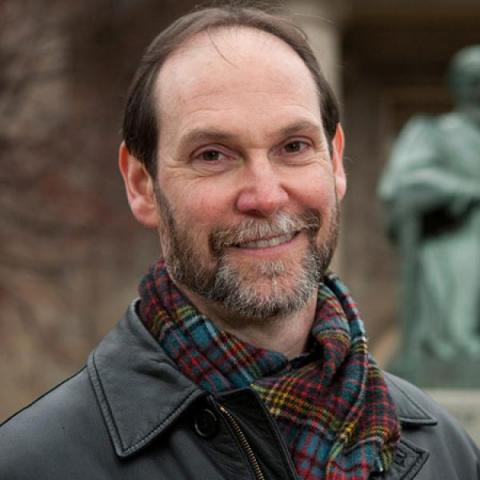
Akhenaten and Sultan and Sheikh

Akhenaten and Sultan and Sheikh: Power, Faith, and Memory

Naguib Mahfouz

Part One — The Narrative

Naguib Mahfouz was the first Arab writer to win the Nobel Prize in Literature. He wrote dozens of novels and hundreds of short stories. He was a chronicler of Cairo, a critic of power, and a master of the human heart. And in his later years, he turned his attention to ancient Egypt — not as a historian, but as a storyteller, using the past to illuminate the present.

Akhenaten is a short novel about the pharaoh who tried to change the world. Akhenaten ruled Egypt in the fourteenth century BCE. He was a revolutionary. He abolished the traditional gods. He declared that there was only one god — the Aten, the sun disk. He moved the capital to a new city. He changed the art. He changed the religion. He changed everything. And then, after his death, his successors erased his name from the monuments. They destroyed his city. They tried to make him disappear. For thousands of years, he was forgotten.

Mahfouz tells the story of Akhenaten through the voices of people who knew him. A royal guard. A priest. A doctor. A poet. A queen. Each one remembers him differently. Each one has a different opinion. One thinks he was a saint. One thinks he was a madman. One thinks he was a naive idealist. One thinks he was a dangerous fanatic. And none of them agree on what happened, or why, or what it meant. The novel is not a biography. It is a series of memories, a collage of perspectives, a meditation on truth and history.

Mahfouz is asking a question: what can we know about the past? If every witness has a different story, if every memory is shaped by ego and interest and emotion, if every account is partial and biased, then how can we say what really happened? The answer, Mahfouz suggests, is that we cannot. The past is a mystery. We can only look at it from different angles, and try to understand the people who lived it.

Akhenaten is not a long book. It can be read in a single afternoon. But it stays with you. It makes you think about the nature of belief, the cost of idealism, the way power operates, the way history is written by the winners, and the way truth can be buried. It is a quiet, subtle, powerful book.

Sultan and Sheikh is a different kind of story. It is set in a small alley in Cairo, in a time that is both specific and timeless. The characters are ordinary people — a baker, a butcher, a barber, a widow. They live in a world of poverty and struggle. They are trying to survive. And then a man appears. He is a stranger. He is a mystic. He is a healer. He is a threat. He is a blessing. He is a curse. He is everything to everyone. And he changes their lives.

The story is simple. A man named Farag is a leader in the alley. He is a bully. He is a tyrant. He controls everything. Then a man named Sheikh Sulayman appears. He is a teacher. He is a healer. He is a spiritual leader. He starts to attract followers. He starts to challenge Farag's authority. And the alley becomes a battleground — not just between two men, but between two ways of life.

Mahfouz is not just telling a story. He is writing a parable. The alley is Egypt. Farag is the state. Sheikh Sulayman is the mosque. The struggle between them is the struggle between political power and religious power, between the secular and the sacred, between the rulers and the ruled. It is a struggle that has been going on for centuries. It is a struggle that is still going on today.

The novel is short, but it is dense. Every character is a symbol. Every scene is an allegory. Every line is a clue. Mahfouz does not explain. He does not tell you what to think. He trusts you to figure it out. And that is what makes him a great writer.

Part Two — The Analysis

The two works share a formal device that is central to Mahfouz's late manner: the use of multiple, contradictory narrators and of the parable structure to distribute judgment. In Akhenaten, no single voice is authoritative, and the truth about the pharaoh is precisely what the novel refuses to supply. This is not relativism for its own sake but a specific epistemic claim about history: the revolutionary figure is destroyed twice, once physically and once in the record, and what survives is conflicting testimony that the reader must adjudicate.

In Sultan and Sheikh, the same technique operates through allegory rather than polyphony. The alley is a compression of Egyptian society into a small enough space for the two forms of power, political and religious, to be studied in their interaction without the noise of national institutions. Farag is the state in its clientelist form, Sheikh Sulayman represents a charismatic authority that answers spiritual need and creates its own dependency, and the ordinary inhabitants are the ground on which both exercises land.

Mahfouz's use of pharaonic material deserves attention because it is not escapist. The novel about a forgotten religious revolutionary, written in a society where the memory of political defeat had to be managed, is a way of debating the present through a past whose official records have been falsified. The lesson the book draws, that a monotheistic ruler who broke with the priesthood was written out of history by the very institution he tried to reform, applies well beyond its ancient setting.

The political reading of Sultan and Sheikh is complicated by the fact that neither figure wins. Farag falls to his own violence, and the Sheikh's victory proves unstable because the people need both bread and meaning, and no single figure supplies either. Mahfouz declines to solve the problem of political and religious power in Egypt; he compresses it into an alley and lets the reader watch the collision.

The result is a pairing that rewards attentive reading. Both works are for readers who are interested in Arabic literature and want to understand the relationship between power, religion, and society, and for readers who appreciate subtlety and symbolism. They are not for readers looking for fast-paced plots or clear moral lessons.

The Death of a Politician

The Death of a Politician: Nobody Cared

Gore Vidal

Part One — The Narrative

Gore Vidal was not a nice man. He was brilliant, and he was cruel, and he was usually right. He was a novelist, an essayist, a playwright, and a political commentator. He wrote about American politics with a cynicism that was breathtaking and a wit that was devastating. And The Death of a Politician is one of his darkest, funniest, and most disturbing books.

The novel is about the assassination of a United States Senator. It is not a mystery novel. We know who killed him. We know why. The question is not "whodunit." The question is "who cared?" And the answer is: almost nobody. The Senator is not a martyr. He is not a hero. He is a corrupt, venal, hypocritical man who used his power to enrich himself and his friends. And when he dies, the world moves on. His enemies celebrate. His allies scramble for his seat. His wife is relieved. His mistress is angry. And the public does not care.

Vidal tells the story through a series of voices. A newspaper reporter. A political fixer. A police detective. A society hostess. A union boss. A TV producer. Each one has a different perspective. Each one is trying to spin the story to their advantage. Each one is lying — to themselves, to each other, to the reader. And Vidal is having a wonderful time watching them all squirm.

The novel is not really about politics. It is about media. Vidal was one of the first writers to understand that in a modern democracy, the real power is not in the hands of politicians. It is in the hands of the people who decide what the public sees and hears. The senator is not important. What matters is how he is portrayed. The real battle is not over the truth. It is over the narrative. And the winner is not the one who is right. It is the one who is more convincing.

Vidal writes with a savage wit. He is not afraid to offend. He is not afraid to be unfair. He is not afraid to tell the truth. His prose is lean, precise, and merciless. He does not waste a word. He does not waste a character. He does not waste a scene. Every line is a punchline. Every page is a demolition.

But the book is not just entertainment. It is a critique. Vidal is asking a question: what happens when the people who are supposed to represent us are corrupt, and the people who are supposed to inform us are liars, and the people who are supposed to protect us are complicit? What happens when democracy becomes a game, and everyone is playing to win, and nobody is playing fair? The answer, Vidal suggests, is that we get exactly what we deserve. We get a government of the rich, by the rich, and for the rich. We get a media that tells us what we want to hear. We get a political system that is not about solving problems but about winning elections. And we get a country that is not a democracy in any meaningful sense. It is an oligarchy. It is a plutocracy. It is a spectacle.

Part Two — The Analysis

The novel belongs to a recognizable line of American political fiction that Warren's All the King's Men also occupies, and the comparison clarifies Vidal's purpose. Where Warren writes in a dense, poetic register and treats corruption as a moral crisis within a single man, Vidal works in a fleet, satirical register and treats corruption as an environment that no single inhabitant can escape. The difference in method mirrors a difference in judgment: for Vidal, there is no Jack Burden to feel the weight of complicity, only operatives who do not know it exists.

The multi-voice construction is the novel's analytical instrument. By giving a dozen narrators who each narrate the same event differently, the book stages the media critique inside its own form: no version of the senator accumulates into a version that is true, because every version has a use. Vidal's point is structural rather than moral. The system does not occasionally lie; it produces narrative as a byproduct of its operation, and the assassination is simply the event that forces all the production lines into the open at once.

The dead senator functions as an empty centre. Because we know everything about the circumstances of his death in advance, the plot's suspense is displaced from event to interpretation, and the senator himself becomes the least interesting person in the book. That displacement is the satirical thesis: in a mediated polity, the important figure is not the one who holds office but the one who controls the description, and the dead politician is merely the surface on which those descriptions are projected.

The historical setting of the novel sits in the years after Watergate, when the postwar consensus about American institutions had already cracked. Vidal's cynicism is therefore not eccentric but representative of a specific mood in which investigative journalism, congressional hearings, and political assassination had produced a public that expected corruption and a political class that assumed exposure. The novel is a document of that mood as much as a critique of it, and it inherits Watergate's vocabulary and its fatalism.

The result is a dark, funny, angry book. It is intended for readers who love political satire and are not afraid of cynicism, and for readers who want to understand how power really works. It is not for readers who are looking for hope or inspiration.

Les Misérables

Les Misérables: A Cathedral of Words

Victor Hugo

Part One — The Narrative

Victor Hugo wrote Les Misérables in exile. He was living on an island in the English Channel. He had been forced to flee France because of his political views. He was angry. He was homesick. He was desperate. And he poured all of that into a novel that is not just a novel. It is a cathedral of words. It is a symphony. It is a plea for justice. It is a prayer for mercy. It is one of the greatest books ever written.

The story is about a man named Jean Valjean. He was sent to prison for stealing a loaf of bread. He served nineteen years. He was released. He was told that he would always be a criminal. He tried to find work. He tried to find shelter. He was rejected everywhere. Then a bishop took him in. The bishop fed him. The bishop gave him a bed. And Jean Valjean stole the bishop's silver. He was caught. The police brought him back. The bishop could have sent him to prison. Instead, the bishop said, "I gave you the candlesticks too." And Jean Valjean was never the same.
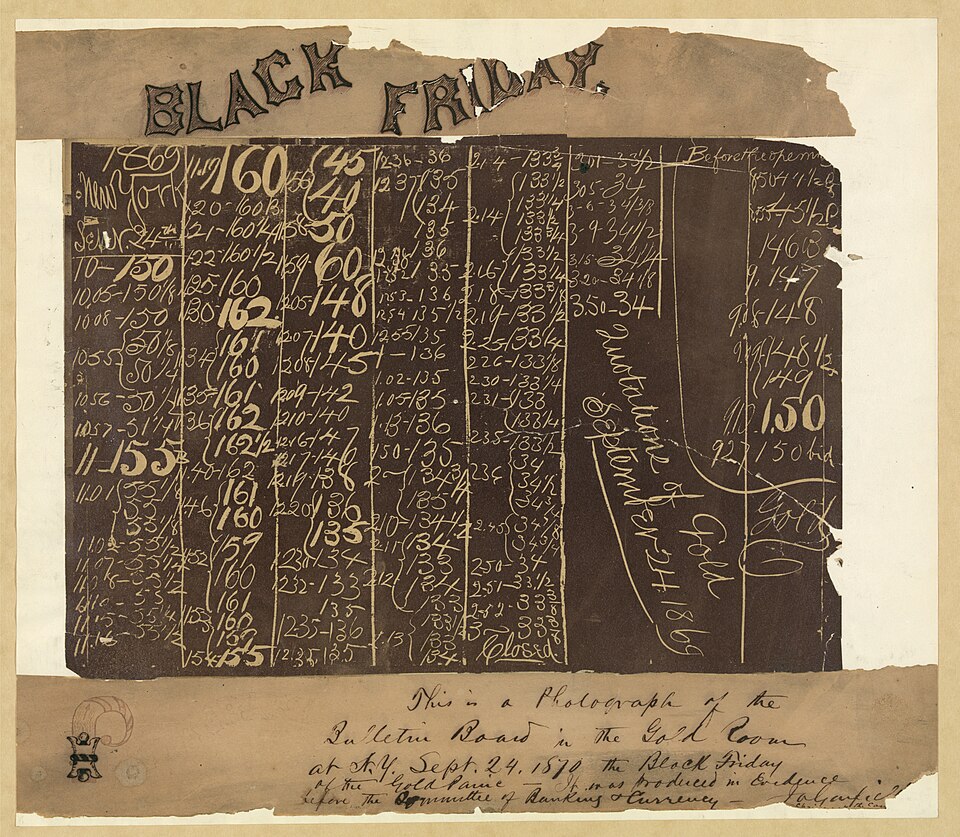
The novel follows Jean Valjean as he tries to build a new life. He becomes a successful businessman. He becomes a mayor. He becomes a father to a girl named Cosette, whose mother died in poverty. He becomes a man who is respected and loved. But he is always running. He is always hiding. Because a police inspector named Javert is hunting him. Javert believes in the law. He believes in justice. He believes that a criminal is a criminal, and that a criminal can never change. And he will not stop until Jean Valjean is back in chains.

The novel is huge. It is over 1,400 pages in most editions. It is full of digressions. Hugo spends entire chapters talking about the Battle of Waterloo. He spends entire chapters talking about the Paris sewers. He spends entire chapters talking about the history of the barricades. Some readers find these digressions tedious. They skip them. They want to get back to the story. But the digressions are not the story. They are the context. They are the world in which the story takes place. They are the reason the story matters.

Because Les Misérables is not just about Jean Valjean. It is about France. It is about poverty. It is about injustice. It is about revolution. It is about the people who are forgotten — the poor, the hungry, the desperate, the abandoned. It is about the systems that crush them. It is about the laws that punish them. It is about the society that ignores them. And it is about the hope that things can be different.

The novel's most famous scene is the barricades. Students and workers have risen up against the government. They have built barricades in the streets of Paris. They are fighting for freedom. They are fighting for justice. They are fighting for a better world. And they are losing. The army is coming. The barricades will fall. The rebels will die. And yet, they fight anyway. Because they believe. Because they have to. Because it is better to die on your feet than to live on your knees.

Hugo writes with a passion that is almost overwhelming. He is not a detached observer. He is a participant. He is a witness. He is a voice for the voiceless. He weeps with his characters. He rages with them. He hopes with them. And he asks the reader to do the same.

Les Misérables is not a perfect novel. It is messy. It is sprawling. It is too long. It is too sentimental. But it is also one of the most humane books ever written. It is a book about redemption. It is a book about grace. It is a book about the possibility of change. It is a book about the dignity of every human being. And it is a book that will make you cry, and make you think, and make you want to be a better person.

Part Two — The Analysis

The novel's scale is the first object of analysis. Hugo designed it as a progress from evil to good, from matter to soul, and organized it into five volumes whose titles declare their subjects: Fantine, Cosette, Marius, the essays on history and the sewers, and Jean Valjean. The famous digressions are not interruptions but separate volumes of a book that sets out to argue, through literature, for the social and moral consequences of poverty. The reader who skips them skips the argument.

Hugo's essays, "The Idyll of the Rue Plumet and the Epic of the Rue Saint-Denis," and his chapters on the sewers and Waterloo use the novel as a vehicle for a historical-materialist argument. Waterloo, which the book argues interrupted the work of the Revolution for half a century, and the sewers, which carry both the filth and the police of the city, are instances of Hugo's belief that surface events rest on invisible infrastructures. Both function as social commentary delivered as description.

The novel's structural pivot is the relationship between Jean Valjean and Javert. Their long antagonism is organized not as a chase but as a mutual fixation, each man defining himself against the other's understanding of the law, and the resolution, Javert's suicide after being spared by Valjean, is the point at which the novel's moral terms are reorganized. A legal system in which mercy cannot be registered is shown to be incapable of sustaining itself, which is the novel's case against its own century's jurisprudence.

The barricades sequence deserves separate assessment. It has frequently been read as a political failure, since the revolutionary movement depicted loses, and as a sentimental episode, since the student revolutionaries are celebrated in elegiac tones rather than in tactical ones. But its function inside the book is different: it is the arena in which Marius's generation must decide what its inheritance of the Revolution will mean, and in which the book's thesis, that the redemption of society depends on the moral education of the young, is carried to its limit.

The result is the great social novel of French Romanticism and arguably the most influential novel in the European tradition on the subject of criminal law and poverty. It is essential reading for anyone who believes in justice, and for readers who are patient with long, digressive novels who want to be moved, challenged, and changed.

The Grand Chessboard

The Grand Chessboard: American Primacy and Its Geostrategic Imperatives

Zbigniew Brzezinski

Part One — The Narrative

A cold, brilliant, and deeply controversial book about the geography of power — a book that has shaped American foreign policy for more than two decades and that continues to provoke debate about the role of the United States in the world.

Zbigniew Brzezinski was not a neutral observer. He was a player. He served as National Security Advisor to President Jimmy Carter from 1977 to 1981. He was one of the architects of the strategy that helped bring down the Soviet Union. He was a hawk. He was a realist. He believed that the United States had a responsibility, and a destiny, to lead the world. And in 1997, he wrote a book that explained how to do it.

The book is called The Grand Chessboard. The title is a metaphor. The world is a chessboard. The players are the great powers. The prize is control of Eurasia — the vast landmass that stretches from Europe to Asia, from the Atlantic to the Pacific. Whoever controls Eurasia controls the world. And the United States, Brzezinski argues, must control Eurasia.

Brzezinski divides the world into two categories: the "geopolitical players" and the "geopolitical pivots." The players are the countries that have the power and the will to shape the international order — the United States, Russia, China, Germany, France, India. The pivots are the countries that matter not because of their own power, but because of their location — Ukraine, Azerbaijan, South Korea, Turkey, Iran. The pivots are the pieces on the board that can be moved. The players are the ones doing the moving.

Brzezinski's strategy is simple: the United States must prevent any single power from dominating Eurasia. It must maintain a balance of power. It must support the pivots. It must contain Russia. It must manage China. It must keep Europe united and dependent on American leadership. It must be the "honest broker" in the Middle East. It must be the "offshore balancer" — the power that stays off the continent but intervenes when necessary to maintain order.

The book is not sentimental. Brzezinski does not talk about democracy or human rights. He talks about power. He talks about interests. He talks about strategy. He talks about the things that matter, and about the things that governments actually care about. He is honest about the fact that the United States is not a benevolent hegemon. It is an empire. And empires have interests, not ideals.

The book is also prophetic. Brzezinski predicted many of the things that have happened since 1997. He predicted that Russia would try to reassert its influence over its neighbors. He predicted that China would rise and become a global power. He predicted that the Middle East would remain unstable. He predicted that Europe would struggle to maintain unity. He predicted that the United States would face challenges to its primacy. He did not predict everything — he did not predict 9/11, for example, or the rise of China's economy as quickly as it happened — but he saw the broad outlines of the future.

The book has been criticized from many directions. Critics on the left say that Brzezinski is an imperialist. They say that his strategy is a recipe for endless war. They say that the United States has no right to tell other countries what to do. Critics on the right say that Brzezinski is too focused on the state. They say that he ignores the role of non-state actors — terrorists, corporations, NGOs. Critics in other countries — Russia, China, Iran — say that the book is a blueprint for American domination. They are not entirely wrong.

But the book is not just a manual for empire. It is also a warning. Brzezinski warns that the United States cannot afford to be complacent. He warns that the world is changing. He warns that new powers are rising. He warns that the old alliances are fraying. He warns that the "grand chessboard" is more complicated than it looks. And he warns that if the United States does not play the game carefully, it will lose.

Part Two — The Analysis

The book sits inside a recognizable intellectual lineage. Its central category, the Eurasian "heartland," descends from the British geographer Halford Mackinder, who argued in 1904 that control of the interior of Eurasia was the key to world dominance, and from the American strategist Nicholas Spykman, who adapted that argument into a call for the containment of any heartland power. Brzezinski's contribution is to translate this tradition into a post-Cold War policy brief: the Soviet Union is gone, but the geography remains, and so does the imperative.

The framework has a specific strength, which is that it links geography to state capability without relying on ideology. A "pivot" state matters not because of what it believes but because of where it sits, and this explains why a dozen states with little global significance nevertheless command sustained attention in Washington. Ukraine's position between Russia and Central Europe, Azerbaijan's between Caspian energy and Europe, Turkey's between Europe and the Middle East — each occupies a corridor that a great power must pass through, and each is therefore structurally exposed.

The conceptual weaknesses are equally recognizable. Geography is treated as largely fixed, which understates the extent to which technology changes what location matters. Energy pipelines, undersea cables, maritime routes, and now satellite networks all shift the value of territory in ways that the fixed map does not capture. Furthermore, states are modeled as rational, unitary actors, and non-state forces are severely marginalized despite rhetorical acknowledgment.

The post-1997 record supplies both confirmation and difficulty. Brzezinski's expectation that Russia would resist NATO expansion, that China would rise, and that the European allies would drift has been borne out. His expectation that the United States would maintain a stable Eurasian policy has not: the post-2001 concentration on the Middle East, the wars in Afghanistan and Iraq, and the domestic political exhaustion of the 2010s have produced a foreign policy that his framework warned against, namely a strategy whose commitments outrun its consolidation.

The result is the defining strategic brief of the post-Cold War period. It is essential reading for anyone who wants to understand American foreign policy and the geopolitics of the twenty-first century, and for readers who are interested in strategy, power, and the way the world really works. It is not for readers who want a hopeful or idealistic vision of international relations.

Diplomacy

Diplomacy: Three Centuries of Power and Statecraft

Henry Kissinger

Part One — The Narrative

Henry Kissinger was not a historian. He was a diplomat. He was a statesman. He was a controversial figure — a Nobel Peace Prize winner who was also accused of war crimes. He was a refugee from Nazi Germany who became one of the most powerful men in America. He was a realist in a country that believed in ideals. And in 1994, he wrote a book that is one of the most important works on international relations ever published.

Diplomacy is a history of the world, or at least a history of the world from the perspective of the great powers. It begins with the Treaty of Westphalia in 1648 and ends with the collapse of the Soviet Union in 1991. It covers three centuries of war, peace, alliance, betrayal, negotiation, and statecraft. It is a big book. It is a dense book. It is a book that requires patience. But it is also a book that rewards patience.

Kissinger's central argument is that there are two ways to conduct foreign policy. The first is the realist approach — the approach of Cardinal Richelieu, of Metternich, of Bismarck. This approach is based on power. It is based on the balance of power. It is based on the idea that peace is best maintained when no single power is strong enough to dominate the others. It is cold. It is calculating. It is effective.

The second approach is the idealist approach — the approach of Woodrow Wilson, of Franklin Roosevelt, of Jimmy Carter. This approach is based on values. It is based on the idea that the United States has a special mission to spread democracy and freedom. It is warm. It is moral. It is sometimes naive.

Kissinger does not say that one approach is always better than the other. He says that both are necessary. He says that the United States needs to be realistic about power and idealistic about values. He says that the two must be balanced. He says that the best foreign policy is one that combines the cold calculation of the realist with the moral vision of the idealist.

The book is full of fascinating portraits of the men who made history. Metternich, the Austrian chancellor who built the Congress System that kept Europe at peace for a century. Bismarck, the German chancellor who unified Germany and then managed the balance of power with a skill that no one has matched since. Wilson, the American president who tried to remake the world and failed. Roosevelt, the American president who won the war but lost the peace. Truman, the American president who launched the Cold War and never lived to see it end. Nixon, the American president who opened China and ended Vietnam. And Kissinger himself, the man who did both.

Kissinger writes with authority. He was there. He was in the room. He knew these people. He argued with them. He fought with them. He won some arguments and lost others. And he brings that experience to the page. His descriptions of the negotiations at Vienna, the crisis in Berlin, the opening to China, the shuttle diplomacy in the Middle East — all of these are vivid and immediate. They feel like they are happening now.

The book is also a meditation on the nature of statesmanship. What makes a great leader? What makes a great diplomat? What are the qualities that allow a person to navigate the treacherous waters of international politics? Kissinger's answer is: courage, judgment, patience, and a willingness to make hard choices. He admires men who can see the world as it is, not as they wish it were. He admires men who can make decisions that are unpopular but necessary. He admires men who understand that the best can be the enemy of the good.

The book has been criticized. Some say it is too focused on the great powers. Some say it ignores the role of smaller countries and non-state actors. Some say it is a defense of Kissinger's own record — a justification for the bombing of Cambodia, the overthrow of Allende in Chile, the support for Pakistan in the Bangladesh genocide. There is some truth to these criticisms. But they do not diminish the book's value. It is a masterpiece of synthesis, a brilliant analysis of the way the world works, and a compelling argument for realism in foreign policy.

Part Two — The Analysis

The book's structure enacts the author's own authority. The chapters on the twentieth century are written in the first person, not merely as a participant but as an actor, which produces a double difficulty for the reader: the narrative is both an account of decision-making from inside and an argument for the record. The historian's claim to distance is traded for the practitioner's claim to intimacy, and the result is neither neutral history nor essay, but something closer to diplomatic autobiography with historical scaffolding.

The most conceptually original section concerns the Vienna system of 1815. Kissinger argues that its durability derived not from shared values but from a shared, legitimate structure: the powers could accept each other's roles because the terms of the game were stable. This insight, that peace is a property of the system rather than of the participants' goodwill, is the book's most portable claim, and it is precisely what disappeared in 1914. The comparison of Vienna, Versailles, and Vienna-like settlements informs the entire interpretive arc of the book.

The American problem, in Kissinger's account, is structural rather than cultural: the United States was created to embody a set of universal ideals rather than to participate in a balance, and it therefore entered European statecraft with a permanent handicap of conscience. The book's most polemical register appears in its treatment of Woodrow Wilson, whose language of self-determination and collective security Kissinger blames for weakening the European states that might have resisted Hitler, a claim that has generated extensive debate among historians of the interwar period.

The criticism of self-justification is unable to be fully dismissed. The chapters covering Kissinger's own tenure treat contested episodes in a register that is notably less critical than the register applied to earlier statesmen, and the question of whether this asymmetry is candor or advocacy is one that readers must settle for themselves. Few scholars accept either his justification of the Cambodia bombing or his framing of the Bangladesh crisis as settled.

The result is essential reading for anyone who wants to understand international relations, and for readers who are interested in history, strategy, and the nature of power. It is not for readers who are looking for a simple moral framework. And no one who studies the European states system can reasonably skip it.

The Rise and Fall of the Great Powers

The Rise and Fall of the Great Powers: Why Empires Overspend Themselves to Death

Paul Kennedy

Part One — The Narrative

This is one of those books that changes the way you see the world. I read it for the first time in college. I read it again last year. And both times, I found myself looking at the news differently. Kennedy's argument is simple, but it explains so much.

The argument is this: great powers rise because they have economic strength. They fall because they have too many military commitments. The two things are connected. When a country's economy is growing, it can afford to build a strong military. It can afford to fight wars. It can afford to defend its interests around the world. But when its economy slows down — when it is overtaken by rivals, when its costs rise, when its debts mount — it can no longer afford to do all the things it used to do. And then it has to choose: does it cut back on its commitments? Or does it keep spending, and risk bankrupting itself?

Kennedy traces this pattern through five hundred years of history. He begins with the Habsburgs — the Spanish and Austrian dynasty that dominated Europe in the sixteenth century. He shows how their economy was overwhelmed by the costs of war — wars in the Netherlands, wars with France, wars with the Ottoman Empire. He shows how the Spanish Empire declined not because it lost a single decisive battle, but because it spent too much for too long. He moves on to the Dutch, who built a global trading empire in the seventeenth century, and then lost it to the British because they could not afford to compete. He moves on to the French, who challenged Britain for global supremacy in the eighteenth century, and lost because they could not afford the navy. He moves on to the British, who built the largest empire in history in the nineteenth century, and then declined in the twentieth because they could not afford to defend it. And he moves on to the Americans and the Soviets, who fought the Cold War, and who both struggled with the same problem — the problem of imperial overstretch.

The book is not just a history. It is a warning. Kennedy wrote it in 1987, at the height of the Cold War. He was writing about the decline of the British Empire. But he was also writing about the United States. He was warning that the United States was making the same mistakes that Britain had made. He was warning that if the United States did not get its economic house in order, it would eventually face the same fate. He was warning that the Soviet Union was already in decline. And he was right about the Soviet Union. And he was right about the United States too — in the sense that the United States did face economic challenges in the 1980s and 1990s, and did have to adjust its strategy. But the United States did not decline as fast as Kennedy predicted. It adapted. It recovered. It remained the world's leading power. So Kennedy was not entirely right.

But the book's value is not in its predictions. It is in its framework. Kennedy gives us a way to think about power. He shows us that power is not just about military strength. It is about economic strength. It is about the ability to pay for things. It is about the balance between what you want to do and what you can afford to do. That is a lesson that every great power has to learn, and that every great power has to relearn. And it is a lesson that the United States is still learning today.

Part Two — The Analysis

Kennedy's principal construct is the ratio between economic strength and strategic commitment, and the book's synthesis is one of its chief achievements. Drawing on the long-cycle theories of Modelski and Wallerstein, quantitative data on shares of world manufacturing, and the classic strategic literature, he builds a cumulative case across five centuries rather than testing a single hypothesis. The method is comparative macrohistory, and it prioritizes structural explanation over contingency, personality, or domestic politics.

The analytical core that carries the most weight is his account of relative rather than absolute decline. A great power need not become poorer in absolute terms; it need only grow more slowly than its rivals while its obligations remain fixed or expand. This distinction, which Kennedy borrows from the study of the British case, is what allows the framework to explain why the United States of the 1980s was prosperous and yet strategically overextended, and why the Soviet Union, despite its vast resources, was failing against smaller economies.

The empirical criticisms are substantial and well known. The treatment of the Habsburg decline under-weights territorial and dynastic causes that had little to do with debt. The British case is complicated by the fact that British decline was relative to a peer economy that was also a linguistic and financial partner, which makes it a poor analogy for rivalry with the USSR or with a rising China. And the timing of American relative economic decline, which Kennedy projects, was in fact reversed in the 1990s when the Soviet economy collapsed rather than persisted, before reemerging after 2008.

The book's political reception deserves attention alongside its content. Published in 1987, it was read as a declinist intervention in American politics, and its argument was weaponized in debates over NATO spending, trade deficits, and Japanese economic competition. Its later application to China's rise, which Kennedy did not make at the time, has become the framework's main afterlife, and readers should distinguish his actual historical cases from the retrospective applications that his framework has acquired.

The result is essential reading for anyone who wants to understand the rise and fall of empires, and for readers who love big history and big arguments. It is for readers who are not afraid of a book that will make them think about the future, and it remains one of the most consequential macrohistorical arguments of the last half-century.

The Open Society and Its Enemies

The Open Society and Its Enemies: A Defense of Freedom Against the Philosophers of Certainty

Karl Popper

Part One — The Narrative

Karl Popper was one of the most important philosophers of the twentieth century. He was born in Vienna in 1902. He fled the Nazis in 1937. He spent most of his career in New Zealand and England. He wrote about science, about politics, about the nature of knowledge. And he wrote a book that is one of the most powerful defenses of freedom ever written.

The Open Society and Its Enemies was published in 1945, at the end of the Second World War. It was a response to the totalitarian ideologies that had nearly destroyed Europe. It was a defense of liberal democracy. It was a critique of the philosophical traditions that Popper believed had led to tyranny. And it was a call to arms — a call to defend the open society against its enemies.

Popper's argument is simple. There are two kinds of societies. There are open societies, which are based on freedom, on reason, on the belief that we can improve the world through criticism and debate. And there are closed societies, which are based on authority, on tradition, on the belief that the truth has already been revealed and that anyone who questions it must be punished. Open societies are rare. They are fragile. They are always under threat. And they must be defended.

Popper believes that the enemies of the open society are not just the dictators and the tyrants. They are also the philosophers who provide the intellectual justification for tyranny. He singles out three: Plato, Hegel, and Marx. He argues that Plato's Republic is not a utopia but a blueprint for a totalitarian state. He argues that Hegel's philosophy of history is a justification for nationalism and war. And he argues that Marx's theory of revolution is a recipe for dictatorship. These are bold claims. They are controversial. They are not entirely fair. But they are worth taking seriously.

Popper's critique of Plato is the most controversial. He argues that Plato was not a democrat. He was an elitist. He believed that only a few people were capable of ruling. He believed that the masses were ignorant and dangerous. He believed that the state should control everything — education, art, marriage, reproduction. He believed in censorship. He believed in lying to the people for their own good. He believed in a rigid hierarchy. He believed in a caste system. Popper says that Plato's Republic is a totalitarian manifesto. And he is not entirely wrong.

Popper's critique of Hegel and Marx is more familiar. He argues that they both believed in historical laws — the idea that history follows a predetermined course, and that some people are on the right side of history and others are on the wrong side. He argues that this belief is dangerous. It leads to the idea that the end justifies the means. It leads to the idea that we can sacrifice the present for the future. It leads to the idea that we can justify any crime, any atrocity, any dictatorship, because we are on the right side of history. Popper says that this is the logic of totalitarianism. And he is not entirely wrong.

The book is not perfect. Popper is sometimes unfair to his opponents. He sometimes oversimplifies their arguments. He sometimes ignores the complexity of the historical situations he is describing. But the book is still one of the most important works of political philosophy of the twentieth century. It is a defense of freedom, of reason, of the open society. It is a warning against the seduction of certainty, of ideology, of the belief that we have the answers. It is a reminder that democracy is not just a system of government. It is a way of life. It is a commitment to doubt, to debate, to the possibility that we might be wrong. And it is a call to defend that way of life, against all its enemies.

Part Two — The Analysis

The book's central polemical move is its selection of targets. Popper does not attack the fascist or communist statesmen of his own century but three canonical philosophers of the Western tradition, and the logic of the choice is explicit: totalitarianism does not require an intellectual pedigree to operate, but it does require one to be believed. His equation of Plato with fascism, Hegel with imperialism, and Marx with Leninism is therefore not a scholarly hypothesis to be tested but a rhetorical argument to win, and it is assessed in that category.

Popper's Plato scholarship is the most heavily contested part of the project. Against his reading of the Republic as a closed totalitarian society, an entire generation of scholars has objected that the dialogue's ironies, its framing, and the use of the word "ideal" indicate an anti-utopian intention, and that Popper ignored the secondary literature available to him. The disagreement has a genuine philosophical stake, since if Plato can be read as a defender of unreason, then the entire intellectual history of the West becomes suspect for an additional two millennia.

His critique of historicism is analytically more durable. Popper's argument, developed earlier in The Poverty of Historicism, is that the belief in laws of historical prediction is logically incoherent, because any prediction of the future, once known, alters the conditions it predicted. The application of this argument to Marx is what converts the critique from polemic into analysis, and it is the element of the book that has most influenced the discipline.

The book's most influential legacy is methodological rather than doctrinal. Popper's insistence that the open society be defined by its willingness to be proven wrong has become the philosophical substrate of liberal constitutionalism and of fallibilism in the human sciences. Even those who reject his Plato scholarship accept his criterion of falsifiability, and the book's attack on certainty has become a standing public virtue, invoked wherever doctrine is mistaken for knowledge.

The result is essential reading for anyone who believes in freedom, and for readers who are willing to be challenged, to be provoked, and to be made uncomfortable. It is for readers who want to understand why democracy is worth defending.

The Road to Serfdom

The Road to Serfdom: Why Central Planning Leads to Tyranny

Friedrich Hayek

Part One — The Narrative

A short, powerful, and deeply influential book about the dangers of central planning — a book that has been praised as a masterpiece and condemned as propaganda, but that has shaped the debate over the role of government for more than seventy years.
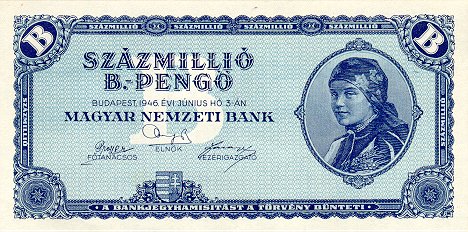
Friedrich Hayek was an Austrian economist. He was born in 1899. He was a student of Ludwig von Mises. He taught at the London School of Economics, the University of Chicago, and the University of Freiburg. He won the Nobel Prize in Economics in 1974. He was one of the most important free-market thinkers of the twentieth century. And in 1944, he wrote a book that made him famous.

The Road to Serfdom was written during the Second World War. It was written in response to the rise of totalitarianism in Germany and the Soviet Union. It was written in defense of individual freedom. It was written in warning about the dangers of central planning. And it was written in a spirit of urgency. Hayek believed that the West was in danger. He believed that the same ideas that had produced tyranny in Germany and the Soviet Union were spreading in Britain and the United States. He believed that unless people woke up, they would lose their freedom without even realizing it.

Hayek's argument is simple. Central planning — the idea that a government can and should control the economy — inevitably leads to totalitarianism. Not because the planners are evil. Not because they intend to create a dictatorship. But because the logic of central planning requires it. If you want to control the economy, you have to control everything that affects the economy. You have to control prices, wages, production, investment, consumption. You have to control who works where, who gets what, who lives where. You have to control education, media, culture. You have to control everything. And once you control everything, you have total power. And once you have total power, you have tyranny.

Hayek does not say that we should have no government. He is not an anarchist. He believes that government has a role. It should protect property rights. It should enforce contracts. It should provide some public goods. It should maintain the rule of law. But it should not try to plan the economy. It should not try to pick winners and losers. It should not try to manage the lives of its citizens. It should stay out of the way. It should let people make their own choices. It should let the market work.

The book was controversial when it was published. Many people were shocked by Hayek's argument. They thought he was exaggerating. They thought he was paranoid. They thought he was a reactionary. But the book found an audience. It was read by Margaret Thatcher. It was read by Ronald Reagan. It was read by millions of ordinary people. It became one of the founding texts of the modern conservative movement. And it remains a powerful argument for limited government today.

The book has been criticized. Some say that Hayek was too extreme. Some say that he ignored the benefits of some government intervention. Some say that his predictions did not come true — that the welfare state did not lead to totalitarianism. There is some truth to these criticisms. But the book is still worth reading. It is a reminder that freedom is fragile. It is a reminder that good intentions are not enough. It is a reminder that the road to hell is paved with good intentions. And it is a reminder that we must be vigilant in defending our freedom.

Part Two — The Analysis

The book's core argument is derived from the wider economic calculation debate of the 1920s and 1930s, in which Mises had claimed that socialist planning was impossible because, without private ownership of the means of production, price signals could not be generated. Hayek's contribution in The Road to Serfdom is to transform that technical impossibility argument into a political argument about freedom, thereby reaching readers who would have ignored the calculation debate but who feared the direction in which British wartime planning was drifting.

The conceptual weakness of the slippery slope has been observed since publication. Hayek's argument that any state intervention moves a society toward servitude is an empirical claim, and the empirical record of the twentieth century does not uniformly support it: Sweden, Denmark, and the Federal Republic of Germany combined extensive welfare provision with unbroken democratic practice, and Hayek himself later relaxed his position in The Constitution of Liberty by conceding much of the welfare state on principle. Even sympathetic economists have noted that the 1944 argument works best when confused with an earlier, stronger version rather than as stated.

The book's institutional afterlife is substantial. It was the intellectual touchstone of the Mont Pelerin Society, founded in 1947, which supplied many participants in the Thatcher and Reagan administrations, and its language of individual freedom and centralized coercion became standard vocabulary in the Atlantic conservative movement. This makes it one of the rare works of economic theory to be weaponized directly in the politics of a democracy, and its outsized political influence should be distinguished from its compact intellectual argument.

The contemporaneous criticism was immediate. Keynes, its reviewer at Cambridge, wrote that he found it "an extraordinary book" but claimed that the moral result of the argument was not to reject intervention but to abandon it quietly; and socialist economists such as Wootton and Lange attempted to demonstrate that planning and freedom could coexist. The result was a debate on the meaning of liberty that continues to define the modern political economy curriculum.

The result is essential reading for anyone who believes in individual freedom, and for readers who want to understand the intellectual foundations of modern conservatism. It is not for readers who are looking for a defense of government intervention, and it remains one of the most consequential and most contested political works of the twentieth century.

The Origins of Totalitarianism

The Origins of Totalitarianism: How Ordinary Societies Produce Monsters

Hannah Arendt

Part One — The Narrative

Hannah Arendt was one of the most original political thinkers of the twentieth century. She was born in Germany in 1906. She fled the Nazis in 1933. She spent most of her career in the United States. She wrote about power, about evil, about the nature of totalitarianism. And she wrote a book that is one of the most profound and disturbing analyses of the twentieth century's darkest moments.

The Origins of Totalitarianism was published in 1951. It is not a history of Nazism or Stalinism. It is an attempt to understand what totalitarianism is — what makes it different from other forms of tyranny, what conditions allow it to emerge, what it does to the people it rules. Arendt argues that totalitarianism is not just a more extreme form of dictatorship. It is something new. It is a system that seeks to destroy the very possibility of freedom. It is a system that seeks to remake human nature. It is a system that seeks to dominate the world.

Arendt identifies three elements that contributed to the rise of totalitarianism. The first is antisemitism. She argues that the Jews were targeted not just because they were a religious minority, but because they were a symbol of everything that totalitarianism hated — the individual, the outsider, the person who did not fit into the collective. The second is imperialism. She argues that the experience of colonizing other peoples — of treating them as less than human — prepared Europeans to accept the same treatment at home. The third is the decline of the nation-state. She argues that when the old political structures collapsed after the First World War, people were left without a sense of belonging, without a sense of purpose, without a sense of meaning. And totalitarianism filled that void.

Arendt's most controversial idea is the "banality of evil." She coined the phrase in her report on the trial of Adolf Eichmann, a Nazi bureaucrat who organized the deportation of Jews to concentration camps. She argued that Eichmann was not a monster. He was a bureaucrat. He was a man who did his job. He was a man who followed orders. He was a man who did not think about what he was doing. And that, Arendt argued, is what makes evil so dangerous. It is not always committed by monsters. It is sometimes committed by ordinary people who have stopped thinking. It is sometimes committed by people who have convinced themselves that they are just doing their duty.

The book is not easy to read. It is dense. It is philosophical. It is full of references to history and literature and philosophy. It is not a book you can skim. But it is a book that rewards close attention. It is a book that will change the way you think about politics, about power, about evil. It is a book that will make you ask uncomfortable questions. It is a book that will make you think about what you would have done in the place of the people who lived through the horrors of the twentieth century. And it is a book that will make you grateful that you live in a time and place where those horrors are not happening.

Part Two — The Analysis

The book's structure is in fact a set of three books folded under a single title: a study of antisemitism, a study of imperialism, and a study of the totalitarian movements themselves. Each addresses a different historical sequence, and the argument is cumulative rather than taxonomic. This structure is the source of both the work's ambition and its difficulty, since a reader expecting a continuous narrative of Nazi Germany will instead encounter a sequence of theses about the historical conditions of the twentieth century.

The claim that totalitarianism is generically new, rather than a variant of ancient tyranny, is the book's foundational assertion and its most contested. Arendt distinguishes totalitarian movements from earlier despotisms by their combination of terror, ideological determinism, and the ambition to make the contingent impossible; but the critics reply that this definition flattens the difference between Nazism and Stalinism, that it requires late Soviet evidence unavailable to her, and that it underestimates the variety of authoritarian practice. The disagreement over "types" of evil has shaped the field for half a century.

Arendt's contention that antisemitism was not merely a scapegoat mechanism but a specific response to the European nation-state's inability to integrate Jews as a "nation of minorities" between the states remains the most influential historical argument in the antisemitism literature. Later scholarship has qualified her claim that the Dreyfus Affair marked the origin of modern antisemitism, and has emphasized the distinctive role of racial doctrine rather than political statelessness, but her framework gave first-generation postwar scholarship a model for interpreting the event.

The Eichmann report, which introduced the phrase "the banality of evil," generated the most sustained controversy of the whole body of work. Arendt's thesis that Eichmann thought as a cliché and obeyed as a reflex, and that the most extreme crimes could be committed by people for whom duty was sufficient reason, was widely misread as exculpation. She insisted that thoughtlessness was not an excuse but the condition that made the crimes possible, and her difficulty was that her vocabulary did not convey the distinction. The debate has not closed.

The result is essential reading for anyone who wants to understand the twentieth century, and for readers who are willing to be challenged and disturbed. It is for readers who believe that ideas matter and that thinking is a moral obligation, and it remains one of the most influential and most argued-over works of political theory of the last seventy years.
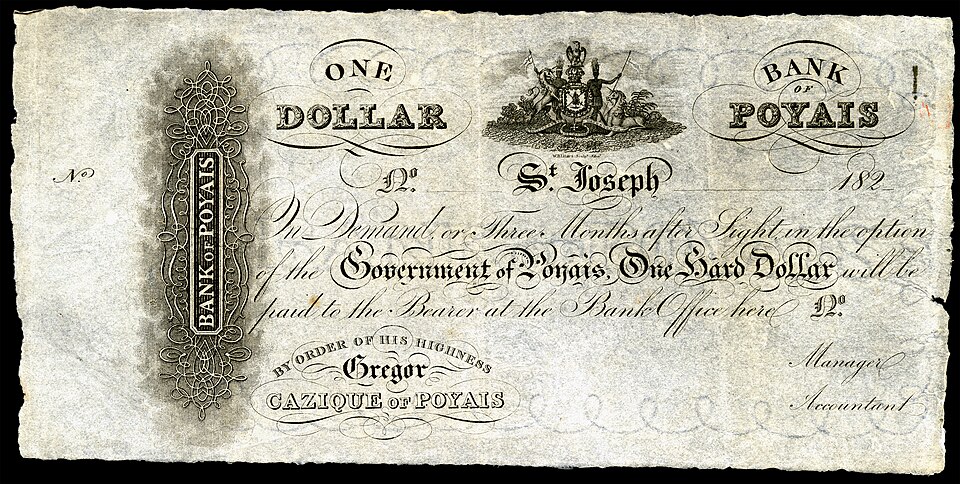
Why Nations Fail

Why Nations Fail: Institutions, Not Geography or Culture, Decide Who Prospers

Daron Acemoglu & James Robinson

Part One — The Narrative

A sweeping, ambitious, and endlessly debated account of why some nations prosper while others collapse into poverty — a book that has shaped the global conversation about inequality and development since its publication in 2012.

Daron Acemoglu and James Robinson are not modest men. They have a big theory, and they are not afraid to defend it. Their argument is simple: the difference between rich and poor countries is not geography, not culture, not religion, not the legacy of colonialism alone. It is institutions. Inclusive institutions — those that allow broad participation in the economy and politics, protect property rights, and encourage innovation — produce prosperity. Extractive institutions — those that serve a narrow elite, concentrate wealth and power, and shut everyone else out — produce poverty.

The authors spend the first half of the book building their case. They compare Nogales, Arizona, with Nogales, Sonora — two cities separated by a fence, one rich and one poor. They trace the roots of English prosperity to the Glorious Revolution of 1688 and the limits it placed on royal power. They explain why Botswana grew while Zimbabwe collapsed, despite similar starting points. They show how the Spanish Empire's extractive colonial model doomed Latin America to centuries of inequality. They show how the Soviet Union's extractive institutions doomed it to stagnation. And they show how China's rapid growth — which seems to contradict their theory — is actually explained by the fact that China, for all its authoritarianism, has allowed enough economic freedom to unleash growth, even as it has kept political power concentrated in a single party.

The writing is clear and engaging, though it can get repetitive. The authors love their framework, and they return to it so often that it starts to feel like a hammer looking for nails. Some readers may also find the historical case studies too brief — each one gets only a few pages, and the authors sometimes gloss over important details.

But these are minor complaints. This is a book that will change how you think about politics, economics, and history. It is not a quick read, but it is worth the effort. It won the Nobel Prize in Economics in 2024. It deserves the attention.

Part Two — The Analysis

The book's intervention is best understood against the debate it entered in 2012. Against Jared Diamond's geographical thesis, the Nogales comparison is a deliberately strong puzzle: shared climate, terrain, and people, radically divergent outcomes, which eliminates the obvious environmental candidates. Against the cultural thesis associated with Weber and Landes, the authors lean on migration, assimilation, and border cases, which are the strongest available evidence for that side. And against the colonial-legacy thesis of Acemoglu's own earlier work, the book generalizes from it, arguing that colonial institutions were themselves determined by whether the colonizers could settle and extract.

The distinction between inclusive and extractive institutions carries the weight of the entire argument, and its operationalization has been the principal target of critics. Institutions are classified according to their effects, which risks circularity: prosperity is explained by inclusive institutions, but inclusiveness is often recognized by the prosperity it produces. The framework also struggles to explain the sequence, since countries can combine inclusive economics with extractive politics, or the reverse, and the theory predicts eventual convergence in either direction, a prediction that the cases must then be made to fit.

The Chinese case is the most consequential anomaly, and the authors' defense is the most revealing move in the book. By arguing that growth under authoritarian rule is possible but non-sustainable, they protect the theory from the strongest counterexample at the cost of weakening its predictive power. China's four decades of rapid growth, the largest and fastest industrialization in history, is now long enough that the "unsustainable" qualification requires empirical support rather than assertion, and subsequent scholarship on state capacity in China has complicated the extractive-inclusive binary considerably.

The historiographic criticisms are also substantial. Each case study is compressed to a few pages, and specialists have objected repeatedly to the selection and treatment of events. The Glorious Revolution is presented as more decisive than its institutional afterlife supports; the treatment of Botswana as a case of inclusive African institutions omits important pre-colonial and rent-distribution detail; and the Soviet comparison conflates planned-economy inefficiency with extractive institutions in a way that some economists find analytically sloppy.

The result is a book that has restored institutions to the center of development economics, which is its single most important legacy. It is intended for readers who want a big, bold theory of history, and for those who prefer nuance over grand narratives, look elsewhere. But no serious study of inequality can bypass the framework, whatever its weaknesses.

The Origins of Political Order

The Origins of Political Order: How States Learned to Be Free

Francis Fukuyama

Part One — The Narrative

Francis Fukuyama begins with a question that has haunted political scientists for generations: how did stable political order emerge? His answer takes him from prehistoric tribal societies to the French Revolution, and the journey is as impressive as the destination.

Fukuyama argues that three institutions must develop together for a successful state: a centralized government, the rule of law, and accountability. In China, a strong state emerged early, but law and accountability never took root. In India, law and religion flourished, but political unity remained elusive. In Europe, all three gradually came together — not by design, but by accident. The result was the liberal democracy that now dominates the West.

The book's strength lies in its scope. Fukuyama moves effortlessly from chimpanzee politics to Chinese imperial bureaucracy to the medieval Catholic Church. He explains how the Church's ban on cousin marriage weakened tribal ties and created new forms of social organization. He shows how the Ottoman Empire's failure to develop a rule of law independent of the sultan doomed it to decline. He traces the emergence of accountability in England to the Magna Carta and the Glorious Revolution.

But the book is not without weaknesses. Fukuyama's treatment of China is fascinating but sometimes feels like a detour. His discussion of India is thin. And his insistence that the European path is the only path to modern statehood will strike some readers as Eurocentric.

What makes the book worth reading is Fukuyama's willingness to ask big questions and his refusal to offer easy answers. He writes with the confidence of a scholar who has spent decades thinking about these problems. The result is a book that will challenge your assumptions, even if you don't agree with all of them.

Part Two — The Analysis

The most significant feature of the book is how it revises Fukuyama's own earlier position. In The End of History, he had treated liberal democracy as an endpoint toward which political development converges; here, he argues that the combination of state, law, and accountability is a fragile historical achievement that emerged once, contingently, in Europe. The first book is a theory of convergence and the second is a theory of divergence, and the combination of the two has produced most of the interpretive interest in his mature work.

The framework itself is deliberately minimal. Fukuyama defines a functioning state by three variables rather than by regime type, which allows him to compare societies across radically different cultural traditions while remaining sensitive to sequence and timing. The variable ordering is the analytical core: China developed a strong state early and never built independent law or accountability; India developed law and religion but never built a strong state; Europe's small, fragmented kingdoms preserved both competition and memory of tribal accountability, and the Catholic Church's marriage reforms weakened the kinship structures that made bureaucratic impersonality impossible elsewhere.

The evidentiary base is broad and unusual for political science, drawing on evolutionary anthropology, on the study of primate politics, on Chinese dynastic history, on Islamic institutional history, and on the scholarship of European state formation. This breadth is the book's strength and its weakness: the syntheses are often illuminating, but the specialist literatures are traversed at speed, and readers without background in the underlying disciplines must take much of the detail on trust.

The principal criticisms concern its Eurocentric framing, its use of the European sequence as the benchmark of political maturity, and the relatively slight treatment of regions outside East Asia, the Middle East, and Europe. Defenders respond that the book asks why a particular combination emerged rather than rank civilizations, and that the premise of historical sociology is comparative, not moral. The debate over whether Fukuyama's evolutionary vocabulary smuggles in a normative hierarchy remains unresolved.

The result is a work of serious historical sociology, and the first volume of a larger project completed by Political Order and Political Decay. It is intended for readers who want a deep, historical understanding of how political systems evolve, and not for those looking for quick answers.

The Narrow Corridor

The Narrow Corridor: The Razor's Edge Between Anarchy and Tyranny

Daron Acemoglu & James Robinson

Part One — The Narrative

This book asks a question I've been thinking about for years: why is freedom so rare? And why, when it appears, does it so often disappear?

Acemoglu and Robinson's answer is simple but powerful. Freedom exists only in a "narrow corridor" between two extremes. On one side is the "absent Leviathan" — a state so weak that it can't protect its citizens, where warlords and mobs rule. On the other is the "despotic Leviathan" — a state so strong that it crushes all opposition. The corridor is narrow because it requires a delicate balance: the state must be strong enough to keep order, but society must be strong enough to hold the state accountable.

They walk through dozens of historical cases to prove their point. They show how the Tswana tribes of southern Africa built inclusive institutions before colonialism. They explain why the Ottoman Empire, despite its early strength, never developed a lasting rule of law. They trace the rise of democracy in Europe to the constant struggle between monarchs and parliaments, nobles and peasants, guilds and merchants. They show how the United States drifted toward the corridor's edge after the Civil War, and how it might be drifting again today.

I found the book's framework genuinely useful. It explains why some countries succeed at democracy while others fail. It explains why authoritarian states sometimes outperform democracies in the short run — and why they almost always fail in the long run. It explains why the United States, despite its many advantages, is not immune to democratic backsliding.

The writing is clear and engaging, though it can get repetitive. The authors love their metaphors, and they return to the "corridor" image so often that it starts to feel like a crutch. Some readers may also find the historical case studies too brief — each one gets only a few pages, and the authors sometimes gloss over important details.

But these are minor complaints. This is a book that will change how you think about politics, power, and freedom. It's not a quick read, but it's worth the effort.

Part Two — The Analysis

The book's central conceptual move is to place state capacity and societal mobilization on the same axis, which allows the authors to separate the two things that developmental literature often conflates: the strength of the state and the strength of society. A state can be weak or strong, and society can be weak or strong, and the four possible combinations map onto identifiable political outcomes, with only one of the four producing freedom. This is the most analytically productive idea in the book, and it explains why anarchy and tyranny can coexist as alternate paths of political failure.

The dynamic mechanism is described as a "tug of war" between state and society. Freedom survives not when either side is permanently victorious, but when the contest remains genuinely competitive, so that each side is continuously forced to check the other. This borrowing from the German sociologist Reinhard Bendix and the liberal tradition of Montesquieu allows the authors to explain why both over-empowered and under-empowered societies produce unfreedom, and it elevates the book above the earlier Why Nations Fail in theoretical sophistication.

The weaknesses are the weaknesses of its predecessor transferred to a new framework. The metaphor of the corridor is more evocative than precise, and the question of how to measure distance from the corridor's walls — what would count as a nation having drifted toward either edge — is never fully answered. The historical cases remain compressed, and the reliance on a recurring schema, in which every episode is resolved into a contest between state and society, sometimes fits the evidence rather than follows it.

The most consequential weakness concerns the case of China, which the authors treat as a despotic Leviathan without sustained engagement with the state-capacity literature. Where other scholars have argued that China's enormous economic transformation involved substantial societal decentralization, this book presents a unidirectional account of state omnipotence. The disagreement is not merely about facts but about the framework's ability to recognize hybrid forms of state-society interaction.

The comparison with Why Nations Fail clarifies both books. The first proposes a static classification of institutions, and the second proposes a dynamic model of the contest between them. If the first book explains the difference between prosperity and poverty, the second attempts to explain the motion between order and freedom, and it is the more ambitious of the two even where it is the less precisely argued.

The result is a book that will change how you think about politics, power, and freedom. It is intended for readers who want to understand why democracy is fragile and what it takes to protect it.

How Democracies Die

How Democracies Die: A Thousand Small Violations, Not a Single Blow

Steven Levitsky & Daniel Ziblatt

Part One — The Narrative

Levitsky and Ziblatt begin with a warning: democracy rarely dies in a single blow. It doesn't usually end with tanks in the streets or soldiers on the evening news. It ends slowly, quietly, through legal means — a thousand small violations that add up to something catastrophic.

The authors are political scientists, and they bring decades of research to bear on the question of how democracies collapse. They trace the rise of authoritarian leaders in Venezuela, Hungary, Turkey, and Russia. They show how elected officials in those countries dismantled democratic institutions from the inside, using the levers of power they had been given. And then they ask the obvious question: could it happen here?

Their answer is uncomfortable. Yes, it could.

The book's central insight is that democracies depend on two unwritten rules. The first is mutual toleration — the willingness to accept that your political opponents have a legitimate right to exist. The second is institutional forbearance — the willingness to refrain from using your legal powers to their maximum extent. When these norms break down, democracy becomes a game of winner-take-all. And when it becomes winner-take-all, it doesn't take long for the winners to start eliminating the losers.

Levitsky and Ziblatt are careful not to overstate their case. They acknowledge that the United States has survived worse crises before. They note that American democracy has always been flawed, especially for Black Americans and other marginalized groups. They admit that their warnings could be wrong.

But their diagnosis is convincing. They show how the Republican Party, over several decades, abandoned the norms that had once constrained it. They show how Donald Trump exploited those weakened norms for personal gain. They show how the Senate, the Electoral College, and the Supreme Court have all been used to entrench minority rule. And they offer a set of practical reforms that could help restore democratic norms — changes to election laws, campaign finance rules, and congressional procedures.

The book is not perfect. Some of its historical analogies are strained. Some of its predictions have not aged well. And its focus on the United States means it has less to say about democracy's fate elsewhere.

Still, it's one of the most important books on democracy written this century. It's clear, it's urgent, and it's right.

Part Two — The Analysis

The book's most influential contribution is its conceptual vocabulary. By naming mutual toleration and institutional forbearance, the authors supplied the terms in which generations of subsequent political commentary have discussed democratic erosion, and the distinction between a norm and a law has proven unusually durable. This is what often elevates a work of political science from period commentary to reference point, and the vocabulary of "backsliding" and "competitive authoritarianism" owes them a considerable debt.

The comparative evidentiary design is the book's methodological strength. The Venezuelan, Hungarian, Turkish, and Russian cases are selected not as a representative sample but as process-tracing instances of a common sequence: elected executives first capture the referee institutions, then manipulate the electoral playing field, then neutralize the opposition. The sequence is drawn from the authors' earlier academic research on competitive authoritarianism, which gives the popular book a scholarly foundation it does not always advertisement.

The limitations follow from the same design. The sequence fitted to the four cases does not generalize cleanly to every instance of democratic decline, and later scholarship has produced categories, such as executive aggrandizement without electoral manipulation, that sit uneasily between the book's stages. Critics also note that the American diagnosis sharpens noticeably in the second half, where the analytical register of the comparative chapters gives way to something closer to argument, and that the book's empirical claim about the pace of erosion in the United States has required revision in light of subsequent events.

The reception history is the most interesting dimension. Written before the 2016 election and rapidly revised afterward, the book moved from academic monograph to national bestseller, and its citation practices, which include a Trump chapter written in weeks, are an object lesson in the timing of academic intervention. Its influence on how the Democratic opposition framed its own resistance is difficult to overstate, and critics of the book often target the tone it set in that debate rather than its empirical claims.

The result is a work that defined the vocabulary of the 2016-2020 debate. It is intended for every American who cares about the future of their country, and for every citizen of a democracy that feels fragile. Read it, and then do something about it.

Das Kapital

Das Kapital: The Book That Explained Capitalism to Its Enemies

Karl Marx

Part One — The Narrative

A monumental, dense, and endlessly debated work of political economy — a book that has been praised as a masterpiece of analysis and condemned as a blueprint for tyranny, but that remains essential reading for anyone who wants to understand the modern world.

Karl Marx published the first volume of Das Kapital in 1867. He spent the next sixteen years working on the second and third volumes. He never finished them. His friend and collaborator, Friedrich Engels, edited the drafts and published them after Marx's death. The result is one of the most ambitious and influential books ever written. It is a critique of capitalism — not just an economic critique, but a moral and philosophical one. It is an attempt to understand how capitalism works, why it produces inequality, and why Marx believed it would eventually collapse.

The book begins with a simple question: what is a commodity? Marx argues that a commodity has two kinds of value. It has a "use value" — the thing it does, the need it satisfies. And it has an "exchange value" — what it is worth in the market. A loaf of bread has a use value and an exchange value. The same is true of everything else. But what determines exchange value? Marx says it is the amount of labor that went into producing the commodity. This is the "labor theory of value," and it is the foundation of everything else in the book.

From this foundation, Marx builds his most important concept: "surplus value." He argues that workers are paid less than the value they produce. A worker might spend ten hours a day making shoes. The shoes are worth $100. But the worker is paid $50. The difference — the surplus — goes to the capitalist. This is exploitation. It is the source of profit. It is the engine of capitalism. And it is, Marx argues, inherently unjust.

Marx does not stop there. He argues that capitalism is not just unjust. It is unstable. It is prone to crises. It is driven by competition, and competition forces capitalists to cut costs, which means cutting wages, which means workers have less money to buy things, which means demand falls, which means profits fall, which means businesses close, which means unemployment rises, which means demand falls further. This is the "crisis of overproduction." Marx believed that these crises would get worse over time, and that they would eventually lead to revolution.

The book is not easy to read. Marx was a German philosopher writing in the nineteenth century. His sentences are long. His arguments are complex. He assumes that the reader is familiar with classical economics, with Hegel, with the history of political thought. He is not a popularizer. He is not a journalist. He is a scholar. And he writes like a scholar. This is not a book you can skim. It is a book you have to study.

But the difficulty is part of the point. Marx was not writing a pamphlet. He was writing a scientific work. He wanted to understand capitalism — really understand it — not just criticize it. He wanted to show how it works, not just why it is bad. He wanted to provide a foundation for political action, not just a call to arms. And he succeeded. Das Kapital is one of the few books that can genuinely be called a masterpiece. It is flawed. It is dated. It is wrong about some things — Marx predicted that revolutions would happen in advanced capitalist countries like Britain and Germany, but they happened in Russia and China instead. But it is still a work of genius. It is still worth reading. It is still worth arguing with.

Part Two — The Analysis

The labor theory of value has not survived contact with modern economics. Since the marginalist revolution of the 1870s, value has been explained by the interaction of subjective preference and scarcity rather than by embodied labor, and the transformation problem identified by Böhm-Bawerk has never received a solution accepted by both Marxist and mainstream economists. The foundation on which the surplus-value argument rests is therefore the single most disputed element in the entire work, and defenders must either defend the labor theory against the mainstream or reconstruct the exploitation thesis on non-Marxian foundations.

The concept of exploitation, however, has a life independent of the labor theory. Marx's central intuition, that the ownership structure of production determines the distribution of income, can be restated in modern terms without reference to embodied labor, and much of the postwar revival of interest in Marx has consisted in exactly this reformulation. The result is a literature in which Marxian claims about power, ownership, and distribution survive even where the Marxian theory of value does not.

Marx's predictive record, meanwhile, is the most serious difficulty facing the book's defenders. The expectation that revolutions would occur first in the advanced capitalist core was falsified by events, as the text acknowledges. The predicted immiseration of the working class has not occurred in the manner described. The expected tendency of the rate of profit to fall remains empirically contested to this day. And the crisis of overproduction has been followed instead by financialization, global supply chains, and a welfare state, all of which Marx did not anticipate and could not have.

The intellectual afterlife of the book, finally, has divided into two lineages. One is scholarly: the Marxian tradition within economics and political economy, which continues to debate the transformation problem, the falling rate of profit, and the nature of exploitation. The other is political: the use of Marx as a founding text by twentieth-century states whose actual practices, from Soviet central planning to one-party rule, Marx never specified. The relation between the book and the regimes that claimed it as a warrant is a problem in the history of reception rather than in the text itself, but it has done more than any other factor to shape the book's modern reputation.

The result is a work of political economy that remains indispensable even where it has been refuted. It is essential reading for anyone who wants to understand capitalism, and for readers who are patient with dense, philosophical prose. It is for readers who are willing to engage with ideas that have shaped the world, for better and for worse.

The Age of Surveillance Capitalism

The Age of Surveillance Capitalism: When Your Behavior Became a Product

Shoshana Zuboff

Part One — The Narrative

In 2019, Shoshana Zuboff published a book that gave a name to something we had all been feeling but could not quite articulate. The name was "surveillance capitalism." The book was an instant classic. And the warning it contains is more urgent today than it was when it was written.

Zuboff is a professor emerita at Harvard Business School. She has spent decades studying the relationship between technology and society. She wrote about the rise of the personal computer in the 1980s. She wrote about the internet in the 1990s. And in this book, she takes on the biggest story of our time: the way that a handful of companies — Google, Facebook, Amazon, and their peers — have turned the intimate details of our lives into a new kind of raw material.

The argument is this. In the early days of the internet, companies like Google offered free services — search, email, maps, social media. They told us that they were in the advertising business. They told us that they were using our data to show us more relevant ads. They told us that this was a fair exchange. We get free services. They get advertising revenue. Everyone wins.

But Zuboff says that this is a lie. The truth is more disturbing. These companies are not just selling advertising. They are selling predictions. They are selling predictions about what we will do next. They are selling predictions about what we will buy, what we will click on, what we will believe, who we will vote for. And to make those predictions, they need data. They need as much data as they can get. They need to know what we search for, what we watch, what we listen to, who we talk to, where we go, how long we pause, which words we use, which emojis we send. They need to know us better than we know ourselves.

This is surveillance capitalism. It is a new economic order. It is not just about advertising. It is about power. It is about the power to predict and to shape human behavior. It is about the power to influence our choices, our opinions, our emotions. It is about the power to determine what we see, what we hear, what we believe. It is about the power to make us do things we might not otherwise do. And it is a power that is wielded by a handful of private companies, without our consent, without our knowledge, without any democratic oversight.

Zuboff does not just describe the problem. She explains how we got here. She traces the history of surveillance capitalism back to the dot-com boom. She shows how Google discovered that the "data exhaust" from its search engine — the traces we leave behind — could be turned into a valuable asset. She shows how the company built an infrastructure of data collection, analysis, and prediction that became the model for the entire industry. She shows how Facebook, Amazon, and others followed the same playbook. And she shows how the logic of surveillance capitalism has spread beyond the tech industry — into insurance, into healthcare, into education, into the workplace, into the government.

The book is dense. It is not a quick read. Zuboff is a scholar, and she writes like one. She is not afraid to use big words. She is not afraid to make big arguments. She is not afraid to be angry. And she should be angry. Because the story she is telling is a story of theft — theft of our data, theft of our privacy, theft of our autonomy, theft of our democracy. And it is happening right now, while we scroll through our phones and wonder why we feel so tired.

Part Two — The Analysis

The book's central claim, that the raw material of surveillance capitalism is behavioral surplus rather than advertising inventory, is a genuinely productive distinction, and it has been widely adopted. Even critics who dispute the book's historical sequence accept the core insight: that the business model of the major platforms is the extraction and prediction of behavior, and that the advertising revenue is the result rather than the objective. This distinction allows the concept to be applied to sectors, from automotive telematics to predictive policing, where advertising is not even present.

The historical account, however, has generated more scholarly reservation. Zuboff traces the origins of the model to Google's crisis-ridden dot-com period and its perception of search traces as an asset, and the sequence is contested. Google's own early business documents, and the technical history of its ad systems, suggest a series of incremental adjustments rather than the single decisive turn that the book narrates, and later accounts have emphasized the role of ad-tech intermediaries and data brokers rather than a single originating discovery. The book's insistence on the uniqueness of the mechanism, as opposed to its continuity with earlier forms of market surveillance, is also questioned.

The concept of behavioral modification, elaborated through the instrumentarian and utopian figures, is the book's most philosophically ambitious move. It draws on the Skinnerian tradition to argue that the platform's objective is not only to predict but to tune behavior, and it raises genuinely important questions about autonomy under conditions of continuous, large-scale experimentation. The difficulty is that the empirical case for system-wide behavioral tuning is thinner than the theoretical case, and critics have noted that the technical capability claimed has not been consistently demonstrated in the platforms' actual practices.

The political implications are where the book has proven most prescient after publication. The revelations around the mid-2010s concerning third-party data access and the role of platform data in electoral manipulation have largely vindicated her insistence that the model's effects are not confined to the market. The specific mechanism of leakage to political consultants, however, was not the mechanism she predicted, and her expectation of drift toward authoritarian instrumentality remains a contested forecasting claim.

The result is one of the defining critical works on the digital economy. It is essential reading for anyone who uses the internet, and for readers who want to understand how their data is being used and why it matters. It is for readers who are willing to be alarmed, and its vocabulary of behavioral surplus and instrumentarian power has become part of how the generation now studies the platforms.

1984

1984: The Machinery That Makes Tyranny Possible

George Orwell

Part One — The Narrative

George Orwell wrote 1984 while seriously ill with tuberculosis, finishing a novel shaped by the political disasters he had witnessed across Europe. Published in 1949, shortly before his death, it imagines a future in which authoritarian rule has moved beyond policing public behavior and begun to claim ownership of private thought. Its reputation as a warning about tyranny is well deserved, but the book's lasting force comes from the precision with which it examines the machinery that makes tyranny possible.

The story unfolds in Oceania, one of three superstates locked in a seemingly endless war. The ruling Party, represented by the omnipresent image of Big Brother, reaches into nearly every part of daily life. Posters announce that someone is always watching, telescreens make private space almost impossible, and children are encouraged to report disloyalty within their own families. The regime's power, however, rests on more than surveillance. It controls the records through which people understand the past, manipulates the language available to them, and treats independent judgment as a political threat.

Winston Smith works at the Ministry of Truth, where he revises newspapers and documents whenever the Party's official account changes. His job requires him to make yesterday agree with today, erasing people who have fallen out of favor and inventing evidence for claims that were never true. Winston performs this work competently, yet he cannot fully silence his suspicion that reality exists beyond the Party's version of it. His private rebellion begins modestly, with a diary, a forbidden relationship with Julia, and the hope that some part of life might remain beyond state control.

Orwell builds the novel around the gap between outward obedience and inward belief. Winston wants to preserve his memories, his affections, and his ability to recognize a lie. These may sound like small ambitions, but in Oceania they challenge the foundations of the political order. The Party does not merely demand that people follow instructions. It seeks the authority to decide what is true, what has happened, and even what a person is permitted to feel. Its most disturbing victories come when people are made to distrust their own minds.

The concept of doublethink gives this system its clearest expression. Citizens are expected to accept contradictions whenever the Party requires it: war becomes peace, freedom becomes slavery, and yesterday's enemy becomes today's ally without any public acknowledgment of the change. Newspeak serves a related purpose. By narrowing the language people can use, the Party hopes to narrow the range of thoughts they can form. Orwell's insight is that political control becomes especially durable when people lose not only the freedom to speak, but also the words and confidence needed to challenge what they are told.

Part Two — The Analysis

The novel is not without weaknesses. Some characters function more as vehicles for Orwell's arguments than as fully developed people, and sections of the narrative slow down when the political theory takes center stage. Its bleakness can also make it difficult to return to. Yet these limitations do little to diminish its central achievement: Orwell makes the struggle over truth feel immediate and personal. The question is not simply whether a government can deceive a population, but whether it can make people surrender their own capacity to distinguish truth from deception.

That question has kept 1984 relevant across generations. Its images and vocabulary are now so familiar that it is easy to forget how unsettling they are in the context of the novel itself. Read closely, the book is less a vague prediction of a dark future than an examination of the habits and institutions that allow political power to become absolute. It asks readers to take memory, language, and independent thought seriously, not as abstractions, but as conditions of a free life.

The novel's enduring influence lies in the way it located tyranny not primarily in physical coercion but in epistemology. Surveillance and torture are present, but the decisive violence is done to evidence, records, and language, so that the citizen cannot know that he has been wronged. This is a more sophisticated model of totalitarianism than the simple police-state picture, and it is why the book continues to be read by political theorists as an argument about the political function of truth rather than as a mere dystopia.

Its publication history also matters to its afterlife. Written in 1948 and published in 1949, the novel arrived when the wartime alliance with the Soviet Union was collapsing, and its reception was shaped by the onset of the Cold War. Read as anti-Soviet prophecy at the time, it has since been read as anti-totalitarian, anti-surveillance, and, in the age of algorithmic information, anti-propaganda. Each generation has found its own threat in its pages, which is testimony to the flexibility of Orwell's design.

Brave New World

Brave New World: Submission Through Comfort

Aldous Huxley

Part One — The Narrative

Aldous Huxley published Brave New World in 1932, during a period of economic uncertainty and growing political extremism. His imagined future differs sharply from the familiar picture of a dictatorship sustained by fear. In the World State, stability is maintained through comfort, consumption, conditioning, and constant amusement. The population is not expected to endure misery for the sake of the system; it is trained to enjoy the system so thoroughly that questioning it rarely occurs to anyone.

Human beings in this society are manufactured in laboratories rather than born into families. From the beginning, they are sorted into castes — Alphas, Betas, Gammas, Deltas, and Epsilons — and conditioned to accept the work and social position assigned to them. Biological engineering determines much of their capacity, while repeated lessons shape their preferences. The result is a society that appears orderly and prosperous because its citizens have been prepared to desire exactly what the state wants them to desire.

Bernard Marx is an Alpha who feels alienated from the confidence and conformity expected of his caste. His discomfort does not necessarily make him a principled dissident; he is often insecure and concerned with how others see him. His friend Helmholtz Watson, a talented writer, feels a different kind of frustration: he has the ability to create but lacks the freedom to give his work real depth. Their dissatisfaction exposes the limits of a culture that provides entertainment and pleasure while discouraging reflection.

John, known as the Savage, offers the sharpest contrast to the World State. Raised outside its system on a reservation in New Mexico, he has encountered suffering, ritual, family ties, and the language of Shakespeare. When Bernard brings him to London, John becomes an object of public fascination. People are curious about him, but they do not understand what he represents. He cannot accept a culture that has removed much of the pain from life by also suppressing grief, loyalty, solitude, and the possibility of profound attachment. To John, the World State's happiness seems less like freedom than a carefully managed substitute for it.

Huxley's world is disturbing precisely because its methods are so ordinary. Soma offers an easy escape from discomfort. Entertainment fills nearly every quiet moment. Casual sex is encouraged, while enduring commitment is treated as strange. Families and religious traditions have been dismantled, and serious art has little place in a culture that prizes immediate satisfaction. The system does not need to persuade every citizen through argument. It shapes their habits early and keeps them occupied enough that the questions which might challenge those habits rarely take hold.

The novel's most revealing scenes often involve officials explaining the social order in calm, practical terms. They do not present themselves as villains. They argue that instability, artistic freedom, deep relationships, and independent thought carry costs that society has sensibly chosen to avoid. Their reasoning is chilling because it is coherent on its own terms. Huxley asks readers to consider what happens when efficiency and contentment become the highest public values, and when anything that threatens them is treated as a problem to be managed.

Part Two — The Analysis

The book has familiar limitations. Bernard's role in the story is not always as compelling as the ideas surrounding him, and the final movement can feel abrupt. Some characters are designed to represent competing philosophies more than to develop naturally. Even so, Huxley's central question gives the novel unusual staying power: if a society could remove much of our distress by limiting our freedom, would the resulting happiness be worth having? The answer is not as simple as rejecting pleasure. Huxley is concerned with the price of a life in which pleasure becomes compulsory and discomfort is no longer allowed to teach, deepen, or change us.

Read alongside 1984, Brave New World presents a different route to political submission. Orwell imagines power maintained through fear and coercion; Huxley explores a population that may give up freedom because distraction and convenience feel better than responsibility. That contrast is what makes the novel more than a period piece. It is a thoughtful examination of how a society can become unfree without looking miserable.

The novel's anticipations have proven remarkably durable. Published two years before the consolidated consumer economies of the West began expanding, it imagined fordist production applied to human beings themselves, with reproductive technology, psychological conditioning, and pharmaceutical mood management as instruments of governance. Later readers have found in it a description of pharmaceutical dependency, celebrity culture, and attention economics that Huxley sketched but could not fully name.

The novel's weakness, frequently noted, is that its sociology is stronger than its psychology. The World State is brilliantly specified while its inhabitants remain sketchy, and John's intensity sometimes serves thematic function more than character development. Huxley himself later revisited and partly revised the book's diagnosis in Brave New World Revisited, accepting much of the criticism that the work had offered a caricature of distraction rather than a serious study of it.

Fahrenheit 451

Fahrenheit 451: The War Against Attention

Ray Bradbury

Part One — The Narrative

Ray Bradbury's Fahrenheit 451, published in 1953, emerged amid Cold War anxiety and fears about censorship. Yet the novel's concern is broader than a government that destroys books. Bradbury imagines a culture in which serious reading has already lost much of its appeal, crowded out by speed, noise, and entertainment. State censorship is possible partly because citizens have become less willing to make room for the difficult ideas that books can contain.

Guy Montag is a fireman, but in his society the job means setting fires rather than putting them out. He burns books and the homes in which they are hidden, carrying out his duties with the satisfaction of someone who has never seriously questioned them. His wife, Mildred, spends much of her time immersed in wall-sized television programs that make her feel connected to fictional characters while leaving little room for sustained conversation. Their home is full of stimulation, yet the relationship between them feels empty. Neither seems able to explain what is missing.

Montag's routine begins to change after he meets Clarisse McClellan, a young neighbor whose curiosity makes her seem almost alien in this environment. She notices small things, asks questions without rushing toward an answer, and pays attention to the world around her. Her most disarming question — whether Montag is happy — forces him to confront a doubt he has been avoiding. The question does not instantly make him courageous or wise. Instead, it gives a name to the unease that has begun to disturb his familiar life.

As Montag starts hiding books and trying to understand why people risk so much to preserve them, the novel shifts from a story about professional obedience to a struggle over attention and judgment. Books matter not because every printed page is automatically valuable, but because reading can expose people to complexity, contradiction, and experiences beyond their own. A society that rejects such encounters becomes easier to manage. If citizens are trained to expect constant stimulation and instant agreement, difficult thought begins to feel like an inconvenience.

One of the novel's most powerful episodes occurs when a woman refuses to abandon her books during a raid. The event leaves Montag unable to dismiss the objects he has been burning as meaningless contraband. Her decision confronts him with a possibility he has never considered: perhaps books contain something for which a person might be willing to risk everything. The scene is disturbing because it reveals the distance between the state's official judgment and the value an individual finds in the life of the mind. Bradbury makes Montag's transformation begin not with a sophisticated theory, but with the shock of witnessing conviction he cannot explain.

Bradbury's social criticism extends beyond the firemen. The people around Montag have become accustomed to shallow conversation, rapid entertainment, and a pace of life that leaves little time for reflection. The government exploits this culture, but it did not necessarily create every weakness it uses. That is an important distinction. The novel suggests that censorship can gain support when people themselves come to regard disagreement, complexity, or sustained attention as unpleasant. The destruction of intellectual freedom may begin long before anyone lights a match.

Part Two — The Analysis

The book is not equally successful in every respect. Its second half moves quickly, some characters remain thinly drawn, and Bradbury's dialogue can occasionally sound as if it is delivering the theme directly to the reader. His prose is often vivid and lyrical, but the imagery can become so dense that it competes with the story. At times, the argument is clearer than the characters' motivations. These weaknesses are real, even if they do not erase the novel's emotional force.

What endures is Bradbury's defense of attention: the willingness to sit with a difficult passage, listen to another person, notice the world, and tolerate ideas that do not immediately comfort us. Fahrenheit 451 is not simply a plea to preserve books as objects. It asks what kind of inner life becomes possible when people make time to read, remember, question, and talk honestly with one another. Its warning is directed at both institutions and individuals.

The novel's critical history has centered on whether its censorship model is accurate. Written at the height of McCarthy-era suspicion, it imagines an officially sanctioned campaign of book burning, and later historians have pointed out that most actual censorship in liberal societies has operated through market pressure, school boards, and private compliance rather than state bonfires. Bradbury's deeper claim, however, is that formal censorship is a late symptom of a culture that has already stopped reading, which makes the state's role secondary rather than primary.

That claim has acquired new relevance as home cinema, social media, and streaming have displaced print at a scale Bradbury only gestured at with wall screens and seashell radios. Whether the decline of reading constitutes the crisis he described is contested, but the novel's insistence that a free society requires citizens capable of sustained attention has proven one of the most quoted and most debated propositions in postwar American fiction.

We

We: Engineering Away the Unpredictability of Being Human

Yevgeny Zamyatin

Part One — The Narrative

Yevgeny Zamyatin wrote We around 1920, in the years following the Russian Revolution, as the new political order was taking shape. The novel imagines a state that treats individual variation as a threat to collective efficiency. Although it predates the best-known twentieth-century dystopias, it anticipates many of their concerns: surveillance, ideological conformity, the remaking of language, and the belief that human beings can be organized into a perfectly rational system.

The setting is the One State, a society of glass buildings and transparent walls where privacy has almost disappeared. Citizens are identified by numbers rather than ordinary names and follow a tightly regulated schedule known as the Table of Hours. Daily life is coordinated with mathematical precision. Work, meals, recreation, and even permitted personal time are organized to prevent unpredictable behavior. The state presents this arrangement as the triumph of reason over chaos. Its citizens are told that freedom produces uncertainty and unhappiness, while obedience guarantees stability.

The narrator, D-503, is a mathematician and engineer responsible for building the Integral, a spacecraft intended to carry the One State's ideology to other worlds. He initially admires the system and regards its order as a moral achievement. His diary begins as a record intended for an imagined audience beyond Earth, but it gradually becomes an account of his own confusion. Through the act of writing, D-503 reveals contradictions in his beliefs that the state's orderly language cannot fully contain.

His encounter with I-330 unsettles the certainty on which his life has been built. She is unpredictable, irreverent, and willing to cross boundaries that D-503 has treated as natural laws. Through her, he encounters experiences that do not fit the One State's approved categories: desire, uncertainty, imagination, and the possibility of resistance. His growing attraction to her is not a simple liberation story. It is frightening to him because it exposes the instability of an identity he believed was complete.

The diary form is central to the novel's effect. D-503's language changes as his confidence weakens. Mathematical comparisons and rigid patterns initially give him a sense of control, but the same habits become inadequate when he tries to describe feelings that refuse to fit into a formula. His narration allows readers to experience ideological change from within. The One State's control is not only imposed by guards and rules; it has become part of the way D-503 understands the world. His struggle begins when that inner structure starts to fail.

Zamyatin's glass city is one of the novel's strongest inventions. Transparency is presented as a public virtue, but its political meaning is unmistakable: if everyone can be watched, private thought becomes difficult to protect. The state's obsession with rationality also carries a deeper irony. It claims to have eliminated irrationality, yet its pursuit of perfect order depends on denying the complexity that makes human life unpredictable. The system calls itself reasonable because it has decided in advance which parts of human experience are allowed to count as reasonable.

Part Two — The Analysis

The prose can be demanding. Zamyatin's imagery is fragmented and often surreal, and the narrative does not follow the smooth rhythm of a conventional political thriller. Some readers may find D-503's changing consciousness more compelling than the plot itself. Yet these qualities are also part of the novel's originality. The disjointed style conveys a mind struggling to describe experiences for which its established vocabulary has no place.

We is sometimes discussed mainly as a precursor to 1984 and Brave New World, but reading it only in relation to later works undersells its own achievement. Zamyatin gives the problem of total control a distinctive intellectual and emotional shape. His concern is not merely that governments will take away freedom, but that people may come to regard the elimination of freedom as the highest form of happiness. D-503's awakening is therefore both personal and political: he begins to discover that an orderly life is not necessarily a fully human one.

The novel's composition history is one of the strangest in twentieth-century literature. Written in 1920 and denied publication in Soviet Russia as ideologically dangerous, it circulated in samizdat, was smuggled to the West in 1924 in a Czech translation, and reached English readers only in the same decade as Orwell's and Huxley's books. Zamyatin was arrested, permitted to emigrate, and died in Paris in 1937, having never seen his novel published in Russian.

The scholarly consensus now places Zamyatin as the founder of the genre's modern form, and the line of descent to Orwell and Huxley is explicit. What distinguishes him is the mathematical aesthetic: where Orwell writes bureaucratic prose into his totalitarianism and Huxley writes consumer pleasure into it, Zamyatin writes engineering, and this makes his dystopia feel closer to modern technocracy than either of its more famous successors.

The Handmaid's Tale

The Handmaid's Tale: How Oppression Becomes Respectable

Margaret Atwood

Part One — The Narrative

Margaret Atwood's The Handmaid's Tale presents a society that has transformed religious rhetoric into a system of political control. The novel takes place in Gilead, a theocracy established after the collapse of the United States as it once existed. Its rulers claim to be restoring moral order, but their version of morality is enforced through hierarchy, surveillance, and the removal of women's rights. Atwood's warning is not that history will repeat itself in exactly the same form. It is that political institutions can borrow familiar beliefs and traditions to make extreme forms of control appear legitimate.

Women in Gilead are assigned rigid social roles. Wives occupy the households of powerful men; Marthas perform domestic labor; Econowives belong to less privileged families; and Handmaids are compelled to bear children for Commanders and their Wives when fertility has become scarce. Offred, the narrator, is a Handmaid. Before Gilead, she had a husband, a daughter, a job, and a life that belonged to her. Under the new regime, her identity is reduced to a function the state considers useful. Even her name is replaced by a designation that marks her as belonging to a man.

The regime regulates clothing, work, reading, movement, relationships, and reproduction. Its authority is reinforced through public rituals and the constant possibility of punishment. Biblical language gives the system a vocabulary of righteousness, allowing those in power to present domination as duty. Yet Gilead is not sustained by religious claims alone. It depends on institutions that make resistance dangerous, on social divisions that prevent solidarity, and on the participation of people who may benefit from the hierarchy or fear what would happen if they challenged it.

Atwood tells the story through Offred's fractured recollections. Her account moves between the constrained present and memories of the world before Gilead, often returning to moments whose significance becomes clearer only as the narrative progresses. This structure reflects the uncertainty of a person trying to preserve an inner life under a system that wants to define her from the outside. Offred is observant but not always heroic; she can be frightened, conflicted, cautious, and inconsistent. Those qualities make her voice convincing. Survival under repression does not always look like open defiance, and the novel refuses to make courage simple.

The prose is controlled and intimate. Atwood pays attention to the meaning carried by ordinary objects, routines, and phrases. A uniform is never merely clothing; it signals a social category and limits how the wearer can be seen. A permitted conversation can become significant because so much speech is restricted. Memory, meanwhile, offers Offred a fragile way of maintaining continuity with the person she was. Her recollections cannot restore her former life, but they resist the regime's claim that its version of reality is the only one that matters.

The novel's political force comes from its attention to how oppression is normalized. Gilead does not present every act of domination as cruelty. It describes restrictions as protection, hierarchy as order, and coercion as necessity. The people who occupy privileged positions are not all equally powerful, and some are constrained by the very rules they help uphold. That complexity matters, but it should not blur the basic asymmetry of the system: Gilead systematically denies women control over their own lives and uses ideology to justify doing so.

Part Two — The Analysis

Some readers find the novel relentlessly bleak or regard its political emphasis as heavy-handed. Its deliberately restricted viewpoint can also leave parts of Gilead unexplained. Yet these features serve the book's design. Offred cannot provide a complete account of the system because she is living inside it, with limited information and limited freedom. The uncertainty is part of the experience the novel creates. Its ending refuses to provide a neat resolution, leaving the reader to confront how little control Offred has over the story that will be told about her.

That ending also raises questions about memory and historical interpretation. The events of the novel may later be studied, classified, and debated by people who are no longer exposed to the immediate risks Offred faced. Their distance can help them understand the system, but it can also make them overlook the lived reality behind the evidence. Atwood asks readers to consider not only how authoritarian societies arise, but how their victims are remembered after the fact.

The novel's construction is deliberately conservative in technique. Atwood has said that she included nothing that had not already occurred somewhere in human history, and historians of the seventeenth-century Puritan settlements of New England have traced the sources of many of Gilead's practices. The book is thus closer to archival reconstruction than to invention, which is why its imagined theocracy reads as a rearrangement of documented abuses rather than as fantasy.

Its political afterlife has been unusually dramatic, becoming a reference point for debates over reproductive rights in the United States and elsewhere, and its imagery adopted at demonstrations far from literary contexts. That reception would likely have surprised its author, who has been careful to note that the novel speculates about what could happen rather than predicts what will happen, and the distance between the book's argument and its use as a political symbol is one of the more instructive episodes in recent literary reception.

Kallocain

Kallocain: The State That Wanted Your Thoughts

Karin Boye

Part One — The Narrative

Karin Boye's Kallocain, published in 1940, belongs to the early tradition of dystopian fiction, but it approaches totalitarian control through a particularly intimate fear: the possibility that the state might gain access not only to citizens' actions, but to their private thoughts. Written as Europe was confronting the expansion of authoritarian regimes, the novel imagines a society in which loyalty is measured through exposure and secrecy itself has become suspicious.

The story takes place in the World State, a militarized society organized around discipline, collective duty, and constant readiness for conflict. The government seeks to make citizens legible to its institutions. Private life is treated as a potential hiding place for disloyalty, and the distinction between personal feeling and public conduct steadily narrows. Leo Kall, the central character, is a scientist who believes in the system and hopes to strengthen it through his work.

Kall develops a substance called Kallocain, which compels those who receive it to reveal thoughts and feelings they would ordinarily keep private. He initially sees the discovery as a tool for public safety. If the authorities can uncover hidden doubts and secret intentions, he believes, they will be better able to identify threats and protect the state. His confidence depends on the assumption that greater knowledge will make society more secure. He has not yet considered what happens when the pursuit of security destroys the right to an inner life.

The invention gradually changes Kall's understanding of both his society and himself. The drug's revelations do not produce the simple moral clarity he expected. People are more complicated than their official loyalties suggest, and their private thoughts cannot be neatly divided into categories of obedience and betrayal. When Kall confronts his own inner life, he discovers doubts that do not fit the image he has constructed of himself. His scientific achievement becomes a source of moral uncertainty: he has helped create a means by which the state can invade the very privacy that allows individuals to examine their beliefs honestly.

Boye's central insight is that a regime does not need to punish every disloyal act to exert profound control. The possibility of being exposed can be enough to change what people are willing to say, think about, or admit even to themselves. When citizens believe that no thought is truly private, trust becomes difficult to sustain. Relationships turn into potential risks, and the individual's inner life becomes another territory for the state to occupy. A society that promises perfect transparency may therefore produce not honesty, but fear and performance.

Kall is a particularly effective protagonist because he is not introduced as an obvious opponent of the regime. He wants to serve it. His invention grows out of conviction rather than open malice, and that makes his gradual disillusionment more meaningful. Boye examines the danger of treating technical capability as moral permission: just because a discovery can expose hidden information does not mean that authorities are entitled to use it. The novel's scientific premise becomes a question about political ethics, especially the limits that should exist even when governments claim to be acting for the common good.

Part Two — The Analysis

The novel also explores the tension between collective security and personal dignity. The World State's logic treats individual privacy as an obstacle to unity, but Boye suggests that a person's inner life is not simply a concealed threat. It is where uncertainty, conscience, affection, and independent judgment can develop. Remove that space, and loyalty loses much of its moral meaning. Obedience may remain, but it becomes difficult to distinguish genuine conviction from fear of exposure.

Kallocain is less widely known than 1984 or Brave New World, and its narrative may feel more direct and less formally polished than those later classics. Some of its characters and situations serve the philosophical argument more than a complex dramatic plot. Still, its focus gives it a distinct place in dystopian literature. Rather than concentrating primarily on the rewriting of history or the manipulation of pleasure, Boye imagines a state that wants to make inner privacy impossible.

The novel's Swedish provenance supplies one of its most distinctive features. It was written by a poet and novelist associated with Swedish modernism rather than with the socialist-realist tradition, and its language carries a religious and introspective quality absent from its Anglo-American successors. Where Orwell and Huxley wrote in the idiom of political pamphleteering, Boye wrote in the idiom of confession, which makes Kall's self-examination feel like a spiritual crisis rather than a political one.

The novel's question remains relevant wherever governments, employers, or institutions claim that total access to personal information is necessary for security. Boye does not suggest that secrecy always protects virtue or that private thoughts are beyond moral scrutiny. Her concern is with the political power created when an authority can compel disclosure and decide how every unspoken thought should be interpreted. The right to privacy is not merely a convenience; it can be a condition for independent judgment.

War and Peace

War and Peace: History as a Crowded Human Experience

Leo Tolstoy

Part One — The Narrative

Leo Tolstoy's War and Peace is an expansive portrait of Russian society during the Napoleonic Wars, but its ambition reaches well beyond a historical account of battles and aristocratic life. Tolstoy follows families, soldiers, servants, and political leaders as their private choices intersect with events far larger than any one person can control. The novel's scale is part of its achievement: history appears not as a sequence of decisions made by a handful of celebrated figures, but as a crowded human experience shaped by countless actions, accidents, loyalties, and misunderstandings.

The narrative begins in 1805 and moves through the upheavals of the Napoleonic era, including the French invasion of Russia and the burning of Moscow. Its central figures belong chiefly to three aristocratic families: the Bezukhovs, the Bolkonskys, and the Rostovs. Through them, Tolstoy moves between drawing rooms and battlefields, intimate conversations and national crises. A dance or a family disagreement can receive as much psychological attention as a military campaign, because both reveal how people understand their place in the world.

Pierre Bezukhov is an awkward, searching man who inherits great wealth without acquiring an equally clear sense of purpose. He moves through political ideas, social expectations, and personal disappointments in an attempt to discover how to live meaningfully. Prince Andrei Bolkonsky begins as an ambitious and disillusioned nobleman, drawn to the prospect of distinction but increasingly forced to reconsider his ideas about glory, love, and death. Natasha Rostova grows from a lively and impulsive young woman into someone whose experiences reshape her understanding of herself and others. Their paths cross in ways that show personal development as an uneven process rather than a steady march toward wisdom.

Tolstoy's treatment of war is particularly striking because he resists presenting it as a stage on which great men demonstrate their mastery. Battles are confusing, information is incomplete, and plans often break down once people encounter the conditions on the ground. Commanders may issue orders, but they cannot fully control what thousands of individuals do under pressure. Soldiers experience fear, exhaustion, loyalty, and chance in ways that do not fit the clean explanations offered after a victory or defeat. The result is a view of military history that gives more weight to lived experience than to the polished stories nations tell about themselves.

This approach connects to Tolstoy's broader argument about historical causation. He challenges the idea that figures such as Napoleon determine events through exceptional willpower. Political leaders matter, but their intentions are only one part of a much larger process. Armies move because of logistics, weather, communication failures, individual decisions, and circumstances that no commander can completely foresee. History emerges from the interaction of many forces rather than from a single heroic mind. Tolstoy returns to this argument repeatedly, sometimes at length, and his philosophical digressions can interrupt the momentum of the story.

Part Two — The Analysis

The novel's scale can be daunting. It is long, introduces a large cast, and includes characters who appear briefly before disappearing from the narrative. Its shifts between domestic scenes, military action, and explicit philosophical discussion may frustrate readers expecting a tightly plotted novel. Tolstoy's arguments about history are not always as persuasive as his scenes of human behavior, and some passages feel as though the author is determined to settle a debate rather than let the story speak for itself. These are genuine demands the book makes on its readers.

Yet the breadth of the novel allows Tolstoy to capture experiences that a narrower story could not. The characters do not exist only to illustrate an argument about war. They fall in love, misjudge one another, pursue status, suffer losses, change their minds, and discover that the lives they imagined are not always the lives they receive. Their private struggles continue while history moves around them. In that sense, the book's title describes not two separate conditions but the unstable relationship between them: peace is lived inside a world shaped by conflict, and war never erases the ordinary human needs that persist beneath it.

Tolstoy's deepest interest is not in proving that individuals are powerless. Rather, he questions the comforting stories people tell about control. The powerful often exaggerate their influence, while ordinary people may fail to recognize the cumulative importance of their own actions. Meaning is found not only in public achievement or historical fame, but also in relationships, humility, responsibility, and attention to the people close at hand. The novel's emotional rewards grow out of this contrast between the grand scale of history and the particular details of a human life.

The book's critical status has shifted across a century and a half. Initially dismissed by many Russian critics as a loose and undisciplined epic, it was later canonized, and its philosophical second epilogue became the most attacked part of the work. Modern scholarship tends to read the novel against Tolstoy's own later renunciation of art in favor of moral didacticism, seeing it as the last point before that turn, when his gifts for narrative and for argument were still held in productive tension.

The novel is a major achievement for readers willing to spend time with a long, digressive, and philosophically ambitious work. Its cast and structure require patience, and its historical arguments can slow the narrative, but Tolstoy's understanding of human motives is extraordinary. War and Peace offers not just a vivid account of Russia during the Napoleonic era, but a lasting meditation on history, chance, ambition, and the ordinary lives that grand historical narratives often overlook.

The Grapes of Wrath

The Grapes of Wrath: What a Society Owes Its Discarded

John Steinbeck

Part One — The Narrative

Published in 1939, John Steinbeck's The Grapes of Wrath brought the human cost of the Great Depression and the Dust Bowl into sharp public view. The novel won the Pulitzer Prize in 1940, but its reception was far from unanimous: its depiction of poverty, exploitation, and corporate power provoked fierce criticism as well as admiration. Its importance lies not only in the historical crisis it records, but in the way Steinbeck turns economic displacement into a story about dignity, solidarity, and the struggle to survive when the systems meant to sustain people abandon them.

The Joad family loses its Oklahoma farm after years of drought and dust storms, compounded by debts and the demands of banks and landowners. A handbill promising agricultural work in California offers a way out, so the family packs its belongings onto an old truck and heads west. The journey begins with hope, though that hope is already fragile: the Joads have little money, an unreliable vehicle, and no guarantee that the promised work will exist when they arrive.

As they travel, the family is diminished by death, separation, and exhaustion. Their losses are personal, but Steinbeck places them within a wider migration of families facing the same conditions. Thousands of people move toward California with similar expectations, only to discover that the labor market is crowded and the advertised wages are often misleading. Employers can exploit their desperation because there are always more hungry workers waiting for a job. Local residents, meanwhile, regard the migrants as a threat, turning economic hardship into social hostility.

The novel alternates the Joads' story with shorter chapters that widen the lens. These intercalary chapters describe the damaged landscape, the movement of migrant families, the practices of landowners, and the collective anger produced by insecurity. Their purpose is not simply to provide background. They show that the Joads' misfortune is not an isolated tragedy caused by bad luck; it is part of a system that distributes risk and suffering unevenly. The family gives the crisis a human face, while the broader chapters reveal the forces that keep reproducing it.

Steinbeck's anger is unmistakable, particularly in his treatment of banks, corporations, and landowners who speak of economic necessity as if it were a law of nature. The institutions that remove families from their land often appear impersonal, making responsibility difficult to locate. A bank's decisions may be carried out by people who insist they have no choice, yet the consequences are experienced by families who lose their homes and livelihoods. Steinbeck exposes the moral distance between those who make economic decisions and those who bear their costs.

At the center of the novel is the gradual movement from individual survival toward collective responsibility. At first, the Joads are mainly concerned with keeping their own family together. Their encounters with other migrants, however, reveal how much they share with people they have never met. The novel suggests that solidarity is not an abstract ideal; it grows from common vulnerability and the recognition that no family can solve a structural crisis entirely on its own. This does not mean Steinbeck romanticizes poverty. The migrants quarrel, make mistakes, and sometimes turn against one another under pressure. Cooperation remains difficult precisely because scarcity makes everyone afraid.

The ending is among the novel's most discussed passages. After the family has suffered repeated losses, Rose of Sharon offers an act of care to a starving stranger. The scene is unsettling and deliberately unresolved: it does not repair the damage the Joads have endured or promise that the wider crisis will end. Instead, it places human compassion beside material deprivation. Steinbeck's conclusion is hopeful without being reassuring. Kindness survives, but it cannot substitute for justice, decent wages, shelter, or institutions that protect the vulnerable.

Part Two — The Analysis

Some readers may find the novel's symbolism and political arguments too direct. Certain characters can seem to serve the social message more than their own individual development, and the alternation between the family narrative and the broader chapters can interrupt the story's momentum. Yet that structure is also one of Steinbeck's most effective choices. It prevents readers from treating the Joads' suffering as a private misfortune and insists that personal stories must be understood in relation to economic conditions.

The Grapes of Wrath remains a major American novel because it asks what a society owes people whose labor it needs but whose lives it is willing to discard. Steinbeck does not offer an easy political program, nor does he pretend that compassion alone can resolve a crisis built into the economy. He makes the case that a person's worth cannot be measured by property, productivity, or market demand, and that a society should be judged by how it treats those with the least power.

The novel's reception history is unusually well documented and unusually hostile. Banned and burned in Kern County, investigated by agricultural committees, and attacked in Congress as communist propaganda, it was the single most contested American novel of the late 1930s. Much of that hostility was organized by the very interest groups it depicts, which is itself evidence of how accurately its account of landownership and migrant labor landed.

Its formal innovations have also aged well. The five-way set-piece chapters that alternate with the narrative, drawing on documentary reporting, on journalistic interchapter technique associated with the 1930s proletarian novel, and on Steinbeck's own field research for a series of newspaper articles, have influenced generations of socially engaged fiction. The challenge it leaves to readers is whether compassion can be represented without sentimentality, and whether a political novel can sustain artistic power after its immediate crisis has passed.

The result is a powerful and demanding novel for readers interested in American history, labor, poverty, and economic justice. Its political anger and occasional symbolic directness may not suit every reader, but its combination of intimate family drama and social analysis remains compelling. Steinbeck shows how a financial crisis becomes a human one, and why dignity and solidarity matter most when people are treated as disposable.

And Quiet Flows the Don

And Quiet Flows the Don: A World Coming Apart

Mikhail Sholokhov

Part One — The Narrative

Mikhail Sholokhov's And Quiet Flows the Don is a large-scale novel about the Don Cossacks during one of the most disruptive periods in Russian history. Written across the years surrounding the First World War, the Russian Revolution, and the Civil War, it follows a community whose customs and loyalties are unsettled by forces far beyond its control. The novel's scope is immense, but its emotional center remains close to the ground: families, relationships, land, and the difficulty of deciding where one belongs when the political world has split apart.

The Don Cossacks occupy a distinctive place in the Russian Empire, with traditions shaped by farming, military service, local identity, and a strong sense of independence. Sholokhov depicts their everyday world in considerable detail: the rhythms of village life, seasonal labor, family obligations, celebrations, quarrels, and the landscape surrounding the Don River. These details establish what is at stake when revolution and war arrive. The Cossacks are not simply a political group choosing between rival programs. They are a community whose way of life is about to be transformed.

Grigori Melekhov stands at the center of this upheaval. He is a Cossack farmer and soldier whose private relationships are as unsettled as his political loyalties. His love for Aksinya, who is married to another man, conflicts with his marriage to Natalya. Neither relationship can be reduced to a simple choice between right and wrong; each exposes different obligations, desires, and consequences. Grigori's emotional uncertainty mirrors the broader instability around him. He wants a life that can hold together love, family, community, and conviction, but history repeatedly makes those aims difficult to reconcile.

The First World War pulls Grigori away from village life and exposes him to violence and military discipline. The revolutions that follow demand political choices that are anything but straightforward. The Reds and Whites offer competing visions of the future, while the Cossacks must decide how to protect their land, autonomy, and social traditions. Alliances shift, loyalties fracture, and yesterday's neighbor may become today's enemy. Grigori's changing allegiances are not merely evidence of personal indecision; they reflect a world in which political labels fail to capture the complicated interests and attachments of ordinary people.

Sholokhov's strongest achievement is his refusal to let historical conflict remain an abstraction. Battles and political changes are measured through their effects on homes, families, and familiar routines. The novel returns to the fields, animals, river, and village customs that make up the Cossacks' lived world. Their importance is not sentimental decoration. They show what political upheaval destroys: not just institutions or territory, but the continuity through which people understand themselves. When that continuity breaks, even victory can feel like a form of loss.

The novel is also notable for its refusal to offer a clean moral division between the opposing sides. Its characters commit acts of courage and cruelty, often under pressures they cannot fully control. Sholokhov gives the conflict a human cost that resists easy propaganda. That does not mean the novel is politically neutral in every respect, or that its historical representation has escaped debate. Its publication and authorship have been the subject of scholarly controversy, and readers should be cautious about treating a literary narrative as a transparent record of events. Its power as fiction, however, lies in its attention to contradictory motives and the suffering produced by civil conflict.

Part Two — The Analysis

Sholokhov's style can be uneven. The narrative is expansive, the prose sometimes rough, and the sheer number of events and characters can make the reading experience demanding. At points, the structure feels closer to a chronicle than to a tightly organized modern novel. But that breadth also allows the work to convey the scale of social change. The story rarely gives readers the comfort of a single viewpoint from which the conflict becomes simple. Instead, it asks them to remain with people whose loyalties and judgments change under pressure.

The tragedy of And Quiet Flows the Don is not merely that a traditional society disappears. It is that historical upheaval forces people to make decisions without giving them the knowledge or stability they would need to make those decisions confidently. Grigori's struggle is therefore both personal and collective. He seeks a place where his loyalties can coexist, while the world around him increasingly demands that he choose one side and abandon the rest.
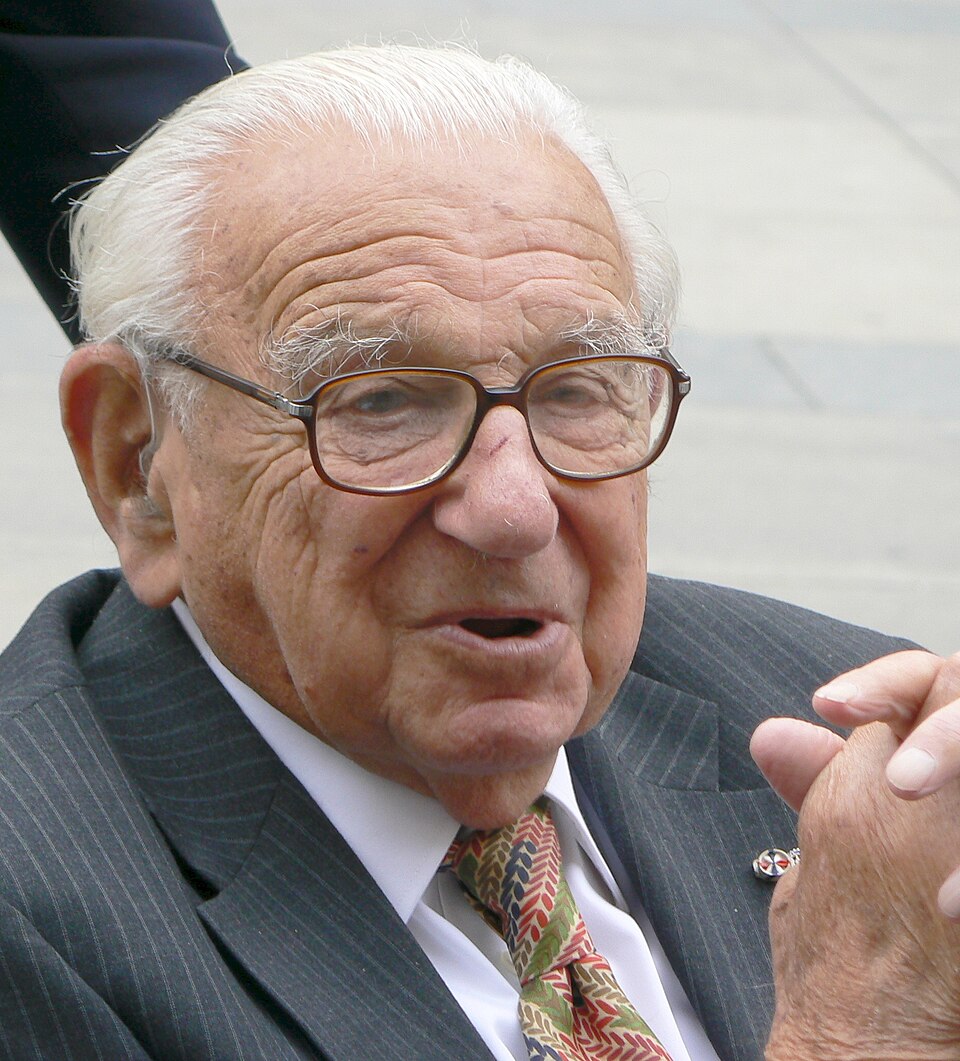
The authorship controversy deserves separate mention, because it is without parallel in twentieth-century Russian literature. Published in four volumes between 1928 and 1940, the work's status as a Cossack epic sympathetic to the White cause and simultaneously a Stalin Prize winner was anomalous from the beginning. Allegations of plagiarism, raised from the late 1920s onward and revived by Solzhenitsyn in the 1970s, have been countered by computer stylometric analysis and archival study, most of which now supports Sholokhov's authorship, though the debate has never fully closed.

The novel's relationship to socialist realism is equally complicated. Officially honored, it depicts the revolution's human wreckage from the standpoint of people it destroyed rather than from the standpoint of its organizers, and its treatment of the Civil War avoided the schematic alignment of parties and virtues expected by the doctrine. Its survival is sometimes attributed to Sholokhov's standing and to the sheer ambition of the work rather than to its ideological compliance.

The result is a substantial, emotionally rich epic for readers interested in Russian literature, the Cossack world, and the human consequences of revolution. Its length, uneven pacing, and historical complexity require patience, but its portrayal of divided loyalties gives the novel lasting force. Rather than turning civil war into a heroic story of inevitable victory, Sholokhov dwells on what it costs ordinary people to live through a world that has come apart.

To Kill a Mockingbird

To Kill a Mockingbird: Decency Without a Result

Harper Lee

Part One — The Narrative

Harper Lee's To Kill a Mockingbird, published in 1960, is often remembered for its treatment of racism and justice in the American South. Its lasting appeal, however, also comes from the way it filters these large questions through a child's growing understanding of the world. Scout Finch narrates the story from the perspective of someone who notices far more than she can initially explain. Through her eyes, familiar routines, neighborhood rumors, and family conversations gradually reveal the prejudice and moral compromises beneath a small town's respectable surface.

The novel takes place in Maycomb, Alabama, during the 1930s. Scout lives with her brother, Jem, and their widowed father, Atticus Finch, a lawyer whose calm manner and sense of responsibility shape the children's understanding of right and wrong. Their childhood includes games, friendships, school troubles, and their fascination with a reclusive neighbor, Boo Radley. These episodes give the story warmth and humor, while also introducing a central concern: how quickly people judge someone they do not understand.

The plot's moral center emerges when Atticus agrees to defend Tom Robinson, a Black man accused of assaulting a white woman. The case places the family in conflict with a community whose racial hierarchy is treated as common sense. Atticus knows that defending Tom will bring hostility, and he understands that the jury may refuse to accept evidence that challenges its prejudices. He proceeds because abandoning the case would mean abandoning the principles he wants his children to learn. His courage is not presented as confidence that he will win; it is the willingness to do what he believes is right despite expecting defeat.

The trial exposes the distance between legal procedure and genuine justice. The evidence undermines the accusation against Tom, yet the jury convicts him. The verdict reveals that the courtroom is not insulated from the town's racial assumptions. The law may claim to treat people equally, but its application depends on the people who interpret evidence and decide whose testimony deserves belief. Lee makes this failure especially painful by allowing Scout and Jem to observe the proceedings without fully understanding all their implications. Readers see both the facts of the case and the children's gradual recognition that adults can uphold an unjust order while insisting that they are respectable.

Scout's perspective is crucial to the novel's moral complexity. She is curious, outspoken, and often impatient with the social rules around her, but she is not a miniature adult who already understands every injustice. Her knowledge develops through encounters that unsettle what she has been told. Jem's response to the trial differs from hers, reflecting the painful process of growing older and discovering that fairness is not guaranteed. Their experiences show how moral education can involve disillusionment as well as empathy.

Atticus is an important figure, though modern readers may reasonably question the extent to which the novel centers a white character's moral courage within a story about anti-Black racism. Tom Robinson's own perspective is limited, and the narrative gives less space to the inner lives of Black characters than it gives to the Finch family. These limitations matter because a story about injustice can reproduce some of the imbalances it seeks to criticize. At the same time, the novel makes clear that Tom's fate is shaped by a system that values racial status over evidence, and it invites readers to question the community that accepts that system.

The Boo Radley subplot develops the theme of judgment on a more intimate scale. At first, Scout, Jem, and their friend Dill treat Boo as a mysterious figure around whom they build frightening stories. As the novel progresses, their assumptions begin to look less like harmless entertainment and more like a version of the town's wider habit of turning unfamiliar people into objects of fear. The children's gradual change in perspective gives emotional weight to the idea that understanding another person requires more than repeating the stories others tell about them.

Part Two — The Analysis

Lee's style is accessible without being simplistic. The adult narrator's retrospective voice preserves the immediacy of childhood while allowing the story to suggest meanings Scout could not have fully grasped at the time. Humor and ordinary domestic scenes sit beside the trial's injustice, preventing the novel from becoming a single-issue tract. Its moral lessons are sometimes stated explicitly, and Atticus can appear almost too consistently principled, but the contrast between childhood innocence and adult prejudice remains effective.

The book's central question is not simply whether individuals can be good in a bad society. It is whether decency means anything when it is not accompanied by action, and how people can learn to see beyond the assumptions their community teaches them. Atticus offers one model of moral responsibility, but the trial also demonstrates the limits of individual virtue when institutions and collective attitudes remain unchanged.

The novel's canonization has been accompanied by a substantial critical countercurrent. Scholars of African American literature have long objected that Tom Robinson functions as an object of white benevolence rather than a subject, and that the Black community of Maycomb, notably Calpurnia's household, receives little interiority. The white savior structure, in which the moral drama belongs to the Finch family and the trial is watched from the segregated balcony, reproduces within the novel the very imbalance it critiques, and this objection has become central to how the book is now taught.

Its publication history is equally instructive. Submitted to a publisher by an amateur manuscript championed by the editor Tay Hohoff, and substantially revised through two years of collaboration, the novel sold modestly before word of mouth turned it into a phenomenon. Lee published almost nothing afterward, refused interviews for decades, and the posthumous publication of Go Set a Watchman generated a further controversy about her intentions and her capacity to consent.

The result is a moving and accessible novel for readers interested in childhood, conscience, racism, and the gap between legal ideals and lived justice. Its focus on Atticus and its limited development of Tom Robinson deserve critical attention, but its account of moral growth remains powerful. The book asks readers to look beyond reputation and social convention, and to recognize that doing the right thing may matter even when it does not produce the right result.

The Day Lasts More Than a Hundred Years

The Day Lasts More Than a Hundred Years: Remembrance as a Moral Act

Chingiz Aitmatov

Part One — The Narrative

Chingiz Aitmatov's The Day Lasts More Than a Hundred Years brings together Central Asian landscape, local memory, Soviet modernity, and speculative elements in a novel concerned with what happens when progress demands the erasure of the past. Aitmatov, a Kyrgyz writer who often wrote in Russian, places an ordinary railway worker at the center of a story that expands into myth, political repression, and questions about humanity's place in the universe. The novel's scope is wide, but its central conflict begins with a modest act of respect: a man wants to bury his friend according to the customs of their ancestors.

Yedigei, the protagonist, sets out to accompany the body of Kazangap to an old cemetery on the Kazakh steppe. The journey gives the novel its physical structure, but the burial is also a test of whether the community's memory can survive the demands of a rapidly changing world. The cemetery is threatened by development connected to a nearby space facility, and access to the ancestral resting place has become difficult. What might appear to be a local administrative problem carries a deeper meaning: the dead, their stories, and the rituals through which the living remember them are being pushed aside by institutions that see little value in them.

Aitmatov gives the landscape an active presence. The steppe is not merely scenery; it holds the rhythms of work, travel, kinship, and memory. Yedigei's knowledge of the place comes from years of living within it, while the institutions around him measure space according to other priorities. The contrast is not a simple argument that old ways are always good and modern technology always bad. Rather, the novel asks what kind of progress is worth pursuing if it treats cultural continuity as an obstacle and human attachment as irrelevant.
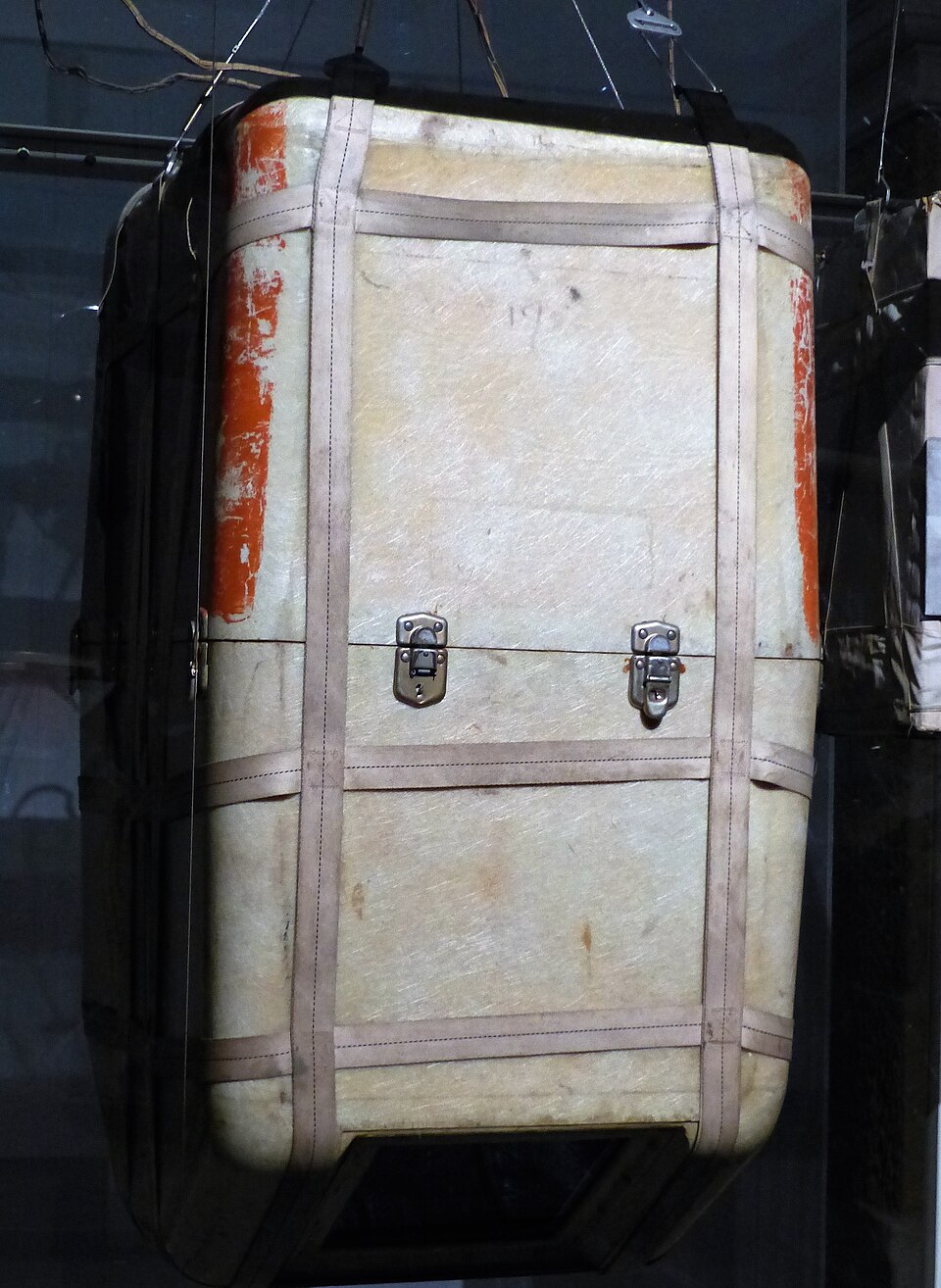

The main journey is interwoven with stories from the past, including the fate of Abutalip, a teacher and former prisoner who records the history and traditions of his people. His desire to preserve memory becomes politically dangerous. Under a system suspicious of independent thought, even the act of writing down local experience can be interpreted as disloyalty. Abutalip's story connects the novel's concern with cultural inheritance to the coercive power of the state: a government can weaken a community not only by changing its institutions, but also by controlling which memories are allowed to survive.

The novel's title suggests that a single day can contain more than the immediate events unfolding within it. Yedigei's journey is filled with recollections, inherited stories, and historical wounds that stretch far beyond its hours. Personal time and collective time overlap. A burial becomes an occasion for remembering a friend, a community, and the political pressures that have shaped both. In this way, the novel resists the idea that the past is simply over. What has happened continues to influence the living through language, habits, grief, and the stories people choose to tell.
Aitmatov also widens the narrative beyond the steppe through a speculative strand involving space exploration and contact beyond Earth. This shift may surprise readers expecting a purely realist novel, but it reinforces the book's questions about power and responsibility. Technological ambition can expand humanity's reach without necessarily expanding its moral imagination. A civilization may develop extraordinary capabilities and still fail to respect the dignity of individuals or the histories of communities. The contrast between the local burial and the grand scale of space technology gives the novel much of its distinctive tension.
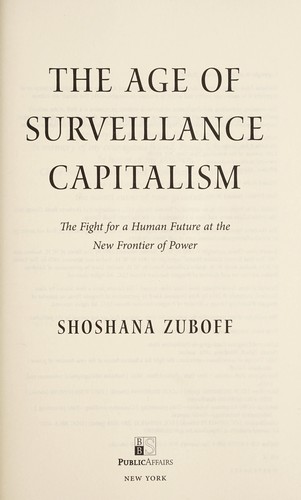
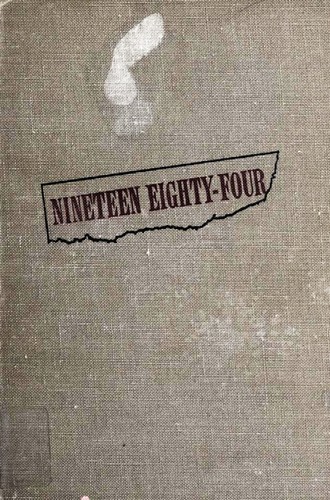
Part Two — The Analysis

Aitmatov's writing is emotionally direct and often lyrical. He gives substantial space to memory, legend, and moral reflection, and his narrative can move from intimate observation to sweeping declaration. Readers who prefer understatement may find some passages overly emphatic, while the shifts between realism, folklore, and speculative fiction can make the structure feel uneven. Yet the novel's mixture of forms is central to its vision: a people's history is carried not only by official records, but by stories, rituals, landscape, and the memories of individuals.

The book is especially valuable for readers interested in Central Asia because it places local experience at the center of a story about Soviet rule and modernization. Its world is neither an exotic backdrop nor a footnote to Russian history. The steppe has its own traditions, conflicts, and forms of knowledge. Aitmatov asks what is lost when those ways of understanding the world are dismissed as backward, and what responsibilities remain when political systems attempt to dictate how the past should be remembered.

The novel's mixture of registers is best understood as a deliberate poetics of survival. Aitmatov combines the Soviet village prose tradition, with its detailed attention to rural labor, with Central Asian oral epic structure, with philosophical science fiction, and the seams show, but the awkwardness is functional. Each register carries a different kind of memory, and the novel's argument is that a community's survival depends on keeping all of them in play rather than submitting to a single official version.

The author's position inside the late Soviet literary system complicates the reading. Aitmatov was one of the most honored writers in the USSR, later a diplomat and adviser, and the novel was published in 1980, at the height of stagnation. Works that pair state honors with quiet critique of memory politics belong to a recognized Soviet genre of licensed dissent, and the question of how much its critique is veiled, or how much was permitted, remains part of the critical record.

The result is a distinctive and ambitious novel for readers interested in Central Asian culture, memory, Soviet history, and the tensions between technological progress and human continuity. Its philosophical passages and shifts in genre can feel uneven, but its central image, a journey to honor the dead in a world determined to move on, gives the book enduring emotional force. Aitmatov makes remembrance a public and moral act, not merely a private feeling.

The New York Trilogy

The New York Trilogy: When the Detective Loses Himself

Paul Auster

Part One — The Narrative

Paul Auster's The New York Trilogy takes the conventions of detective fiction and gradually turns them inside out. Comprising City of Glass, Ghosts, and The Locked Room, the trilogy begins with recognizable mysteries but refuses to provide the stable identities, clear evidence, and satisfying explanations that readers may expect from the genre. Instead, each story becomes an inquiry into observation, authorship, language, and the uneasy boundary between the person who watches and the person being watched.

In City of Glass, Daniel Quinn is a writer of detective novels who lives in isolation after the deaths of his wife and son. A wrong-number phone call leads someone to mistake him for a private investigator named Paul Auster. Rather than correcting the caller, Quinn accepts the role and takes on a case involving Peter Stillman, a young man who fears his father. The elder Stillman has pursued an experiment concerning the origins of language, subjecting his son to years of isolation in the belief that he might discover a form of speech untouched by society. What begins as a task of protection gradually draws Quinn into a maze of surveillance and interpretation.

Quinn follows Stillman through New York, recording his movements and searching for a pattern in the routes he takes. The detective's work depends on the assumption that careful observation will reveal meaning. Yet the more Quinn watches, the less secure his own identity becomes. He is no longer certain whether he is acting as a writer, a detective, or a character in a story he cannot control. The city offers an endless supply of signs, but no guarantee that those signs can be assembled into a reliable explanation.

Ghosts strips the detective plot down even further. Blue is hired by White to watch Black and send regular reports. The task seems straightforward, but Black's routine offers little obvious explanation for the surveillance. Blue's work becomes repetitive, and his attention gradually shifts from the man he observes to the act of observing itself. The assignment begins to shape his identity: he spends so much time watching Black that the distinction between investigator and subject starts to weaken. The mystery is no longer only what Black is doing, but what gives Blue's own life direction or meaning.

In The Locked Room, the narrator's relationship with an absent writer named Fanshawe raises questions about authorship, possession, and personal identity. Fanshawe disappears, leaving behind manuscripts, a wife, and a child. The narrator is asked to manage the work and gradually occupies a place in the life Fanshawe left behind. Professional success and personal attachment become difficult to separate from the suspicion that he has inherited, or appropriated, another man's identity. The search for Fanshawe becomes a search for the boundaries between one life and another.

Across the three stories, Auster repeatedly unsettles the assumption that identity is stable and self-contained. Names can be exchanged, roles can be performed, and one person can become absorbed in the life of another. The detective's traditional task is to restore order by discovering who did what and why. Auster's characters often find that investigation destabilizes the very selves from which they began. Knowledge does not necessarily bring mastery; sometimes the pursuit of an answer exposes how little the investigator understands about himself.

Language is equally uncertain. Words are necessary for recording evidence and telling stories, but they do not provide transparent access to reality. The Stillman plot makes this problem explicit, while the trilogy's shifting narrators and references to writers draw attention to the constructed nature of the stories themselves. Auster invites readers to notice how interpretation depends on assumptions, and how easily a pattern can look convincing even when its meaning remains unclear.

New York is more than a backdrop. Its streets, rooms, windows, and anonymous crowds create the conditions for both connection and isolation. The city gives the characters countless people to watch and countless routes to follow, yet its scale makes it easy for an individual to disappear. Urban life becomes a fitting setting for the trilogy's interest in anonymity: people are visible everywhere, but visibility does not mean they are understood.

Part Two — The Analysis

The trilogy's formal experimentation is also its main challenge. Readers who want conventional mysteries may find the endings frustrating, because the books do not tie every thread into a neat solution. The characters can feel more like figures in philosophical experiments than fully rounded psychological portraits, and the repeated patterns may occasionally seem deliberately opaque. Yet the uncertainty is not simply a puzzle left unsolved. It is part of Auster's subject. The books ask whether a mystery can ever be separated from the person trying to solve it.

The trilogy's debts are specific and openly acknowledged. Quinn reads Don Quixote, the Stillman experiment alludes to Rousseau's and Locke's theories of language, and the city itself functions as a kind of palimpsest over Poe's and Dickens's New York. Critics have therefore read the work as a postmodern rehearsal of the detective story's founding assumptions, in which the genre's promise of rational resolution is exposed as a fiction of the same order as the cases it resolves.

That indebtedness is also the basis of the main criticism leveled against the later reception of the work. Reviews at the time frequently described it as clever, and the charge of cleverness, that the books are exercises in literary quotation rather than investigations of character, has followed Auster's fiction ever since. The counterargument is that the deliberately schematic figures are the point, since a novel about the impossibility of stable identity cannot rely on rounded individuals without contradicting itself.

The trilogy's place in the history of the form rests on its radicalization of a trend already visible in Chandler-era noir. By taking the detective's reliance on pattern recognition and pushing it to the point where pattern dissolves, Auster produced a version of the genre in which the reader's own desire for a solution is the mystery being investigated. This self-implicating design accounts for its enduring interest for critics of postmodernism and its relative neglect by readers who treat detective fiction as entertainment.

The result is a rewarding but unconventional collection for readers interested in postmodern fiction, detective stories, and questions of identity and language. Its refusal to offer tidy resolutions may frustrate readers who prefer plot-driven mysteries, but the trilogy's formal play has a clear purpose: it reveals how observation can turn into obsession and how the search for certainty can unsettle the self. Read it less as a set of cases to solve than as an exploration of what happens when the usual tools of explanation stop working.

I, Claudius

I, Claudius: The Fool Who Survived the Palace

Robert Graves

Part One — The Narrative

Robert Graves's I, Claudius, published in 1934, reconstructs the political world of imperial Rome through the imagined autobiography of Claudius, a member of the imperial family who survives years of suspicion and violence before becoming emperor. Graves draws on ancient historical sources while using the freedom of fiction to fill the gaps between recorded events. The result is both a lively historical narrative and a study of how power operates inside a family where affection, inheritance, and political survival are difficult to separate.

Claudius is an unlikely figure to occupy the center of Roman power. He has a limp and a stammer, and relatives regard him as physically weak and intellectually unimpressive. Their dismissiveness gives him a measure of protection. While other members of the family compete for status or expose their ambitions, Claudius watches and listens. He learns to notice what people say in public, what they conceal in private, and how a reputation can matter more than a person's actual abilities. His survival depends partly on the fact that others fail to see him as a serious rival.

One of the most formidable figures in the novel is Livia, the wife of Augustus. Intelligent, calculating, and fiercely protective of her family's interests, she understands that the appearance of respectable domestic life can conceal ruthless political maneuvering. She works to secure the succession for her son Tiberius and treats potential obstacles with chilling pragmatism. Through Livia, Graves shows how power can be exercised without public office: influence over marriage, inheritance, reputation, and access to the emperor can determine the future of the state.

Claudius observes the reigns of Augustus, Tiberius, and Caligula as the imperial system grows more unstable. The court is filled with rivalries, informants, shifting alliances, and people who must guess what a ruler wants before it is safe to speak. Family relationships become dangerous because intimacy provides access to secrets, while political suspicion makes even ordinary disagreements appear threatening. The palace functions as a concentrated version of a broader authoritarian system: those closest to power are often the least secure because their fortunes depend on the changing moods of a single ruler.

The autobiographical form gives the novel much of its charm. Claudius narrates events with a combination of historical curiosity, dry humor, and self-awareness. He is not simply a passive observer, though his apparent harmlessness often allows him to remain unnoticed. He is also an interpreter of the people around him, trying to understand how they justify their actions and how their public images differ from their private motives. His account makes the reader feel close to the political machinery without pretending that any single observer can understand everything.

Graves's historical knowledge gives the story texture, but the novel should not be treated as a straightforward record of ancient Rome. It is historical fiction, shaped by the surviving sources and by Graves's own choices about character, motive, and event. Ancient accounts of the imperial family are themselves uneven and sometimes hostile, so a vivid fictional scene can feel convincing without being independently established fact. Graves uses those materials to create a coherent dramatic world, not to eliminate all uncertainty about the past.

Part Two — The Analysis

The novel's treatment of power is particularly effective because Claudius's apparent weakness becomes a form of insight. He recognizes that political survival depends on timing, alliances, and the ability to judge how others perceive him. Strength alone cannot explain who rises or falls. A ruler may command armies and still be vulnerable to flattery, fear, or misinformation; a person dismissed as insignificant may endure because no one considers him worth eliminating. The court rewards not only ambition, but the ability to read an environment where the rules are rarely stated openly.

Some elements may feel exaggerated to modern readers, particularly the emphasis on intrigue, poison, and calculated betrayal. The supporting characters are sometimes drawn in broad strokes, and the novel's dramatic momentum can make the imperial court appear more uniformly treacherous than any real society is likely to be. Yet this heightened quality is part of its satirical energy. Graves makes the pursuit of power grotesque enough to expose the insecurity beneath its grandeur.

Claudius's eventual rise to the throne gives the story an ironic shape. The family member treated as a fool survives while more celebrated and powerful figures destroy themselves or one another. His success does not prove that the political system is just. It shows that survival within a corrupt system may depend on qualities the system itself fails to recognize. His memoir is also an attempt to preserve a version of events that official power might distort or erase.

The novel's publication context shaped much of its meaning. Written in 1934, it was a commercial success at a moment when European readers were watching authoritarian leaders consolidate power around them, and its portrait of a state that rewards sycophancy and punishes competence read as contemporary commentary. Graves wrote it largely for money, at speed, and later claimed to detest it, yet it secured his financial independence and remains the only one of his many novels still widely read.

The sources deserve note. Graves worked primarily from Tacitus, Suetonius, and Plutarch, whose accounts of the Julio-Claudian dynasty are themselves shaped by senatorial hostility toward the emperors, and his fictional inventions, particularly the motive he assigns to Livia, have been challenged by modern historians. The novel's achievement is less documentary than dramatic: it gives psychological coherence to a body of evidence that constantly implies plots without being able to prove them.

The result is an engaging historical novel for readers interested in ancient Rome, political intrigue, and the relationship between public image and private ambition. Its characters and events are shaped for dramatic effect rather than strict historical reconstruction, but Graves's use of Claudius as an observant outsider makes the imperial court vivid and revealing. The book's lasting appeal lies in its account of a political world where power belongs not simply to the strongest, but to those who understand how fragile the strongest can be.

Civitas Politics — Issue 01

The Weekly Newspaper · 27 pages · Scroll down to read

PDF
/ 27